The education authorities in Southwest China's Yunnan Province have ordered an immediate investigation after factual errors were found in a question involving American inventor Thomas Edison in the province's 2026 high school entrance examination, or zhongkao, with an assessment also launched into the potential impact on candidates, reported the Xinhua News Agency on Sunday.
On Sunday afternoon, the Yunnan provincial education authorities issued a statement via its official WeChat account confirming the errors in its history paper.
According to the statement, the incorrect information concerned Edison's date and place of birth. The exam originally stated that Edison was "born in New York in 1882," whereas he was born in Ohio in 1847. It also described Edison as having "more than 1,000 patented technologies in inventions such as the electric light, telephone and film," which the authority said was imprecise and should be revised to Edison having obtained over 1,000 invention patents in fields including electric lighting, telephone technology and motion pictures.
According to official records, Thomas Alva Edison was born on February 11, 1847 in Milan, Ohio. He held 1,093 patented inventions in his life. His key inventions include the light bulb and electric utility systems, recorded sound, motion pictures, R&D labs, and the alkaline family of storage batteries.
Following the discovery of the mistakes, the provincial admissions authorities immediately organized a panel of history experts, frontline teachers and officials from grassroots examination bodies to review the test materials, retrace the drafting and review process, and assess the impact on scoring standards and candidate performance, said the statement.
The review concluded that Exhibit 2 included basic biographical elements such as name, nationality, early life and major contributions, while Question 2 required students to analyze the impact of Edison's inventions on social production and daily life. The scoring criteria did not rely on information about Edison's birth date or birthplace, and the authority said the errors would not affect grading outcomes.
The provincial education authority expressed deep regret over the mistakes, apologizing to students, parents and the public.
The provincial authorities have set up an investigation team to look into institutional and individual liability. Several officials found responsible for the error have been suspended from duty, and further accountability proceedings are underway for the leader and members of the question-setting team.
According to the provincial authorities, the 2026 high school entrance examination, or zhongkao, in Yunnan was held from June 16 to 20.
Under clear blue skies and over turquoise waters east of Taiwan island, researchers aboard the Chinese research vessel Xiangyanghong 22 meticulously deployed survey equipment to conduct comprehensive physical oceanography, seawater chemistry, and marine ecological surveys. The vessel also established multiple sampling stations.
This footage, obtained by the Global Times on Monday, shows part of a marine environmental survey operation conducted from June 16 to 18 in waters under China's jurisdiction east of Taiwan island by the East China Sea Bureau of the Ministry of Natural Resources. Under the escort of two China Coast Guard vessels, 2304 and 2502, the Chinese survey operation employed a rich variety of methods and yielded detailed data.
Frontline research team told the Global Times that during the survey activities in the waters off eastern Taiwan, Japanese aircraft repeatedly approached and harassed the Chinese operation. The Taiwan authorities also dispatched a vessel in an attempt to interfere. Nevertheless, the research vessel Xiangyanghong 22 overcame various adverse factors and resolutely carried out the survey in the waters east of Taiwan, achieving fruitful results.
This marine environmental survey was primarily conducted in the sea area between 123°E to 125.2°E and 21.5°N to 23.5°N off the eastern coast of the island of Taiwan.
Shi Jun, deputy director of the East China Sea Ecology Center with the East China Sea Bureau of China's Ministry of Natural Resources who headed the frontline voyage, told the Global Times on Monday that the survey adopted a multidisciplinary synchronous approach, collecting data on seawater environmental DNA, birds, cetaceans, marine chemistry, and hydro-meteorological conditions. These efforts have laid a foundation for China to further understand the key habitats in this sea area, conduct ecosystem health assessments, and provide scientific support for marine biodiversity conservation in the region.
The data and samples obtained from this survey will further clarify the distribution characteristics of rare and endangered species - including fish and marine mammals - in the waters east of Taiwan, offering critical data support for the better protection of marine biodiversity and typical ecosystems, Shi said.
The Global Times noted that this marine environmental survey was carried out in the waters between 123°E-125.2°E and 21.5°N-23.5°N. Compared with the previously announced so-called delimitation area east of Taiwan island proposed by Japan and the Philippines, the Chinese survey area this time includes waters covered by the illegal and invalid claims put forward by Japan and the Philippines in collusion.
Video obtained by the Global Times shows the daily operations of this survey mission, including scenes of the Xiangyanghong 22 team's mission command, deck operations, on-site bird and cetacean observations, laboratory analysis, and sample pretreatment. Persistent harassment vs professional and steady progress
Shi further revealed that during the survey, the team aboard Xiangyanghong 22 also captured photographs of Japanese aircraft. "On the morning of June 17 and the afternoon of June 18, Japanese aircraft flew close to the ship and circled it twice. Based on our preliminary assessment, these were aircraft from the Japan Coast Guard," he recalled.
Evidentiary photos taken by the research vessel Xiangyanghong 22 and obtained by the Global Times show that the Japanese aircraft involved in the harassment bears the registration number JA573A. The aircraft is a Dassault Falcon 2000EX operated by the Japan Coast Guard. Public records indicate that this aircraft is stationed at Japan's Naha Air Base and is responsible for maritime surveillance missions around China's Diaoyu Dao.
In response to the Japanese harassment, the Xiangyanghong 22 declared its position through radio communication: "We are the Chinese research vessel Xiangyanghong 22, conducting routine marine scientific research in waters under China's jurisdiction. Please do not interfere with our normal operations and maintain a safe distance."
In addition to Japanese interference, the Taiwan authorities' "coast guard administration" also dispatched vessels in an attempt to disrupt the Chinese mainland survey. According to reports by Taiwan media such as Taipei Times, the Taiwan "coast guard" stated on the June 19 that they dispatched the Lanyu patrol vessel and the boat PP-10077 to shadow the Chinese mainland ship and issue radio warnings ordering it to leave.
Regarding the Taiwan authorities' claims, Shi provided Global Times with a firsthand account of the incident: "At around 23:40 on the evening of June 18, while the Xiangyanghong 22 was underway, a vessel from the Taiwan 'coast guard' hailed our ship. However, due to poor high-frequency communication quality, our team members could not clearly hear the content. Following established practice, we still responded via radio to state our position."
During this survey, two large-tonnage China Coast Guard vessels provided escort. In the face of improper interference from the Taiwan side, the Xiangyanghong 22 adhered to laws and regulations, steadily and orderly advancing all scheduled tasks. "We demonstrated a high level of professionalism, and the relevant survey work has been successfully completed," Shi said.
A multi-departmental joint governance model east of Taiwan
Since early June, the situation in the waters east of Taiwan island has changed. According to a briefing by the China Coast Guard, on June 1, the China Coast Guard Daishan Fleet conducted law enforcement patrols in the waters east of Taiwan island in accordance with the law. Subsequently, on June 6, the Ministry of Transport organized multiple maritime safety administrations to carry out a special maritime traffic law enforcement operation in the waters east of Taiwan island.
The operation involved China's 10,000-ton-class maritime patrol vessel Haixun 09, the large Taiwan Straits patrol and rescue vessel Haixun 06, the professional hydrographic survey vessel Haixun 08, and the professional rescue vessel Donghai Jiu 113, all working together. The action fully exercised China's maritime administrative law enforcement jurisdiction, strengthened deep-sea patrol and law enforcement capabilities as well as traffic control in key waters, ensured maritime traffic safety, and safeguarded national rights and interests.
Experts noted that both operations on June 1 and 6 explicitly stated that these were necessary actions taken in response to Japan and the Philippines unilaterally announcing the launch of the so-called maritime delimitation negotiations east of Taiwan island, which seriously infringes upon China's territorial sovereignty and maritime rights and interests.
The geographical framework of Taiwan island dictates that any delimitation between Japan and the Philippines cannot circumvent China's maritime rights and claims. Unilateral delimitation negotiations between Japan and the Philippines affect China's rights and the final delimitation outcome, and are inconsistent with the United Nations Convention on the Law of the Sea, Ding Duo, director of the Research Center for International and Regional Studies at the National Institute for South China Sea Studies., told the Global Times.
The recent marine environmental survey conducted by the Ministry of Natural Resources is regarded by maritime experts as yet another breakthrough in China's exercise of jurisdiction in the waters east of Taiwan island.
"From the series of recent actions by multiple Chinese departments, it is clear that China's management of the waters east of Taiwan island has entered a new stage, characterized by a multi-departmental joint jurisdiction and governance model," Chen Xidi, an expert at China Institute for Marine Affairs, Ministry of Natural Resources, told the Global Times.
He noted that China's jurisdiction and governance in these waters represent the exercise and reaffirmation of its legitimate rights. Multiple Chinese departments are all entitled to exercise their respective authorities in the area in accordance with the law.
According to previous official briefings, the relevant actions by various maritime departments have produced positive outcomes. The Ministry of Transport's special maritime traffic law enforcement and hydrographic survey operation east of Taiwan Island covered a total distance of 1,030 nautical miles, with a surveyed distance of 1,025 nautical miles. It inspected 198 vessels and addressed three violations, thereby reinforcing patrol and law enforcement capabilities as well as traffic control in the waters east of Taiwan island and further improving maritime safety.
"The relevant operations demonstrate that China's ability to maintain a regular presence and conduct sustained governance in the waters east of Taiwan island is firm and unquestionable," Chen noted. The recent series of actions have showcased China's capacity to respond appropriately to developments in the area and have helped shape a constructive situation. Moving forward, should relevant parties continue to pursue the so-called "delimitation negotiations," China will take further necessary actions and measures in the region, Chen said.
The year 2026 marks the start of the 15th Five-Year Plan period (2026-30). The outline of the 15th Five-Year Plan dedicates a chapter to "accelerating the green transition across the board and building a Beautiful China."
From the guiding philosophy that "lucid waters and lush mountains are invaluable assets," to the strategic guidance of China's "dual carbon" goals, and further to the systematic arrangements for comprehensive green transition, China has, under the guidance of Xi Jinping Thought on Ecological Civilization, accelerated its green and low-carbon transition and continued to improve the quality of its ecological environment.
The book series Xi Jinping: The Governance of China includes a number of President Xi's important ideas on ecological conservation. These ideas profoundly reflect the inheritance, enrichment and development of the theoretical framework for ecological civilization construction, as well as the continuity, elevation and focus of its goals and tasks.
Volume V of the book series includes "The Beautiful China Initiative" as a dedicated topic, systematically expounding the thinking and arrangements for building a Beautiful China.
In the 25th installment of the special series "Decoding the Book Xi Jinping: The Governance of China," the Global Times, along with the People's Daily Overseas Edition, continues to invite Chinese and foreign scholars, translators of Xi's works, practitioners with firsthand experience, and international readers to focus on the theme of "accelerating the green transition across the board and building a Beautiful China." Together, they explore the vivid practices through which China, under the guidance of Xi Jinping Thought on Ecological Civilization, applies the concept of green development throughout the process of economic and social development, and discuss its major practical significance and contemporary value.
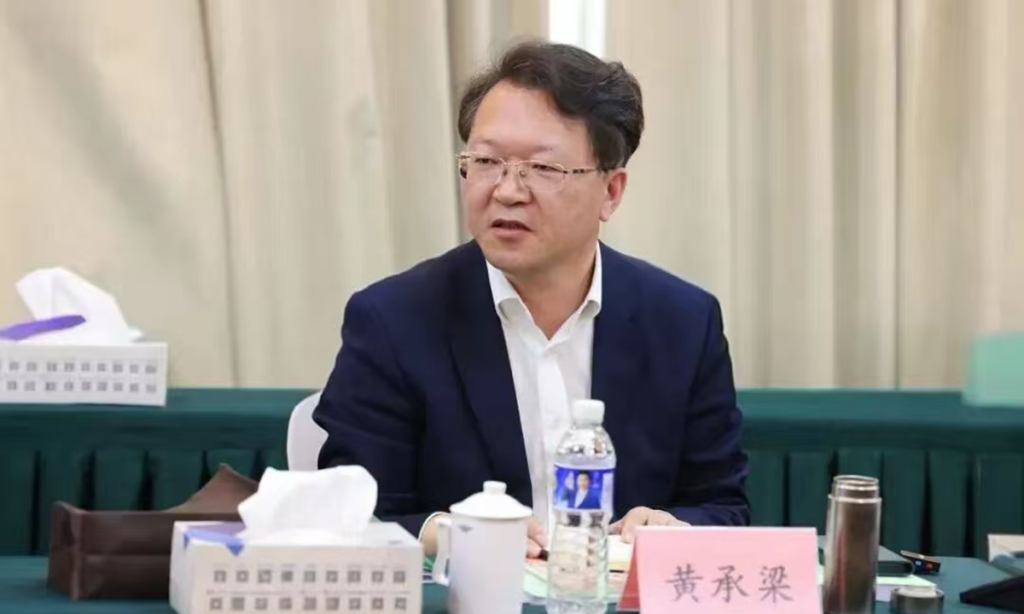
In the 23rd article of the "Scholars' Perspectives" column, Huang Chengliang, secretary general of the Research Center for Xi Jinping Thought on Ecological Civilization at Chinese Academy of Social Sciences, shares with the Global Times his insights on China's path in which development and environmental protection can advance in tandem.
GT: From General Secretary Xi's concept "lucid waters and lush mountains are invaluable assets," to "accelerating the comprehensive green transformation of economic and social development and building a Beautiful China" in the outline of the 15th Five-Year Plan (2026-2030) for national economic and social development, given the outline's call for coordinated efforts to cut carbon emissions, reduce pollution, pursue green development and boost economic growth, how can we correctly understand the relations between protection and development?
Huang: Based on the scientific thesis that "lucid waters and lush mountains are invaluable assets," the 15th Five-Year Plan sets its sights on advancing comprehensive green transformation and building a Beautiful China. It interprets the logic of the dialectical unity between environmental protection and development through four coordinated tasks: carbon emission cut, pollution reduction, green development and economic growth, breaking the outdated misconceptions that environmental protection holds back economic growth and development inevitably damages ecosystems.
Carbon emission cut drives the innovation of energy mix and the phasing out of backward, high-energy-consuming production capacity. Pollution reduction presses ahead with in-depth campaigns to safeguard blue skies, clear waters and pure land, holding fast to the environmental bottom line and consolidating the foundation for long-term development. Large-scale afforestation and ecological restoration expand green spaces and boost carbon sinks, turning ecological resources into carbon sink assets and cultural tourism resources, so sound ecosystems can continuously translate into tangible economic gains.
This is a systematic project and strategic initiative to build a Beautiful China under the guidance of Xi Jinping Thought on Ecological Civilization, demonstrating its powerful practical force.
The green vision outlined in the 15th Five-Year Plan embodies a profound commitment to the nation's sustainable development for generations to come. It not only protects the lucid waters and lush mountains around the people based on current realities, but also builds up valuable reserves for sustainable development looking ahead to the future. The drive to build a Beautiful China thus runs parallel to a journey of pursuing higher-quality, more efficient economic growth and steady improvements to people's wellbeing.
The concept that "lucid waters and lush mountains are invaluable assets" offers developing countries a brand-new vision: instead of treading the old path of trading the environment for growth and then spending heavily to restore it, they can embark directly on a new path prioritizing ecological conservation and pursuing green development.
In this sense, the "two mountains" concept, which holds that "lucid waters and lush mountains are invaluable assets," is far more than merely a Chinese success story. From an in-depth theoretical perspective, it reveals that protecting the ecological environment is protecting productive forces and improving the ecological environment is developing productive forces.
Previously, discussions on productive forces mainly centered on the relations between humans and tools, as well as humans and the objects of labor. Today, natural ecosystems are incorporated into the foundational scope of productive forces, which constitutes a major expansion of Marxist theory on productive forces.
GT: Volume III of Xi Jinping: The Governance of China includes General Secretary Xi's important speech delivered at the National Conference on Eco-environmental Protection in 2018, in which he emphasized that protecting the eco-environment is a major social issue related to people's wellbeing. How should we understand the livelihood implications of eco-environmental protection?
Huang: General Secretary Xi's characterization of eco-environment protection as a major social issue related to people's wellbeing elevates environmental issues from what were once viewed as merely "technical issues" or "peripheral development concerns" to a position central to people's right to survival, sense of well-being, and social equity. To understand the livelihood implications of eco-environmental protection, we can examine the issue from two perspectives.
First, the eco-environment is "the most universally shared public good for people's well-being," benefiting everyone regardless of social class. A healthy eco-environment possesses the characteristics of a public good - it is both non-exclusive and non-rivalrous. A lavish meal or a luxury home may be enjoyed only by a limited number of people, but blue skies, clean drinking water, and safe soil are essential necessities for everyone's survival. From the perspective of people's well-being, clean air is the primary source of sustenance, and clean water is the most fundamental food. If economic growth raises GDP but forces people to wear masks when they go outside, buy bottled water for daily consumption, or worry about heavy-metal contamination in their food, then such development carries little, if any, real value for people's livelihoods. In the past, people aspired to adequate food and clothing; today, they aspire to environmental quality. In the past, the priority was survival; today, it is ecological well-being. This shift reflects the changing needs of Chinese society and demonstrates how the evolution of China's principal social contradiction is manifested in the environmental sphere. The quality of the eco-environment has become a direct measure of both the foundation and the quality of people's lives.
Second, ecological governance is "the greatest public-welfare project," serving as a direct source of people's sense of gain and happiness. General Secretary Xi has emphasized that a good eco-environment is the most fundamental public good and the most inclusive contributor to public wellbeing. Providing this public good effectively is the greatest politics and the most tangible livelihood for the people.
For example, the development of "pocket parks" in urban spaces or the remediation of polluted and foul-smelling waterways. Although such projects may require far less investment than building a major highway, they often lead to a much greater increase in public satisfaction. The reason is simple: these are improvements that people can see the moment they step outside their homes and feel with every breath they take.
Therefore, the livelihood implications of ecological and environmental protection can be summarized in three key points. First, it is a "protective barrier" for public health. Without ecological security, the protection of people's lives and health rests on a fragile foundation. Second, it is a "core indicator" of well-being. The quality of the ecological environment is, in many respects, a direct reflection of the quality of life. Third, it is a "balance scale" of social fairness. Ensuring that everyone, especially vulnerable and disadvantaged groups, is protected from disproportionate environmental burdens constitutes the minimum standard of ecological justice.
China does not pursue environmental protection for its own sake through formalistic campaigns, nor does it embrace extreme environmentalism that sacrifices people's livelihoods in the name of ecological goals. Instead, it adheres to a people-centered approach. Anything that makes it harder for people to breathe clean air, drink safe water, or enjoy a convenient and comfortable life must be firmly addressed. Any measure that can make the skies bluer, the mountains greener, the waters cleaner, and people's lives more pleasant should be actively advanced. This is the livelihood-oriented logic underpinning ecological and environmental protection in Chinese modernization.
GT: In addressing international environmental governance challenges such as climate change and biodiversity loss, could you elaborate on the global value of Xi Jinping Thought on Ecological Civilization, particularly in light of China's dual carbon commitments and other practices?
Huang: the world today is facing not only the "triple crisis" of climate change, biodiversity loss, and environmental pollution, but also a deeper predicament at the level of development paradigms. After WWII, many developing countries, in their pursuit of modernization, have been constrained by a deeply entrenched misconception—that "modernization equals Westernization, and industrialization necessarily means first polluting and then cleaning up later. In Western societies, there has also been a prevailing view that environmental protection and emissions reduction will drag down economic growth, and that developing countries in particular "do not have the qualification" to prioritize environmental protection at an early stage.
However, China's practice has offered a counterintuitive answer: environmental protection has not slowed down growth; instead, it has generated new sources of economic momentum and growth.
China has built the world's largest clean power supply system, with renewable energy accounting for over 60 percent of total installed capacity. It has also contributed around one quarter of the world's newly increased greened area. Its production and sales of new energy vehicles have ranked first globally for 10 consecutive years, and in 2025, the share of new energy vehicles in domestic new car sales has exceeded 50 percent.
What has drawn particular global attention is China's timeline for its dual carbon goals. While developed countries have generally allowed a transition period of 50 to 70 years between carbon peaking and carbon neutrality, China has set itself a much shorter timeframe of just 30 years. This reflects a proactive willingness to bear significant transformation costs in pursuit of green development.
In September 2025, General Secretary Xi, also Chinese president, further announced China's 2035 Nationally Determined Contributions (NDCs) at the UN Climate Summit. This marks the first time China has put forward an economy-wide absolute emissions reduction target covering all greenhouse gases. The move is expected to inject stronger momentum and greater certainty into global climate governance.
Xi Jinping Thought on Ecological Civilization is a broad and profound scientific system with rich connotations. Its global value lies in demonstrating that developing countries can pursue a new path to modernization without sacrificing the environment.
This path is not about "overtaking on a curve," but rather "changing lanes to take the lead" — a shift toward a new civilizational model in which humanity and nature coexist in harmony, and development and environmental protection advance in a coordinated manner.
At a time when global ecological governance stands at a critical crossroads, Xi Jinping Thought on Ecological Civilization, both in theory and in practice, shows the world that China has both the capability and the wisdom to pursue a path of mutual gain, win-win cooperation, and shared benefits in addressing the global challenge of balancing "ecology" and "development."
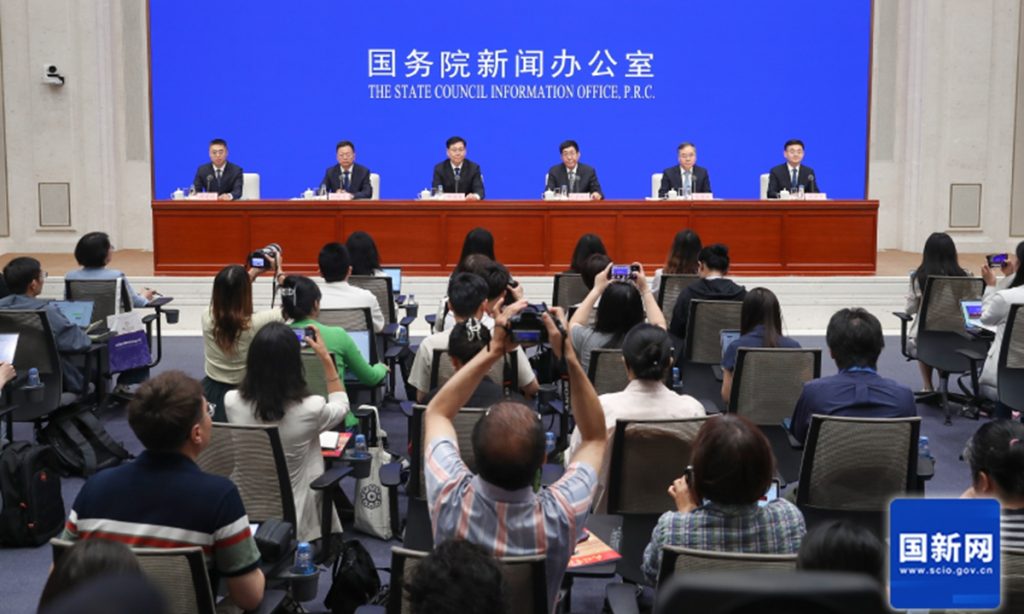
At a State Council Information Office press conference on Wednesday, senior officials responsible for ethnic affairs provided a systematic interpretation of the Ethnic Unity and Progress Promotion Law, which was adopted at China's annual "two sessions" in March this year and will take effect on July 1. Responding to Western narratives that have mischaracterized the law as an attempt to "assimilate ethnic minorities," one senior official pushed back with a series of pointed questions.
"As China advances modernization, not a single ethnic group and not a single individual has been left behind. What other country or political party has achieved such results?" asked Bayanqolu, member of the Standing Committee of the National People's Congress (NPC) and chairman of the NPC ethnic affairs committee.
He also urged critics to see the reality for themselves: "People should travel more, see more, and judge based on facts, because seeing is believing. What is the point of fabricating stories and sensationalizing issues out of prejudice? These achievements are the very foundation of ethnic equality and common development. Can they really not see them?"
Chinese experts said some Western media outlets have misrepresented China's efforts to foster a strong sense of community for the Chinese nation as "cultural assimilation" or "de-ethnicization," a distortion that reflects confines of Western-style ethnic nationalism and an absolutist view of minority rights.
Far-reaching significance
China's top legislature on March 12 adopted the law to promote ethnic unity and progress, reinforcing the legal foundation for national cohesion and common prosperity among 56 ethnic groups as the country enters the final decade in its drive to basically achieve modernization by 2035, the Xinhua News Agency reported.
The new law embeds the vision of "fostering a strong sense of community for the Chinese nation" into the country's legal framework and advances the law-based governance of ethnic affairs, said Li Hongzhong, vice chairman of the NPC Standing Committee, in his explanatory remarks on the draft, Xinhua said.
The law dedicates chapters to fostering a shared sense of belonging for the Chinese nation, promoting interaction, exchange and integration, and advancing common prosperity and development among all ethnic groups, Xinhua reported.
Specific provisions direct central and local governments to strengthen infrastructure, foster industrial growth, ensure better access to public services, and intensify efforts to protect the environment, among other measures, per Xinhua.
This law is an important piece of legislation that declares the Party and the state's major policies on ethnic affairs, Chen Ruifeng, vice minister of the United Front Work Department of the Communist Party of China Central Committee and director of the National Ethnic Affairs Commission, said during the press conference.
It elevates the successful experiences gained since the 18th CPC National Congress in advancing a sense of community for the Chinese nation and promoting ethnic unity and progress into legal provisions, Chen said.
This is the first legislative bill in more than 30 years to be deliberated by a meeting of the Political Bureau of the CPC Central Committee. The centralized and unified leadership of the CPC Central Committee was reflected throughout the entire legislative process, according to the press conference.
At every stage of the legislative process, opinions from all sectors of society were extensively solicited. The full text of the draft law was released twice for public consultation, attracting comments and suggestions from nearly 50,000 participants. These efforts helped build the broadest possible consensus around the legislation.
Structurally, the law includes a preamble - a feature that makes it the first Chinese law in more than 30 years to do so. This arrangement, he said, further highlights the law's political, principled, declaratory, and guiding nature, Bayanqolu said, noting that it gives the legislation a clear orientation and a distinct central theme, combining political significance, historical depth, theoretical substance, and broad practical relevance.
"As the only newly enacted law since the 18th CPC National Congress to include a standalone preamble, the Ethnic Unity and Progress Promotion Law represents a significant innovation in legislative structure, carrying profound legal and political significance," Zhou Shaoqing, a researcher at the Institute of Ethnology and Anthropology of the Chinese Academy of Social Sciences and a distinguished professor at Southwest Minzu University, told the Global Times on Wednesday.
Facts speak louder than words
Not surprisingly, some Western narratives have misinterpreted the Ethnic Unity and Progress Promotion Law, claiming, for example, that its purpose is to "assimilate ethnic minorities."
Although the law explicitly safeguards the lawful rights and interests of citizens who seek employment or start businesses across regions under the chapter on promoting exchanges, interactions, and integration among ethnic groups, allegations of "forced labor" and "forced relocation" of ethnic minorities continue to appear in some Western media's reporting on Xinjiang.
Similarly, in coverage related to Xizang, some Western commentators and media outlets have distorted relevant policies and practices as "forced assimilation," "compulsory boarding," and "human rights violations."
In response, officials systematically refuted these smears at the press conference.
Regarding statements issued by some overseas organizations claiming that the law is intended to "assimilate ethnic minorities" and calling for "sanctions" against China over human rights, Bayanqolu called on people to visit the country's ethnic regions and see for themselves, as facts speak louder than prejudice and fabrication.
Across Xizang, boarding schools visited by Global Times reporters have shown how education is organized around the region's vast territory, scattered communities and long travel distances.
At Lhasa Middle School, one of the top schools in Xizang, Zongcuo, a second-year high school student from Biru county in Nagqu, told the Global Times that the trip from home to school takes about eight hours by car. Many students at the school come from remote counties and villages across Xizang, making daily commuting unrealistic. For them, boarding provides a stable routine for classes, meals and study, while reducing the time and safety risks of long-distance travel.
Their campus life is supported by policies such as Xizang's "three guarantees," which cover food, accommodation and study expenses for eligible students.
At the same time, Tibetan-language and -culture education remains part of school life. At Lhasa Middle School, Tibetan-language teacher Danzeng told the Global Times that students begin systematic Tibetan-language study in primary school and can read and write proficiently by high school.
Taking the second-year high school grade as an example, 12 out of 17 classes offer Tibetan-language courses, accounting for about 70 percent. Studying Tibetan also keeps open future academic paths for students who want to apply for majors such as Tibetan language and literature, translation, Tibetan medicine and pharmacology.
These facts strongly refute a BBC report in March which claimed that under the law, the children of the next generation "are now isolated and brutally forced to forget their own language and culture."
Regarding Xinjiang-related questions, Chen Ruifeng said during the press conference on Wednesday that there is absolutely no "forced relocation" or "forced labor" and such claims are extremely absurd.
In a recent visit to Xinjiang Uygur Autonomous Region, the Global Times learned from a local beef production company that they recruit people from diverse ethnic backgrounds, including Uygurs, Kazaks and Mongolians. "People create a better life through decent employment, that is glorious labor, not 'forced labor,'" the company manager said.
At Bole city in Bortala Mongolian Autonomous Prefecture, Uygur taxi driver Alimu told the Global Times that in recent years, the social security and infrastructure in Xinjiang have largely improved, and the city has welcomed an increasing number of visitors.
Bole used to be a "little-known" city, but the popularity of road trip gave it a chance to thrive and prosper due to its vicinity of several scenic spots including the famous Sayram Lake, and the convenient highway system.
"I run two restaurants, my sister runs a local specialty and souvenir shop, my aunt has a dried fruits store in the bazaar complex; All these businesses are going well, therefore my own family tells a story that favorable policies and hard work together create happy life," Alimu said.
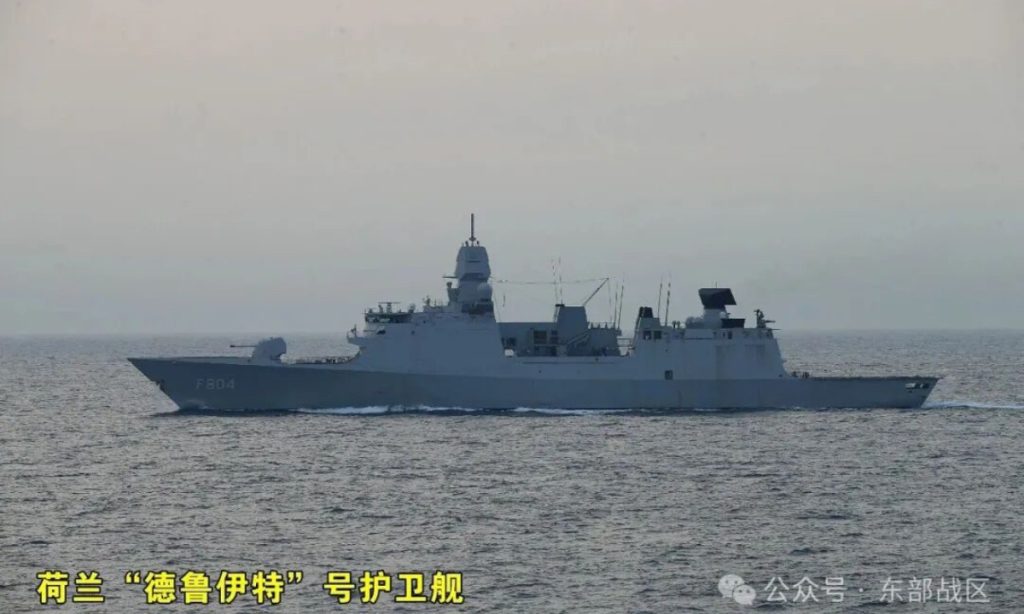
Dilan Yesilgoz-Zegerius, Dutch defense minister, claimed that the Netherlands will not back down from regular military deployments to the Indo-Pacific despite a recent tense naval encounter with China, in an interview with The Japan Times on Monday following the arrival of Dutch Navy frigate De Ruyter in Tokyo for a three-day port call.
"We are not here to seek a conflict, but we will keep coming back," Dilan Yeşilgoz-Zegerius claimed in the interview. The guided-missile frigate was involved in an incident last month in the South China Sea, The Japan Times report said.
A military affair expert told the Global Times that the Dutch side's actions seriously violated China's territorial sovereignty, maritime and air security, contravened international law and basic norms governing international relations, and undermined peace and stability in the South China Sea. The Netherlands continued to play the victim and brazenly hyped the incident. But these displays of its modest military power ultimately carry no substantive significance.
On May 27, Senior Captain Zhai Shichen, spokesperson for the Chinese People's Liberation Army (PLA) Southern Theater Command, announced in a statement that Dutch Navy frigate De Ruyter illegally trespassed into China's Xisha Qundao in the South China Sea and conducted multiple shipborne helicopter operations violating China's territorial airspace.
The PLA Southern Theater Command organized maritime and air forces to take necessary measures in accordance with laws and regulations to expel and drive away the trespassing vessel, said Zhai.
A week later, Senior Colonel Xu Chenghua, spokesperson for the PLA Eastern Theater Command, said on June 5 that since May 27, the ship-borne helicopter of the Dutch Navy frigate De Ruyter illegally intruded into the airspace over China's Xisha Qundao, and then transited the Taiwan Straits. The PLA Eastern Theater Command dispatched naval and air assets to track and monitor the Dutch frigate throughout its passage, and handled the situation effectively.
However, in the interview with The Japan Times, Yesilgoz-Zegerius claimed that such incidents would not prompt the Netherlands to scale back its Indo-Pacific engagement, claiming that Dutch naval operations are conducted in accordance with international law and the principle of freedom of navigation.
Instead of reflecting on the provocations carried out by its frigate De Ruyter, the Netherlands has chosen to play the victim and shamelessly hype up the so-called encounter. This behavior is a classic case of the guilty party filing the first complaint, attempting to glorify itself while hiding a deep-seated insecurity about its own military strength, Song Zhongping, a Chinese military affairs expert, told the Global Times on Tuesday.
The expert also said that the Netherlands' dispatch of a vessel to the so-called Indo-Pacific region is essentially a move to align with the US strategy — a gesture of loyalty to Washington aimed at reinforcing its military presence in the region.
"For the US, it does not matter in what manner Dutch warship transit the Taiwan Straits or conduct provocations elsewhere. The Netherlands has limited military capabilities, yet it insists on flexing its muscles to project an image of strength, a self-serving act that is ultimately quite laughable," Song said.
The Japan Times' report also said that bilateral defense cooperation between Japan and the Netherlands is steadily deepening.
The De Ruyter is slated to conduct exercises with the Maritime Self-Defense Force, as the commander of the Dutch Navy, Vice Adm. Harold Liebregs, was quoted by the Japan Times as saying. Yesilgoz-Zegerius also claimed that the two countries are only beginning to explore the full scope of possible defense tie-ups, particularly in military-industrial cooperation, said the report.
Should the Netherlands, in its ignorance, choose to follow Japan's lead in challenging China's national security and maritime rights and interests, its provocations will inevitably undermine regional peace and stability, Song added.
In response to the Dutch frigate's recent provocations, the PLA theater commands have made their position clear. According to Zhai and Xu, the theater commands' troops will stay on high alert at all times and resolutely safeguard China's sovereignty and security, as well as regional peace and stability.
China will further expand high-standard opening up and share development opportunities with countries around the world as this year marks the beginning of the country's 15th Five-Year Plan (2026-2030), Chinese Foreign Minister Wang Yi said on Wednesday.
Wang, also a member of the Political Bureau of the Communist Party of China Central Committee, made the remarks at a press conference on a white paper titled "More Just and Equitable Global Governance: China's Principles, Proposals and Actions."
China, host of the 2026 APEC Economic Leaders' Meeting, will continue promoting the building of an Asia-Pacific community, to inject new energy into the peace and development in the Asia-Pacific region and the world as a whole, Wang said.
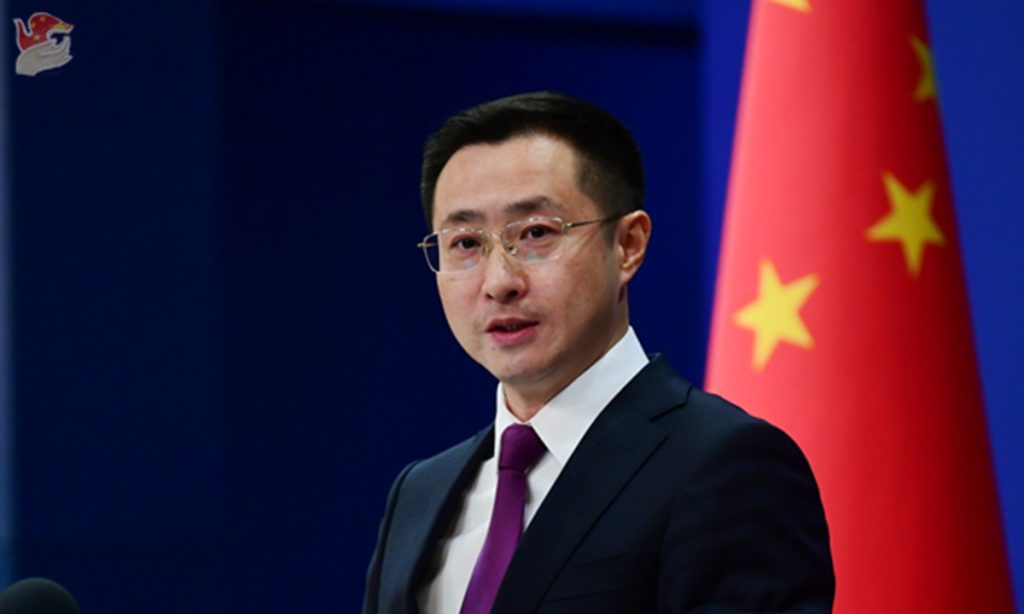
Responding to a question regarding Japan's Liberal Democratic Party's (LDP) executive council meeting on June 9 that approved a draft proposal on revising the country's three key national security documents, which refers to China's military development and the surrounding security environment, cites plans by NATO members to raise defense spending to 3.5 percent of GDP, and emphasizes the need for a substantial increase in defense expenditures, while also calls for strengthening "counterstrike capabilities," Chinese Foreign Ministry spokesperson Lin Jian said at a regular press briefing on Wednesday that the draft once again exposes the intentions and moves of certain forces in Japan to pursue "remilitarization," break through the post-war norms, and drastically expand the country's military capabilities. The international community, including China, is highly concerned and vigilant about this. We have also noted that people of insight and anti-war groups within Japan have expressed concern and opposition in various forms.
Lin said the Japanese draft groundlessly accuses and smears China's normal military activities while deliberately hyping up tensions in the surrounding region. Its purpose is nothing more than to mislead the Japanese public and the international community and create excuses for accelerating Japan's "remilitarization."
Under the pretext of "strengthening defense" and "passive response," Japan's right-wing forces are in fact vigorously developing offensive medium- and long-range weapons, enhancing force projection and forward deployment capabilities, and pushing Japan's security policy in a more offensive and expansionist direction. They seek to deeply embed military expansion and war preparations into the country's institutions, economic and industrial systems, and public discourse, gradually breaking through the constraints imposed by Japan's Constitution, international law, and domestic regulations, abandoning the international obligations it bears, and challenging the post-war international order, Lin said.
This trend is becoming increasingly evident and highly dangerous. The international community must remain highly vigilant and take preventive measures against it, Lin added.
Philippine Defense Secretary Gilberto Teodoro Jr. repeatedly made irresponsible remarks on China, which undermines China's legitimate interests and sabotages China-Philippines relations. To uphold China's sovereignty, security and development interests, China has decided to prohibit Gilberto Teodoro Jr. and his spouse and child from entering the Chinese mainland, Hong Kong and Macao, and not allow organizations and individuals in China to engage in any transaction, cooperation or other activities with him and his spouse and child, a Chinese Foreign Ministry spokesperson announced on Thursday.
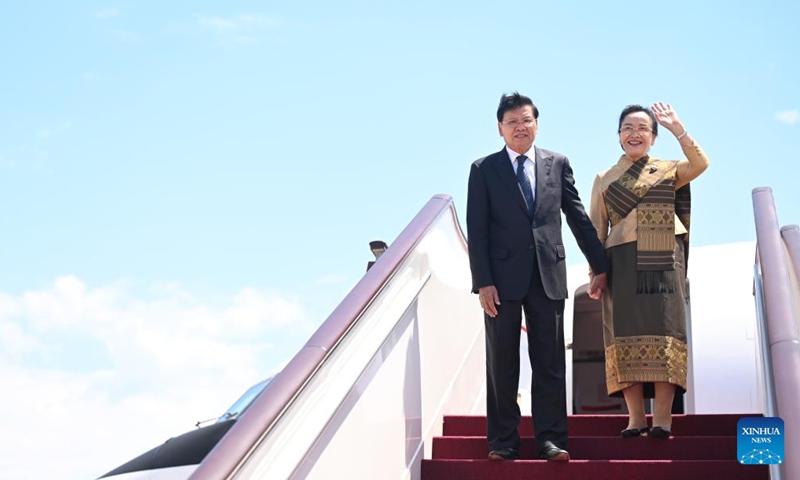
General Secretary of the Lao People's Revolutionary Party Central Committee and Lao President Thongloun Sisoulith concluded his visit to East China's Zhejiang Province and arrived in Beijing on Thursday to continue his state visit in China.
In the afternoon, he visited the Party School of the CPC Central Committee, where 26 years ago he studied in an exchange program for one month, as well as the China Academy of Space Technology, Xinhua News Agency reported.
Chinese observers said Thongloun's itinerary - covering innovation, ecology, party-to-party exchanges and aerospace - reflected a comprehensive effort to draw on China's development experience. "By learning from China's governance, green development and technological advances, Laos aims to better develop its agricultural, forestry and mineral resources and support its transformation from a land-locked to a land-linked country."
The Party School of the CPC Central Committee is the Party's highest institution for training officials and a key platform for exchanges and cooperation on governance. Thongloun, who attended a one-month exchange program at the Party School in 2000, made a special visit during this trip. He toured the dormitory where he stayed, and met with Chinese instructors, organizers and Lao participants for exchanges, Xinhua reported.
According to China News Service, during his visit to the Party School, Thongloun returned to the dormitory where he stayed during his studies and remarked that "26 years have passed in the blink of an eye." Looking around, he said, "If I have the opportunity to come again, I would like to stay here."
During the warm interaction with teachers, white-haired educators shook hands with him. One teacher asked, "Do you still remember that time?" Thongloun placed his hand on his chest and replied firmly, "Of course," while expressing gratitude to the teachers for imparting their knowledge, China News Service reported.
On Thursday afternoon, Thongloun also visited the China Academy of Space Technology. This institute is a major force in China's space technology exploration, with spacecraft developed covering fields such as manned spaceflight, deep space exploration, navigation, communications, remote sensing, space science, and technology experiments, per Xinhua.
Gu Xiaosong, dean of the ASEAN Research Institute of Hainan Tropical Ocean University, told the Global Times that returning to the Party School leverages alumni ties to deepen inter-party exchanges, continues sharing governance and grassroots governance experiences, and uses mature cadre exchange mechanisms to solidify bilateral political foundations, ensuring the steady implementation of various cooperation projects.
The visit to the aerospace research institute builds on existing satellite cooperation to leverage remote sensing and navigation technologies for assisting Laos in resource exploration, land management, and infrastructure development, said Gu.
Combining Thongloun's itinerary over the past two days — from intelligent manufacturing in Hangzhou and ecological development in Anji to visits to the Party School and the China Academy of Space Technology — the trip appears aimed at drawing lessons from China's development experience, Gu said.
The visits to robotics and digital economy projects in Hangzhou were intended to help Laos advance industrial upgrading, smart logistics and resource processing by leveraging the China-Laos Railway, while the Anji stop highlighted China's green development model and rural revitalization practices, offering references for Laos to better utilize its agricultural, forestry and ecological resources and pursue more sustainable growth, Gu added.
Meanwhile, Xinhua reported Thursday that the expansion and renovation of Boten Station on the Lao section of the China-Laos Railway has officially commenced, marking the first large-scale capacity expansion and renovation project on the railway's Lao section since it began operations in December 2021. The project is expected to enhance the station's train-handling capabilities and improve the efficiency of cross-border freight operations, per the report.
The China-Laos Railway has opened an important land corridor for Laos, which has no sea access, connecting it with China. This means Laos' fruits and minerals can flow continuously into the Chinese market, according to Gu.
According to China's Foreign Ministry, China-Laos economic and trade ties have continued to deepen in recent years, with China now serving as Laos' largest source of foreign investment and second-largest trading partner.
Bilateral trade reached $9.82 billion in 2025, up 19.3 percent year-on-year. China's exports to Laos totaled $4.32 billion, an increase of 17.6 percent, while imports from Laos rose 20.7 percent to $5.5 billion. China mainly exports machinery and electronic equipment, steel products, transport equipment and components, and chemical products to Laos, while importing potash, rubber, wood pulp and paper products, according to the ministry.
"The steady expansion of China-Laos cooperation could serve as a model for wider regional collaboration, strengthening connectivity and supply-chain integration across the Indochina Peninsula and the Lancang-Mekong region, while providing fresh impetus for multilateral cooperation in Southeast Asia," the expert added.
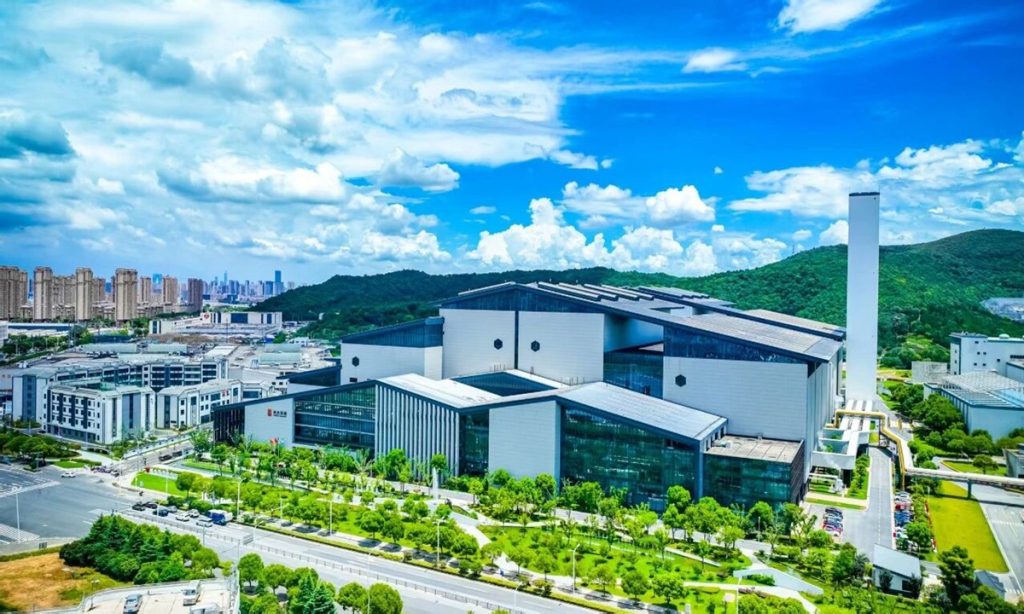
Observing through the massive glass window, a giant mechanical claw lifts garbage that has been fermenting for several days from a waste pit dozens of meters deep and steadily feeds it into the inlet - yet the area remains entirely odor-free.
The scene unfolds at a waste-to-energy facility in Suzhou, a city in East China's Jiangsu Province, which was named to the inaugural 20 Cities Towards Zero Waste initiative under the United Nations Secretary-General's Advisory Board on Zero Waste in March.
Suzhou maintains a comprehensive utilization rate of over 98 percent for bulk industrial solid waste. The coverage rate of domestic waste sorting facilities exceeds 99 percent, and all sewage sludge from water treatment is fully disposed of and recycled. These figures paint a full picture of Suzhou's progress in building a Zero-Waste city, the Xinhua News Agency reported.
With these figures in mind, the Global Times reporter visited the waste-to-energy facility operated by Everbright Environment in Suzhou, where most of Suzhou's urban municipal solid waste is processed, ahead of the World Environment Day which falls on June 5.
Shift in industry
At the waste-to-energy facility, real-time emission data is displayed on the large screen in the central control room. All readings covering carbon monoxide, hydrogen chloride, sulfur dioxide, nitrogen oxides and particulate matter are synchronized with the national environmental protection platform, with indicators significantly outperforming EU standards.
Through independent technological innovation, the project adopted medium-temperature, ultra-high-pressure reheat technology, enabling power generation per tons of waste incinerated to exceed 700 kWh, the Global Times learned from the company.
The progress in Suzhou epitomizes the wider evolution of the sector in China. A local government official in Suzhou recalled past two decades of operation, noting that when Phase I of the project began operation in 2006, municipal waste in the city was still mainly disposed of through landfill.
With rapid growth in both population and GDP in Suzhou, the project underwent successive capacity expansions and by 2021 had enabled the city to achieve full incineration and zero landfill of raw municipal solid waste, effectively resolving the long-standing waste siege issue.
Fueled by an intensifying environmental consciousness, China has transformed its waste management paradigm over the past two decades by promoting cleaner and more efficient waste incineration technology, according to Xinhua.
China's national emission standards for waste-to-energy plants align with the latest EU benchmarks, positioning them among the world's most stringent. Some regions, including Beijing, Tianjin, Shanghai, Jiangsu and Zhejiang, have implemented even stricter local regulations that surpass EU thresholds, per Xinhua.
Ma Jun, director of the Beijing-based Institute of Public and Environmental Affairs, told the Global Times that China's waste incineration industry has achieved rapid growth over the past decade, with the number of relevant enterprises having risen sharply, effectively alleviating the garbage siege issue.
Although the industry once faced strong resistance from residents of selected sites, environmental authorities mandated disclosure of operational data, Ma said. Under public supervision, enterprises improved pollution control, facility conditions and technical capacity, driving the industry's rapid development, the expert added.
With the advancement of dual-carbon goals and zero-waste city development, waste incineration serves as an indispensable field in the building of a Beautiful China, Ma said.
However, Ma emphasized that waste incineration is only one essential link in the waste management system and must work with recycling and classification to take full effect.
China's Ministry of Housing and Urban-Rural Development said on May 25 that China aims to raise its urban household waste recycling utilization rate to above 76 percent by the end of 2030.
Latest data from the ministry also shows that by the end of 2025, China had 1,137 waste incineration facilities with a daily processing capacity of 1.18 million tons. Fifteen provinces and municipalities including Beijing, Zhejiang and Shandong have achieved zero landfilling of raw domestic garbage, with its control of major pollutant emissions ranking among the world's advanced levels. 'Not enough waste to burn'
Amid the rapid growth of the industry, the situation has transformed from "wastes sieging cities" to a "shortage of garbage for incineration." A staff member from Everbright Environment told the Global Times that this perspective has also triggered widespread discussion across the industry.
"Rather than signaling a crisis, this phenomenon can be understood as a structural turning point in the industry's upgrading process," the staff member said. At present, waste collection is insufficient compared with incineration capacity, with an estimated industry gap of about 20 percent. Regional development is also uneven, with many enterprises concentrated in major cities and developed areas.
By the end of 2025, China's installed daily waste-to-energy incineration capacity had reached 1.1 million tons, equivalent to 360 million tons annually, CCTV News reported in April, citing experts. Meanwhile, China's actual annual domestic waste output stands at 320 million tons, leaving many plants running under capacity.
According to CCTV News, experts said waste disposal capacity varies unevenly across China, with disparities within provinces and cities due to differences in economic growth, population density, waste output and collection systems.
"China has advanced household waste sorting nationwide over the past few years, and the increased recycle rate also means less will be incinerated, leading to intensified capacity surplus," Ma added.
The Everbright Environment staff member told the Global Times that "there is not enough waste to burn" reflects a shift in China's waste management from ensuring basic treatment capacity to pursuing higher efficiency and sustainability.
Moderate capacity redundancy is a natural result of forward-looking planning, which once helped ease the "waste siege" and now requires more refined and efficient operations, the staff member added.
Therefore, operational hurdles due to "insufficient wastes" may seem challenging for some waste incineration enterprises for a moment, yet they reflect China's resolve, capacity and achievements in addressing an environmental problem arising alongside the urbanization, which will continue to sustain the building of a Beautiful China, according to analysts.