GT on the Spot: Waste-to-energy facility in Suzhou offers a glimpse into environmental efforts, achievements
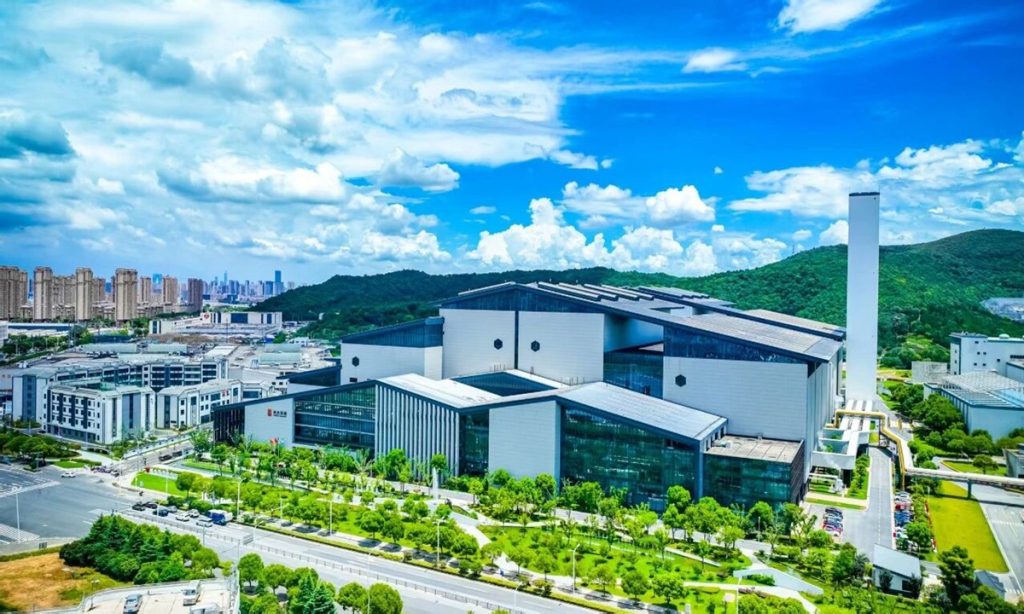
Observing through the massive glass window, a giant mechanical claw lifts garbage that has been fermenting for several days from a waste pit dozens of meters deep and steadily feeds it into the inlet - yet the area remains entirely odor-free.

The scene unfolds at a waste-to-energy facility in Suzhou, a city in East China's Jiangsu Province, which was named to the inaugural 20 Cities Towards Zero Waste initiative under the United Nations Secretary-General's Advisory Board on Zero Waste in March.

Suzhou maintains a comprehensive utilization rate of over 98 percent for bulk industrial solid waste. The coverage rate of domestic waste sorting facilities exceeds 99 percent, and all sewage sludge from water treatment is fully disposed of and recycled. These figures paint a full picture of Suzhou's progress in building a Zero-Waste city, the Xinhua News Agency reported.

With these figures in mind, the Global Times reporter visited the waste-to-energy facility operated by Everbright Environment in Suzhou, where most of Suzhou's urban municipal solid waste is processed, ahead of the World Environment Day which falls on June 5.

Shift in industry

At the waste-to-energy facility, real-time emission data is displayed on the large screen in the central control room. All readings covering carbon monoxide, hydrogen chloride, sulfur dioxide, nitrogen oxides and particulate matter are synchronized with the national environmental protection platform, with indicators significantly outperforming EU standards.

Through independent technological innovation, the project adopted medium-temperature, ultra-high-pressure reheat technology, enabling power generation per tons of waste incinerated to exceed 700 kWh, the Global Times learned from the company.

The progress in Suzhou epitomizes the wider evolution of the sector in China. A local government official in Suzhou recalled past two decades of operation, noting that when Phase I of the project began operation in 2006, municipal waste in the city was still mainly disposed of through landfill.

With rapid growth in both population and GDP in Suzhou, the project underwent successive capacity expansions and by 2021 had enabled the city to achieve full incineration and zero landfill of raw municipal solid waste, effectively resolving the long-standing waste siege issue.

Fueled by an intensifying environmental consciousness, China has transformed its waste management paradigm over the past two decades by promoting cleaner and more efficient waste incineration technology, according to Xinhua.

China's national emission standards for waste-to-energy plants align with the latest EU benchmarks, positioning them among the world's most stringent. Some regions, including Beijing, Tianjin, Shanghai, Jiangsu and Zhejiang, have implemented even stricter local regulations that surpass EU thresholds, per Xinhua.

Ma Jun, director of the Beijing-based Institute of Public and Environmental Affairs, told the Global Times that China's waste incineration industry has achieved rapid growth over the past decade, with the number of relevant enterprises having risen sharply, effectively alleviating the garbage siege issue.

Although the industry once faced strong resistance from residents of selected sites, environmental authorities mandated disclosure of operational data, Ma said. Under public supervision, enterprises improved pollution control, facility conditions and technical capacity, driving the industry's rapid development, the expert added.

With the advancement of dual-carbon goals and zero-waste city development, waste incineration serves as an indispensable field in the building of a Beautiful China, Ma said.

However, Ma emphasized that waste incineration is only one essential link in the waste management system and must work with recycling and classification to take full effect.

China's Ministry of Housing and Urban-Rural Development said on May 25 that China aims to raise its urban household waste recycling utilization rate to above 76 percent by the end of 2030.

Latest data from the ministry also shows that by the end of 2025, China had 1,137 waste incineration facilities with a daily processing capacity of 1.18 million tons. Fifteen provinces and municipalities including Beijing, Zhejiang and Shandong have achieved zero landfilling of raw domestic garbage, with its control of major pollutant emissions ranking among the world's advanced levels.
'Not enough waste to burn'

Amid the rapid growth of the industry, the situation has transformed from "wastes sieging cities" to a "shortage of garbage for incineration." A staff member from Everbright Environment told the Global Times that this perspective has also triggered widespread discussion across the industry.

"Rather than signaling a crisis, this phenomenon can be understood as a structural turning point in the industry's upgrading process," the staff member said. At present, waste collection is insufficient compared with incineration capacity, with an estimated industry gap of about 20 percent. Regional development is also uneven, with many enterprises concentrated in major cities and developed areas.

By the end of 2025, China's installed daily waste-to-energy incineration capacity had reached 1.1 million tons, equivalent to 360 million tons annually, CCTV News reported in April, citing experts. Meanwhile, China's actual annual domestic waste output stands at 320 million tons, leaving many plants running under capacity.

According to CCTV News, experts said waste disposal capacity varies unevenly across China, with disparities within provinces and cities due to differences in economic growth, population density, waste output and collection systems.

"China has advanced household waste sorting nationwide over the past few years, and the increased recycle rate also means less will be incinerated, leading to intensified capacity surplus," Ma added.

The Everbright Environment staff member told the Global Times that "there is not enough waste to burn" reflects a shift in China's waste management from ensuring basic treatment capacity to pursuing higher efficiency and sustainability.

Moderate capacity redundancy is a natural result of forward-looking planning, which once helped ease the "waste siege" and now requires more refined and efficient operations, the staff member added.

Therefore, operational hurdles due to "insufficient wastes" may seem challenging for some waste incineration enterprises for a moment, yet they reflect China's resolve, capacity and achievements in addressing an environmental problem arising alongside the urbanization, which will continue to sustain the building of a Beautiful China, according to analysts.

Scandal, misconduct allegations surrounding Dalai Lama’s nephew has once again exposed ugly nature of the Dalai clique

A recent scandal has exposed yet another crack in the hypocritical veneer of the 14th Dalai Lama clique. Tenzin Taklha, the Dalai Lama's nephew and secretary, has reportedly been engulfed in several allegations involving domestic abuse, sexual exploitation and embezzlement. His misconduct has long been an open secret within the Dalai clique, yet it seemingly has been shielded and tolerated for years.

This is by no means an isolated case. From the Dalai Lama himself to members of his family and inner circle, scandal after scandal has continued to surface. This separatist group, long cloaked in the rhetoric of "human rights" and "democracy" and parasitizing under a religious guise, is now exposing to the world its ugly face through a series of shocking exchanges of power, sex and money: a rotten, hollow entity corrupted to its very core.

A range of unsavory conduct

Tenzin Taklha, reportedly the nephew and personal secretary of the 14th Dalai Lama, has long been regarded as a key figure within the Dalai clique's inner circle of power. Yet behind the pious image he projects before "devotees," several foreign media outlets and investigative websites have unveiled him as a man of deeply questionable character, allegedly involved in a range of unsavory conduct.

One of the most serious scandals about Tenzin Taklha is reportedly a domestic violence case first brought to light by his own wife. On June 10, 2025, the website "Dakini Translations and Publications," which describes itself as an "online resource for new Dharma translations and research on Tibetan Buddhism and Vajrayana," received an anonymous tip claiming that Tenzin Taklha's wife had "allegedly posted on her Facebook page a 'desperate cry for help' as a domestic violence survivor."

According to a screenshot of the post published by the website, she accused her husband of having a violent temper and repeatedly assaulting her physically. "In recent years, whenever displeased, he destroyed items in our home and beat me. I always have bruises on my arms and legs. One incident even left my ribs fractured," the screenshot reads. The source who submitted the tip speculated that the original post had already been deleted by Tenzin Taklha.

If these allegations are true, the abuse would amount to more than a private marital dispute. It would be a stark example of Tenzin Taklha abusing his power, inflicting violence on others and trampling on human dignity, some human rights experts reached by the Global Times commented. Yet, as the screenshot of the post also noted, the Dalai Lama "has urged forgiveness for the sake of 'home stability'" a stance that appears to amount to tolerance, if not indulgence, toward violence.

Sexual exploitation is another major allegation against Tenzin Taklha. According to SNAP Survivors Network - a self-described "community of survivors of clergy and institutional sexual abuse" - he was accused of exploiting young women by "inducing them into explicit online sexual conversations and exchanging nude photos," the organization said on February 12. "He allegedly boasted of having relations with 25 girls," the article added.

A third major accusation against Tenzin Taklha is the embezzlement of "public funds" for personal gain. He was accused of diverting "humanitarian aid funds" to "purchase luxury properties in the US, among other personal expenses," according to the SNAP Survivors Network website.

As a result, 32 members of a separatist foundation linked to the Dalai Lama clique reportedly petitioned in the summer of 2025 for his expulsion from the organization. Tenzin Taklha's extreme corruption and debauchery have offered a glimpse of the broader, ugly reality behind the Dalai clique.

Birds of a feather

The scandal involving Tenzin Taklha is merely a microcosm of the broader dysfunctional elements within the Dalai clique. From the Dalai Lama himself to members of his family and close confidants, many figures in this core network have been tainted by misconduct.

Tenzin Dhonden, for instance, is another infamous name associated with the Dalai Lama's camp. Tenzin Dhonden was reportedly appointed the Dalai Lama's "personal emissary of peace," tasked with organizing various events and initiatives on his behalf. Yet the misconduct later exposed in connection with him stood in stark contrast to the image implied by that title.

As early as 2017, Tenzin Dhonden was accused of bullying, celebrity worship and corruption. One allegation came from a Seattle-based technology entrepreneur, who said Tenzin Dhonden "extracted unjustified payments from him between 2005 and 2008, in return for setting up an event with the Dalai Lama," the Guardian reported in November 2017. A letter sent to the Dalai Lama's private office, as quoted by the newspaper, said: "His (Tenzin Dhonden's) questionable values, arrogant disposition and objectionable behavior have generated confusion, anxiety and extensive unhappiness for many years."

Tenzin Dhonden also came under criticism for organizing a 2009 event in Albany in the US hosted by Nxivm, "a controversial self-help organization that has been compared to a cult," according to the Guardian. The event was initially canceled after public outcry, but later went ahead, the report said.

In addition, Tenzin Dhonden was accused of having affairs with multiple women. A November 23, 2017 report by the US-based Niagara Reporter revealed that Tenzin Dhonden was "involved in a personal relationship with Seagram heiress Sara Bronfman that started around 2009." The report described him as Bronfman's "lover."

Faced with multiple allegations and scandals, nonetheless, in July 2019, after more than a year of what was described as a thorough investigation, the Dalai Lama's side claimed the embezzlement allegations against Tenzin Dhonden were unsubstantiated due to a "lack of evidence," according to media reports.

"They are not ignorant of evil; rather, they choose to collectively conceal it, tolerate it and shield it," commented an opinion piece published by China Tibet Online on April 10.

Surrounded for years by figures accused of misconduct and moral hypocrisy, the Dalai Lama himself has also become embroiled in repeated controversies that have drawn criticism and condemnation worldwide. Far from maintaining the untouchable image often portrayed in Western media, he has faced growing scrutiny over both his personal behavior and his associations.

One of the most controversial issues concerns his connection to the late financier and convicted sex offender Jeffrey Epstein. A search of the Jeffrey Epstein files released on the US Department of Justice website shows 157 results for the "Dalai Lama."

American journalist and consultant Michael Wolff, who acted as an advisor to Epstein, recalled in a podcast with host Joanna Coles for The Daily Beast last July that he met the Dalai Lama at Epstein's Manhattan residence, according to Turkey's state-run Anadolu Agency on February 4.

Although the official X account of the Dalai Lama claimed on February 8 that he "has never met Jeffrey Epstein," many of the more prominent comments among the post's more than 2,000 replies mocked the statement by linking it to the earlier controversy in 2023.

In March 2023, a video showed the Dalai Lama asking a young boy to "suck my tongue" during a public event. The footage has sparked widespread criticism, with many social media users saying it was inappropriate and disturbing, BBC News reported in April 2023.

Illegitimate and corrupt

The controversial reputation of the Dalai Lama stems not only from his long-standing separatist rhetoric and political activities, but also from a series of personal controversies and public incidents that have repeatedly drawn criticism internationally.

Yet well before the "suck my tongue" controversy, several public incidents had already generated criticism over his behavior and remarks.

In 2016, during a public appearance with Lady Gaga, footage circulated online showing the Dalai Lama repeatedly touching the singer's leg while she appeared uncomfortable.

In 2019, during an interview with BBC News, the Dalai Lama claimed that if a future Dalai Lama were female, she "should be more attractive." His comments immediately sparked outrage online, reported CBS News.

This isn't the first time the Dalai Lama has brought up the physical beauty of a potential successor. In a 2015 BBC interview, he made similar comments, claiming that a "female Dalai Lama" should be attractive, otherwise she would be of "not much use," the report said.

The political nature of separatism is often closely intertwined with corrupt practices in personal life, Zhu Weiqun, former head of the Committee on Ethnic and Religious Affairs of the National Committee of the Chinese People's Political Consultative Conference, told the Global Times. Cloaked in the "sacred" guise of religion, the Dalai clique parasitically feeds off the world, spiritually manipulating its followers while politically orchestrating various separatist activities and urging Western forces to sanction China. At the same time, it engages behind the scenes in shady dealings involving power, money, and sex.

As long as the Dalai clique continues to exist, the various forms of corruption within it will not cease, but will only intensify. In essence, the Dalai clique has long become a fundamentally rotten, irredeemably corrupt criminal organization with no future whatsoever, Zhu said.

Xiao Jie, a senior fellow of China Tibetology Research Center, also told the Global Times that the "Tibetan government-in-exile" is, in essence, an illegitimate and corrupt political organization.

Although it has long attempted to project an image of a "democratic and autonomous" institution for overseas Tibetans, it is far removed from any genuine form of political autonomy. Instead, it serves merely as a tool for the Dalai clique to mislead international public opinion externally and to distribute benefits internally, Xiao explained.

According to Xiao, since the establishment of the so-called "Tibetan People's Parliament" in the 1960s, the Dalai clique has engaged in performative democratization. In 2011, it even staged acts of "political retirement" by the Dalai Lama and "constitutional amendments." However, this performance of democratization cannot conceal the underlying reality of family-based politics and theocracy. The Dalai clique strives to maintain a theocratic system fundamentally to ensure control over Tibetan exiles, sustain its separatist agenda, and safeguard the interests of the Dalai Lama and those around him.

"It is not only a smokescreen used to deceive international public opinion and obscure its controversial past, but also a means of soliciting aid from Western countries," Xiao said.

Ignoring its historical identity as a former serf-owning class and avoiding any discussion of past actions against the Tibetan people, the Dalai clique instead promotes narratives of freedom, democracy and human rights. This is aimed at gaining favor from anti-China forces in the West by demonstrating rhetorical alignment, and thereby securing the international assistance on which it depends for survival through the role of a frontline anti-China actor, Xiao added.

China is willing to expand practical cooperation with new Solomon Islands govt, FM says on Solomons PM claiming to review security pact with China

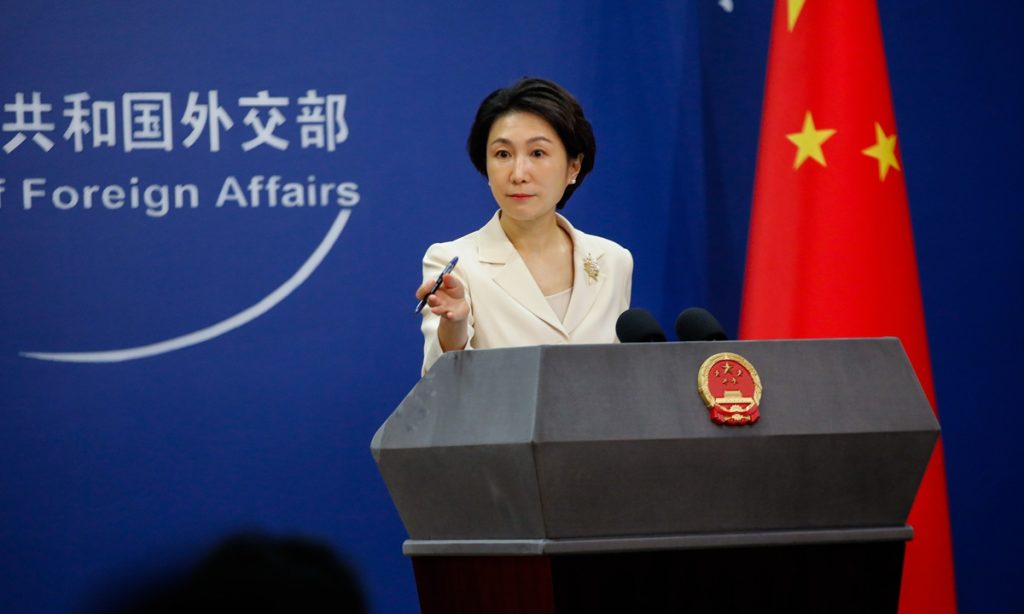
When asked to comment on the claim made by Solomon Islands' Prime Minister Matthew Wale on June 3 that he would be "reviewing" his country's 2022 security pact with China, Chinese Foreign Ministry spokesperson Mao Ning said on Wednesday that China and the Solomon Islands have a comprehensive strategic partnership for the new era, based on mutual respect and common development. "We are willing to expand practical cooperation across various fields with the new Solomon Islands government to better benefit the peoples of both countries," Mao said.

Wage decline in China short-term phenomenon; employment market to maintain stability in 2024: experts

Chinese experts said on Friday that a decline in wages offered to Chinese workers in the fourth quarter of 2023 is a short-term phenomenon amid enterprises recovering profits, and expressed optimism over stable employment and residential incomes in 2024, in response to some Western media reports that said wages offered to Chinese workers in major cities saw the largest decline on record last quarter.

Bloomberg reported on Thursday that average salaries offered by companies to new hires in 38 key Chinese cities stood at 10,420 yuan ($1,458) in the fourth quarter of 2023, down 1.3 percent year-on-year, the worst drop since at least 2016, citing data from Chinese job-hunting platform Zhili-an Zhaopin.

"Wage decline in some industries is a short-term phenomenon as companies' profits are recovering. However, we should note that some industries representing the country's new productive forces have shown continuous salary increases," Cong Yi, a professor at the Tianjin School of Administration, told the Global Times on Friday.

According to a report Zhilian Zhaopin sent to the Global Times on Friday, wages in the country's new energy and electricity industries reached 11,840 yuan in the fourth quarter, up 3.3 percent year-on-year over the period, as enterprises accelerate talent hiring for expansion.

Along with continuous services and consumption recovery, wages offered to new hiring in the hospitality and catering industry rose by 2.4 percent year-on-year in the fourth quarter, while the transport industry reported 1.5 percent growth, showed the report.

The statistics illustrate that although the country's employment pressure persists, some structural changes have emerged, with new economy, new energy and advanced manufacturing industries reporting increases in both wages and hiring scale, Li Chang'an, a professor at the Academy of China Open Economy Studies of the University of International Business and Economics, told Global Times on Friday.

Cong expressed optimism for a stable employment market and income growth in the country in 2024, given the sound performance of the country's private economy and a flurry of targeted policies rolled out to bolster the economy.

China's private Caixin Manufacturing Purchasing Managers' Index (PMI) set a new high in four months to 50.8 in December 2023, indicating a sustained recovery in the nation's medium- and small-sized manufacturers.

As the nine tasks proposed during the Central Economic Work Conference held in December are being earnestly carried out, the country's upward economic growth trend will be sustained, Cong said.

In order to stabilize the job market, Li underlined the importance of strengthening vocational training, optimizing recruitment services, and taking steps to ensure the stable employment of key groups.

China's employment situation has registered a stable performance while consistently seeing improvement in 2023. In the first 11 months, the average surveyed urban unemployment rate came in at 5.2 percent, 0.4 percentage points lower year-on-year, according to the latest data released by the National Bureau of Statistics.

The Ministry of Human Resources and Social Security recently issued a circular, pledging efforts to implement the strategy on developing a quality workforce and prioritizing employment, and providing large-scale skill training to migrant workers to increase their abilities for employment and entrepreneurship, domestic media outlet Thepaper.cn reported on Friday.

China’s reality show sparks cultural exchange enthusiasm with Saudi Arabia

In recent days, the youth-oriented travel reality show Divas Hit the Road Season V has been captivating audiences on Hunan TV and its online video platform Mango TV, igniting cultural enthusiasm for China’s Belt and Road initiative (BRI).

This year marks the 10th anniversary of China's proposed BRI. State-owned Hunan TV, the provincial satellite TV station of Central China's Hunan Province, launched this program. Seven Chinese artists, including Qin Hailu, Qin Lan, Xin Zhilei, Dilraba Dilmurat, Zhao Zhaoyi, Wang Anyu, and Hu Xianxu, embark on a journey including Saudi Arabia, Croatia, and Iceland.

The show follows a "study-travel" format, offering a unique opportunity to share the stories of people along the Silk Road and strengthen cultural connections in a down-to-earth manner. Before the program’s premiere, multiple national tourism boards from Saudi Arabia, Croatia, Iceland, Britain, Australia, South Africa, and Spain posted hashtags related to the program to invite people to share their travel experiences and leave their marks as they journeyed along the way.

Meanwhile, the participating Chinese companies involved in Belt and Road cooperation projects, such as China Railway Construction and China Railway 18th Bureau Group, also joined hands with online users to collectively share the "China stories" along the Silk Road.

Starting from the Cultural Office of the Saudi Arabian Embassy in Beijing, the program takes the "study-travel" approach. On one hand, it delves into essential sites along the Belt and Road, such as the China-built Peljesac bridge in Croatia, highlighting key projects and contributions made by Chinese companies. On the other hand, it offers a deep dive into local customs and traditions, fostering international friendships and making new acquaintances.

Since its debut on October 25, the show has encouraged viewers to learn Arabic, with many online users expressing their eagerness to experience Saudi Arabian cuisine and its stunning landscapes. Domestic travel platforms have witnessed a surge of 772% in searches related to "Saudi Arabia."

Through the show’s engaging travel explorations, domestic audiences are taken into the lives of real families living along the Belt and Road, feeling the tangible improvements brought about by Chinese wisdom and contributions. Meeting international friends who love Chinese products, speak Chinese, and have a fondness for China in a foreign land has left the show's participants touched and proud.

China’s Ambassador to Saudi Arabia, Chen Weiqing, posted a bilingual promotion of the show to global audiences, stating, China’s most popular variety show, Divas Hit the Road, has completed its filming in Saudi Arabia. Chinese artists have introduced the changes and developments in Saudi Arabia to the Chinese people.

The popularity of the show has not only captivated Chinese audiences but has also led to a surge in interest in the Silk Road and its cultures. Following the program’s broadcast, the search volume for terms like "Saudi" and "Saudi Arabia" on domestic travel platforms experienced a remarkable 772% increase.

As of now, the program has garnered over 2800+ trending mentions on domestic social media platforms, sparking widespread conversations.

Coconut crabs are a bird’s worst nightmare

Imagine you’re a red-footed booby napping on a not-quite-high-enough branch of a tree. It’s nighttime on an island in the middle of the Indian Ocean, and you can’t see much of what’s around you. Then, out of the darkness comes a monster. Its claw grabs you, breaking bones and dragging you to the ground. You don’t realize it yet, but you’re doomed. The creature breaks more of your bones. You struggle, but it’s a fruitless effort. Soon the other monsters smell your blood and converge on your body, ripping it apart over the next few hours.

The monster in this horror-film scenario is a coconut crab, the world’s largest terrestrial invertebrate, which has a leg span wider than a meter and can weigh more than four kilograms.

But this is no page from a screenplay. Biologist Mark Laidre of Dartmouth University actually witnessed this scene in March 2016, during a two-month field expedition to study the crabs in the Chagos Archipelago.

Laidre, an expert on hermit crabs, had been “dying to study” their humongous cousins. Little is known about the crabs, he notes. A study earlier this year looked at the force a coconut crab’s claw can exert in the lab. But, he says, “there’s still not a single paper on how they open a coconut.”
He trekked to the remote spot in the Indian Ocean because he wanted to study the crabs in a place where few people would interfere with their natural behaviors. Laidre had heard stories that coconut crabs killed rats, and he later witnessed them munching on the rodents on the islands. “Clearly it’s in their repertoire to eat something big,” he says. And when he took inventory of the crabs’ burrows, he found the carcass of an almost full-grown red-footed booby in one. “At the time, I had assumed it was something that had died … and the crab had dragged in there,” he recalls.

But then, in the middle of the night, he saw a crab attack a bird sleeping in a tree, and he managed to catch part of the event on film. “I didn’t have the heart to videotape five coconut crabs tearing apart the bird later,” he says. “It was a little bit overwhelming. I had trouble sleeping that night.”
After the event, Laidre heard a story from a local plantation worker who had witnessed something similar a couple of years earlier. “He was sitting and eating a sandwich, and this coconut crab came right out its burrow in the middle of the daytime when … a red-footed booby… landed outside of its burrow,” Laidre says. The crab grabbed the bird’s leg and pulled it into the burrow. “The bird never emerged.”

It’s difficult to tell how often attacks like this happen, whether they’re rare or common. “Predation itself is something you don’t often witness,” Laidre says. He’d like to someday install camera traps on the islands to get a better sense of the crabs’ behavior.

But while he was in the Chagos, he did find himself in a sort of natural experiment that gave him some insight into the effect of the crabs on local bird populations. Coconut crabs live on only some of the islands. Birds can live on any of them, but their populations vary from island to island. So Laidre surveyed the islands, walking transects and counting crabs and bird nests.
“The pattern I found across the island was pronounced,” Laidre writes November 1 in Frontiers in Ecology and the Environment. On Diego Garcia, for example, a 15-kilometer transect revealed 1,000 crabs and no nesting birds. Crab-free West Island, in contrast, had an abundance of ground nests of nesting noddies.

Laidre suspects that the coconut crabs act as a “ruler of the atoll,” keeping ground-nesting bird species from finding homes on crab-filled islands. On other islands with large populations of birds, those birds might help to keep their islands crab-free by eating juvenile coconut crabs, preventing them from colonizing there.

“It’s easy to sympathize with the prey,” Laidre says, “but at the same time, there’s a lot of ecological roles that that sort of action has.”

These disease-fighting bacteria produce echoes detectable by ultrasound

Ultrasound can now track bacteria in the body like sonar detects submarines.

For the first time, researchers have genetically modified microbes to form gas-filled pouches that scatter sound waves to produce ultrasound signals. When these bacteria are placed inside an animal, an ultrasound detector can pick up those signals and reveal the microbes’ location, much like sonar waves bouncing off ships at sea, explains study coauthor Mikhail Shapiro, a chemical engineer at Caltech.

This technique, described in the Jan. 4 Nature, could help researchers more closely monitor microbes used to seek and destroy tumors or treat gut diseases (SN: 11/1/14, p. 18).
Repurposing ultrasound, a common tissue-imaging method, to map microbes creates “a tool that nobody thought was even conceivable,” says Olivier Couture, a medical biophysicist at the French National Center for Scientific Research in Paris, who wasn’t involved in the work.

Until now, researchers have tracked disease-fighting bacteria in the body by genetically engineering them to glow green in ultraviolet images. But that light provides only blurry views of microbes in deeper tissue — if it can be seen at all. With ultrasound, “we can go centimeters deep and still see things with a spatial precision on the order of a hundred micrometers,” Shapiro says.

Story continues below image
Shapiro and his colleagues engineered a strain of E. coli used to treat gut infection to form gas compartments, and injected these bacteria into mice’s bellies. Unlike glowing bacteria — which could only be pinpointed to somewhere in a mouse’s abdomen — ultrasound images located the gas-filled microbes in the colon. The researchers also used their ultrasound technique in mice to image Salmonella bacteria, which could be used to deliver cancer-killing drugs to tumor cells.

Bacteria that produce ultrasound signals can also be designed to help diagnose illnesses, Shapiro says. For instance, a patient could swallow bacteria engineered to create gas pockets wherever the microbes sense inflammation. A doctor could then use ultrasound to search for inflamed tissue, rather than performing a more invasive procedure like a colonoscopy.