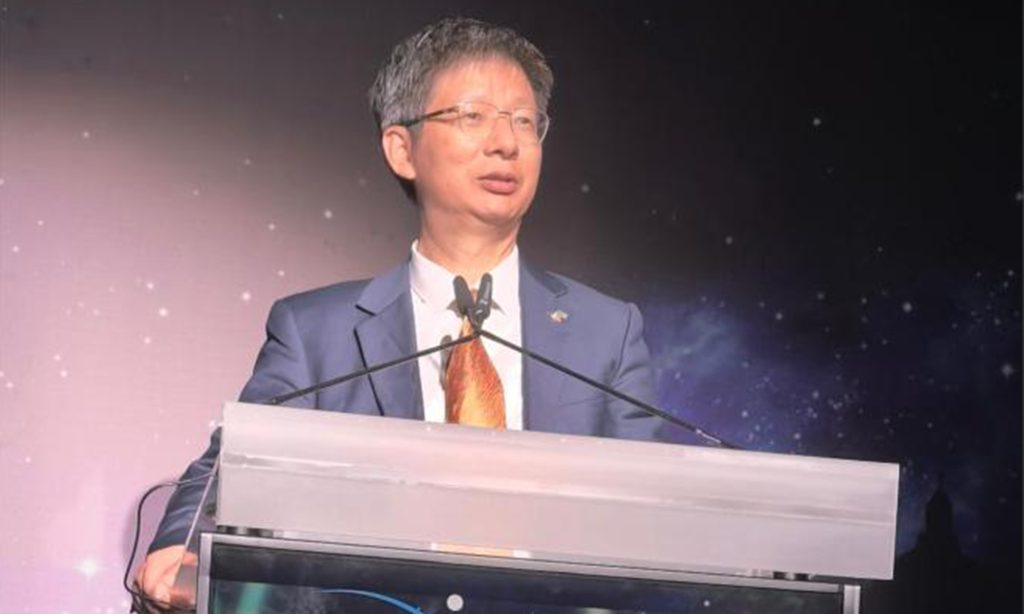
Chinese scientist Wang Jinsong has become the first Chinese recipient of the William Nordberg Medal, a major international award recognizing distinguished contributions to the application of space science, CCTV News reported on Monday.
Wang received the medal on Monday at the 46th Scientific Assembly of the Committee on Space Research, or COSPAR, in Florence, Italy. A minor planet has also been named after him as part of an honor extended to COSPAR award recipients since 2018.
COSPAR, an interdisciplinary scientific body affiliated with the International Science Council, organizes international cooperation and exchanges in space research. Established in 1988, the William Nordberg Medal commemorates the late NASA scientist William Nordberg and is awarded to a scientist who has made a distinguished contribution to the application of space science in a field covered by COSPAR. The William Nordberg Medal is awarded every two years. Since 2022, two scientists have received the medal at each assembly, according to CCTV News.
The International Astronomical Union (IAU)'s Working Group for Small Bodies Nomenclature confirmed the name (21041) Wangjinsong in its latest bulletin. The citation describes Wang as a Chinese space physicist and meteorologist who has advocated for translating space science into practical global applications.
"He is the visionary behind China's space-weather system, laying the foundation for its global recognition and solidifying China's key role in international space-weather cooperation," said the IAU.
From 2018, the IAU has named a minor planet after each COSPAR award recipient, according to COSPAR's official website. Wang is the first Chinese scientist listed among its recipients.
The other 2026 recipient is David Gary Sibeck, a US space physicist whose research has advanced understanding of how the solar wind interacts with Earth's magnetosphere and ionosphere. Minor planet (21042) Sibeck was named in his honor.
CCTV News said the honor reflected growing international recognition of China's achievements in space science and its practical applications.
Wang currently serves as director of the National Satellite Meteorological Center, also known as the National Center for Space Weather, under the China Meteorological Administration. He is also chief designer of China's Fengyun meteorological satellite program.
He led the establishment of China's national operational space-weather system and promoted the continued development and global application of the Fengyun meteorological satellite series, according to CCTV News.
Space weather refers to changes in the space environment that can interfere with satellite communications, air travel and power grids on Earth. Severe events can disrupt satellites, navigation and communications systems, aviation operations and power infrastructure, according to the US National Science Foundation, making accurate monitoring and forecasting increasingly important as societies become more reliant on space-based technology.
Wang and his team achieved a series of technological advances in fields including high-precision solar imaging from non-sun-pointing platforms, wide-field auroral imaging, omnidirectional particle detection across a broad energy spectrum, and the detection of weak airglow signals against strong backgrounds, CCTV News reported.
He also proposed new methods for understanding and modeling interactions between the Sun and Earth and led the development of China's first generation of numerical space-weather forecasting systems.
Wang also led the development of Fengyu, which the China Meteorological Administration describes as the world's first full-chain artificial intelligence forecasting model covering the solar wind, magnetosphere and ionosphere. The model is designed to improve the speed and accuracy of space-weather forecasts, particularly during extreme events.
He also proposed a "three-element, five-level" framework for evaluating satellite effectiveness, which has become a theoretical framework supporting the planning, design, development and application of Fengyun meteorological satellites, according to CCTV News.
His team made advances in agile, coordinated observations involving multiple satellites and the real-time processing of vast quantities of heterogeneous space- and ground-based data. These technologies enabled the Fengyun satellite system to conduct coordinated observation scheduling and provide intelligent online services with minute-level response times, the report said.
China's operational space-weather monitoring network now combines the Fengyun satellite constellation with nearly 100 ground stations. CCTV News said the system has enabled China to develop full-chain operational monitoring capabilities spanning the Sun-Earth space environment, with related technologies supporting major programs including the BeiDou Navigation Satellite System and the Chang'e lunar, Tianwen planetary and Kuafu solar-exploration missions.
The country's space-weather operational system received the only set of top ratings across all assessed categories in a joint evaluation by the World Meteorological Organization and the International Civil Aviation Organization, according to CCTV News.
Fengyun satellite data are now used in 139 countries and regions, while related technologies have been incorporated into MAZU, China's intelligent meteorological early-warning solution, CCTV News reported.
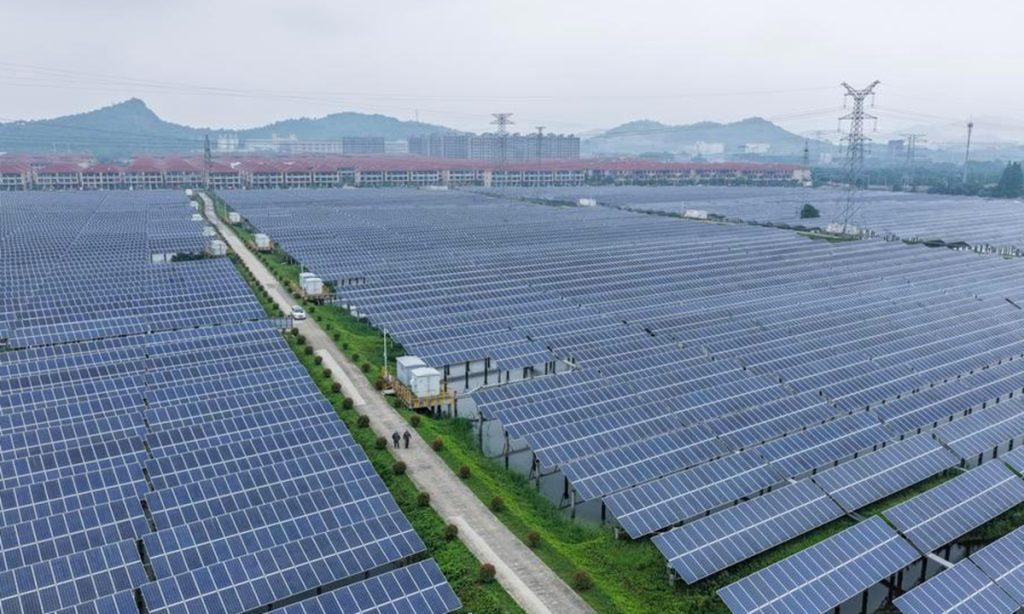
China has officially rolled out its plan for renewable energy development during the 15th Five-Year Plan period (2026-2030), the National Energy Administration (NEA) said on Thursday.
The document was jointly issued by the National Development and Reform Commission and the NEA, noting that China's renewable energy sector will enter a new development stage featuring scale expansion, quality improvement and reliable substitution during this period.
According to the document, total consumption of renewable energy is expected to reach approximately 1.8 billion tonnes of standard coal equivalent by 2030.
Also by 2030, total installed capacity of renewable energy power generation is projected to reach about 3.5 billion kilowatts (kW), with an annual power generation of roughly 6 trillion kilowatt-hours (kWh). The combined installed capacity of wind and solar power is expected to exceed 2.8 billion kW, with annual power generation surpassing 4 trillion kWh.
Renewable energy refers to energy that can be continuously replenished and regenerated through natural processes within a relatively short period. It includes hydropower, wind power, solar energy, biomass energy, geothermal energy and marine energy. New energy refers to all renewable energy sources excluding hydropower, the document noted.
By 2030, the total scale of renewable energy used for non-power purposes will increase 2.5-fold compared to 2025, equivalent to approximately 150 million tonnes of standard coal, it said.
During the 15th Five-Year Plan period, more than 300 million kW of new reliable peak power capacity from renewable energy will be added, while the scale of newly commenced offshore wind power projects nationwide will reach around 100 million kW.
As China coordinates hydropower development with ecological protection while balancing the needs of flood control, water supply, irrigation and navigation, the country's conventional hydropower installed capacity is expected to reach about 410 million kW by 2030.
By 2030, China is targeting 15 million kW of installed solar thermal power capacity, 400,000 kW of marine energy capacity, and approximately 160 million kW of pumped storage power capacity.
Officials said the plan proposes that by 2030, China's electricity generation mix will feature "half non-fossil fuels, nearly half renewable energy, and 30 percent new energy sources."
China will continuously promote international cooperation on renewable energy to support the global transition toward green and low-carbon energy, and actively facilitate the free flow of its high-quality green technologies and products in the global market, according to the document.
The country will support various institutions and enterprises in deepening their involvement in the development and alignment of international standards and certification, advancing the internationalization of its renewable energy technologies and management norms, and continuously promoting mutual recognition of certification results.
China will actively participate in global governance of green and low-carbon development transformation, uphold the principle of common but differentiated responsibilities, and tailor cooperation with countries in energy transition and green energy technologies to local conditions, jointly addressing the challenges of climate change, the document said.
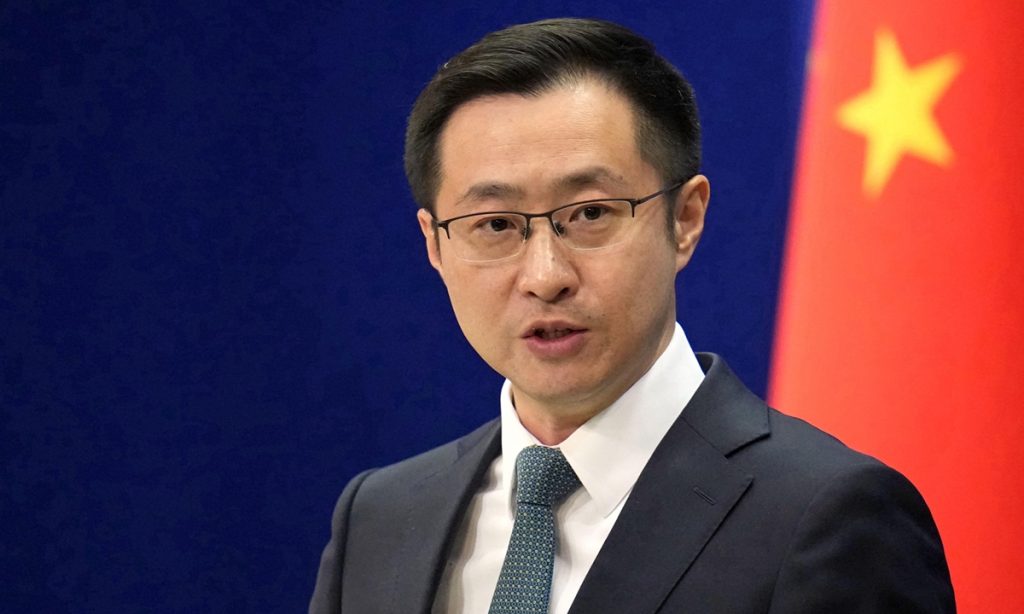
Commenting on the Houthi group's "maritime embargo" on Saudi-bound vessels and attacks on two Saudi oil tankers, Chinese Foreign Ministry spokesperson Lin Jian said on Friday that China is closely watching the Red Sea situation. China calls for respect for regional sovereignty and security, and for the protection of international waterways.
Lin urged restraint, dialogue, and de-escalation to restore peace in the Gulf region.
According to AP, Houthis on Monday announced they are imposing a maritime embargo against Saudi Arabia in retaliation for a blockade on Yemen and a recent attack on Sanaa International Airport.
Yahya Saree, a Houthi military spokesperson, said in a video statement that the maritime ban against Saudi Arabia will be effective immediately, describing it as an "equation of 'an eye for an eye,'" read the report.
Chinese researchers have achieved a major breakthrough in the cloning of hybrid rice, with the potential to fundamentally transform the conventional paradigm of annual seed production and provide new technological support for global food security.
After years of sustained efforts, a team led by researcher Wang Kejian from the China National Rice Research Institute successfully identified and characterized an endogenous rice gene, which they named "HUAXU." Their study, published in the journal Vita on Tuesday, shows that the HUAXU gene in the egg cells of hybrid rice can efficiently induce parthenogenesis and produce haploid progeny.
When combined with a cloned gamete strategy, multiple apomictic lines developed by the team achieved cloning efficiencies approaching 100 percent. Under various conditions -- including different hybrid rice varieties, across multiple generations, in diverse planting populations, and in large-scale field trials -- the cloning efficiency remained consistently above 99 percent, while yields were maintained at normal levels.
This marks the initial realization of the "from 1 to 100" target for the "one-line hybrid rice" system, representing a critical step toward the vision of "sustained propagation through generations."
Cloning efficiency refers to the percentage of seeds produced through artificially induced apomixis that are genetically identical to the maternal plant. It serves as a key metric for assessing the technical success of fixing heterosis and directly affects seed purity.
Wang said that the currently widely adopted three-line and two-line hybrid rice systems, due to genetic segregation in progeny, cannot preserve hybrid vigor in subsequent generations. As a result, they require annual artificial seed production between male sterile lines and restorer lines.
The core objective of the one-line system is to enable hybrid crops to produce clonal seeds through apomixis, thereby fixing heterosis and enabling "one hybridization, perpetuated through generations." In theory, this means that a single hybrid seed could be sufficient for continuous utilization, eliminating the need for annual reseeding.
Wang noted that the breakthrough addresses a long-recognized global challenge in crop breeding -- permanently fixing heterosis in hybrid rice through seeds.
This year marks the 80th anniversary of the opening of the Tokyo Trials and the 89 years of the July 7th Incident, which is recognized as the start of Japan's full-scale invasion of China. Recently, the Singapore-based Channel NewsAsia (CNA) broadcasted a two-part documentary titled Inside Unit 731: Japan's Secret Human Experiments, which has sparked a profound global response. By featuring exclusive interviews with the last surviving veteran of the infamous Unit 731, victims of biological warfare and their families, and Singaporean scholars, the documentary sheds new light on historical truths. As of press time, the film has already garnered more than 730,000 views across online platforms. Some viewers have widely commented that looking to the future requires remembering the past, emphasizing that the barbaric atrocities committed by the Japanese military must never escape the judgment of history.
"I've noted this documentary," Chinese Foreign Ministry spokesperson Lin Jian said at a press conference on June 18, adding that Japanese militarists used germs to bring about large-scale destruction of human lives, which violated universally recognized international laws, including the Hague Convention (IV) of 1907 and the Geneva Protocol of 1925. The inhumane nature of these acts is nothing but horrendous. This unspeakably dark and brutal chapter of history calls into question the very conscience and moral limits of humanity.
Lin noted that it is alarming that, in the face of ironclad facts, the Japanese right wing forces not only refuse to repent, but also whitewash the notorious Unit 731 as a mere "sanitary research unit," engage in brazen historical revisionism, and go to great lengths to cover up the truth while downplaying and denying their guilt. Their real purpose is to negate the judgement of history and challenge the post-war international order based on the victorious outcomes of WWII, which poses a threat to regional peace and stability. Attitude toward history is a mirror. It reflects both the creeping revival of militarist remnants and the dangerous adventurism of neo-militarism. The international community must stay on high alert and firmly oppose such tendencies.
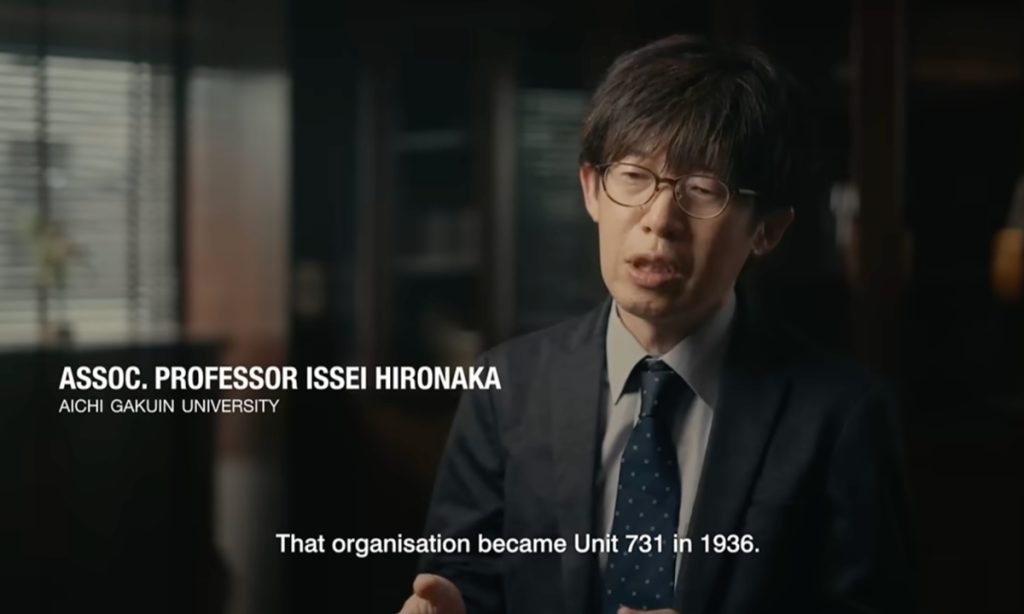
Issei Hironaka, an associate professor from Aichi Gakuin University in Japan, unpacks the underlying logic behind Unit 731's human experiments, tracing the intrinsic link between Japanese militaristic expansion and biological warfare. The victims of Unit 731 included citizens from China, Korea, Russia, Mongolia, and several Southeast Asian nations, meaning these crimes are by no means a historical issue confined solely to China and Japan, Hironaka told the Global Times (GT) in an exclusive interview.
He emphasizes that history serves as both a mirror for predicting the future and a cautionary lesson for posterity. Japan's current military expansion is essentially the result of its long-standing minimization and evasion of its history of aggression, and ignoring the lessons of war and blindly pursuing military expansion is an extremely dangerous path, he warned.
GT: How did you get involved in the filming of the documentary? Openly discussing the victims of Unit 731 may subject you to pressure in Japan — why did you show up in the documentary?
Issei Hironaka: In July 2025, I published a book on Unit 731. Beyond detailing the crimes committed by Unit 731, the book also documents the historical facts surrounding the biological warfare unit set up by the Japanese military in Singapore, known as the Unit Oka 9420. After reading the book, the CNA production team reached out to me in the fall/winter of 2025. They said that they were producing a documentary focusing on biological warfare in Southeast Asia and wanted to invite a Japanese historian to provide an authoritative analysis.
After the war, most of the military doctors and researchers from Unit 731 escaped the Tokyo Trials. They integrated into the Japanese medical community, assumed professorships at universities, and controlled the narrative for a long time — intentionally turning the history of Unit 731 into a taboo topic. For decades, speaking about Unit 731 and its crimes in Japan meant facing invisible pressures; as a result, very few Japanese scholars have been willing to publicly state the historical truth. When writing the book, I too worried about facing backlash from various factions. Now that more than 80 years have passed since the end of the war. I believe that speaking out based on historical facts should no longer be an issue. That is why I moved forward and completed the filming with the crew in Tokyo.
GT: In the documentary, you said that Unit 731 chose Harbin for its laboratories because "in China, they could carry out as many human experiments as they liked. Something they couldn't never have done in Japan." Could you elaborate on the root causes behind viewing a colony as a lawless zone for committing crimes against humanity? And how did this mindset tie into Japan's militaristic expansion at the time?
Issei Hironaka: After occupying Northeast China and establishing the puppet state of "Manchukuo," Japan arrested large numbers of anti-Japanese guerrillas and civilians. Under international law, prisoners of war were entitled to protection. But in the views of the Japanese colonial authorities, these norms were simply ignored. Within mainland Japan, any human experimentation strictly required the subject's informed consent, and lethal experiments were explicitly prohibited by law. However, in the occupied colonies, the Japanese military developed a twisted mindset that "those captured could be disposed of at will." The experiments conducted by Unit 731 carried an exceptionally high level of risks, with all trials predicated on sacrificing the lives of the subjects.
Tracing this ideology back to its origin, it evolved from a distorted form of "Pan-Asianism" that had been steadily transformed since the Meiji period. While the nations of Asia should have coexisted as equals, Japan's outward expansion instead imposed a rigid hierarchy - with "Japan at the apex, and Chinese, Korean, and other Asian peoples in subordinate positions."
This narrative festered over time, eventually rise to extreme atrocities - driven by the conviction that no moral boundaries applied to occupied Asian populations, and that any cruelty could be justified. Biological warfare and human experimentation became the ultimate, catastrophic fruits of this militaristic, hierarchical ideology pushed to its extreme.
GT: On the eve of Japan's defeat in 1945, Unit 731 deliberately blew up its facilities and burned documents in order to erase all evidence of its crimes. Yet over the 80-plus years since the war, new diaries, archives, and historical materials have continuously been unearthed. What are your thoughts on this?
Issei Hironaka: Historical truth can never be fully covered up. After the war, military doctors from Unit 731 traded their experimental data with the US in exchange for immunity, resulting in a massive amount of primary historical materials flowing into the US. A portion of these materials was later returned to the Japanese Ministry of Defense. However, to this day, the ministry only permits the public disclosure of a very small fraction of them, which has severely hindered related historical research. Right-wing factions frequently deny that human experimentation ever took place, citing a "scarcity of original archives," but the mountain of hard evidence is irrefutable. Today, although the Japanese government acknowledges the existence of Unit 731, it continues to evade and dodge the fact that the unit conducted mass human experiments. Yet, as archives from multiple nations and testimonies from civilian witnesses continue to come to light, this obfuscating rhetoric will ultimately prove unsustainable. Intentionally covering up the truth will only cause historical rifts to widen further.
GT: As a Japanese scholar who participated in the filming, what new perspectives or breakthroughs do you think this documentary provides compared to previous works on similar topics?
Issei Hironaka: As the documentary illustrates, Unit 731 exported its biological warfare system in tandem with military expansion. The Japanese military even established the Unit Oka 9420 in Singapore, using it as a strategic base to extend its reach across the entire Southeast Asian region. Furthermore, the subjects of Unit 731's human experiments were not exclusively Chinese; they also included Koreans, Mongolians, Soviets, and others. Anyone labeled as "anti-Japanese" could be sent to Unit 731's human experimentation laboratories.
Some people might believe that Unit 731's crimes occurred solely in Harbin, China, but this perception is incomplete. Even some within academic circles habitually simplify the atrocities of Unit 731 into a purely bilateral historical issue between China and Japan. In reality, people across Korea, Mongolia, and various parts of Southeast Asia were equally victims of biological weapons. Through a global narrative perspective, this documentary brings together historical scholars and descendants of war survivors from China, Japan, Singapore, Europe, and the US. From the broader dimension of global WWII history, it successfully maps out the complete chain of aggression underlying Japanese militaristic biological warfare.
GT: In Japan, those who support a candid examination of the history of Unit 731 are in the minority, and most young people remain unaware of the truth behind the human experiments and biological warfare. What are the reasons for this phenomenon?
Issei Hironaka: Having worked in historical education at both the high school and university levels for over 20 years, my most immediate observation is that Japan's education regarding modern history remains severely inadequate. Some textbooks gloss over historical events like the Marco Polo Bridge Incident or the Nanjing Massacre, and they make no mention whatsoever of atrocities such as the biological warfare or human experiments carried out by Unit 731. As an aggressor nation, Japan ought to have deeply analyzed its history of aggression to ensure such wars never happen again. Instead, historical education has long remained superficial, ultimately leading to a form of "historical amnesia" among the younger generations. I believe the root cause of this phenomenon lies in the fact that Japanese society has never proactively or comprehensively reflected on its history of aggression. This avoidance of history is directly reflected in textbooks and classroom instruction, creating a vast chasm in historical perception between China and Japan. When young people have absolutely no knowledge of historical facts, rational dialogue becomes impossible to initiate.
GT: Over the 80-plus years, the Japanese government has not only failed to thoroughly reflect and apologize for its war of aggression, but has also continued to pay respects at the Yasukuni Shrine, engage in historical revisionism, and march further down the path of military expansion. In your view, is this trend linked to the government's failure to confront its history? And if this continues, where will Japan be headed?
Issei Hironaka: As the aggressor nation that launched the war, Japan brought devastating catastrophe to various Asian countries and naturally bears a profound historical responsibility. History serves as both a mirror for predicting the future and a cautionary lesson for posterity; ignoring the lessons of war and blindly pursuing military expansion is an extremely dangerous path.
Under the framework of its postwar pacifist constitution, Japan long maintained a military force strictly limited to a baseline of exclusive self-defense. However, as the geopolitical landscape in East Asia has shifted in recent years, Japan has substantially increased its defense spending and pushed forward with military expansion. This trend has triggered an alarm among neighboring nations, who fear Japan may return to its old path of militarism. Against the backdrop of escalating military tensions with China, this trajectory has become increasingly pronounced, ultimately chipping away at the constraints of the Pacifist Constitution — a road that harbors immense risk.
The core of this movement stems from Japan's long-standing minimization and evasion of its history of aggression. When society as a whole fails to reflect on wartime responsibility, and historical education remains severely deficient, it leaves people completely unable to conceptualize the catastrophic consequences that would unfold if war were to break out again.
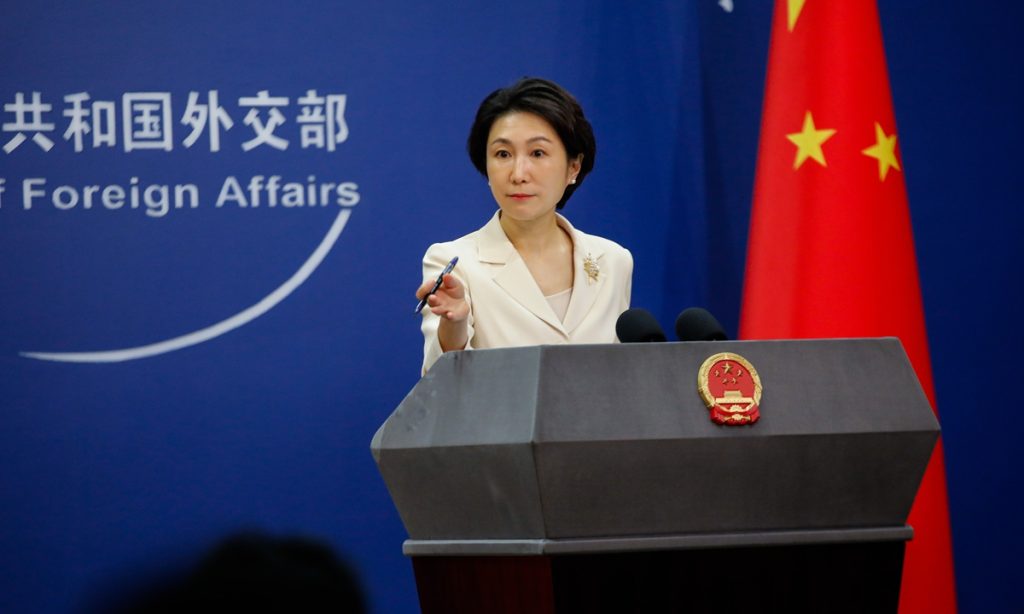
NATO is a regional defensive alliance with a clear mandate and geographical scope. It should not keep bringing up China on the occasions, Chinese Foreign Ministry spokesperson Mao Ning said when asked to comment on that during the recent NATO summit, participants raised security concerns toward China regarding technology, military activities, and China-Russia relations.
Mao said that China has always been a force for peace in the world and never threatened any country, nor will it pose a challenge to the security of the Euro-Atlantic region. NATO should abandon its Cold War mentality, correct its perception of China, and stop hyping up the so-called "China threat" narrative, she said.
The Arctic concerns the common interests of the international community. China's activities in the Arctic are aimed at promoting peace, stability and sustainable development in the region, and are fully consistent with international law, Chinese Foreign Ministry spokesperson Mao Ning said on Friday in response to a question about remarks made by NATO Secretary General Mark Rutte that NATO member states must coordinate their actions to prevent Russia and China from seeking greater influence in the Arctic.
The rights and freedoms of all countries to carry out lawful activities in the Arctic should be fully respected. China opposes the repeated hype over the "China threat" narrative, as well as attempts to stir up tensions and create confrontation in the Arctic, Mao said.
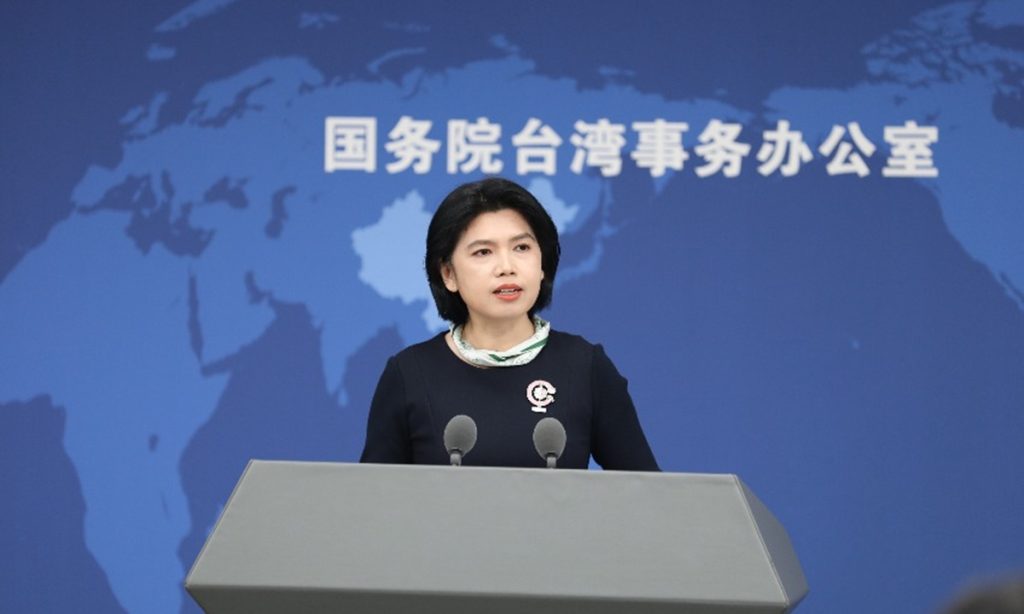
When asked to comment that some DPP politicians made inappropriate remarks about the Ethnic Unity and Progress Promotion Law, Zhu Fenglian, a spokesperson for the State Council Taiwan Affairs Office, said on Thursday that the enforcement of this law will help further advance cross-Straits economic, cultural exchanges and cooperation, deepen integrated development across all sectors on both sides of the Straits, enable compatriots on both sides to jointly inherit and carry forward Chinese culture, and boost Taiwan compatriots' sense of belonging, identity and pride in the Chinese nation.
The DPP authorities stubbornly cling to the separatist "Taiwan independence" stance. Driven by narrow political self-interests, they have repeatedly made irresponsible comments, spread slander and fabricated falsehoods to confuse the public over the law. Their underlying aim is to stoke cross-Straits confrontation, intimidate Taiwan residents. Their malicious schemes are doomed to failure, Zhu said.
Xi Jinping, general secretary of the Communist Party of China Central Committee, and other leaders presented awards to representatives of outstanding Party members, Party workers, and primary-level Party organizations from across the country at the Great Hall of the People in central Beijing on Wednesday morning.
"It's our 250th birthday, and no one seems to know what we're celebrating." In a recent article published by The Atlantic, Yoni Appelbaum, the magazine's deputy executive editor and a cultural historian, said bluntly that without a coherent national story, the US "will fail to be a coherent nation."
Some observers say the US' greatest crisis today is not economic weakness or military decline, but the fact that many people believe that the "American Dream" is no longer achievable. Once-powerful US soft power is now facing its most serious crisis of trust since the end of the Cold War.
In this story, we trace the long history of the US' repeated reconstruction of its national narrative, examine why the US national identity has become so deeply fractured, and explore whether this country can bridge its divides and tell its story anew. 'American story' falls silent
In The Atlantic article, Appelbaum mentioned a discussion he was invited to take part in, which took place in 2019. By then, the organizers had come to realize that US democracy was in steady decline and that the country needed a shared narrative. Yet they found themselves deeply divided over what that narrative should be. So they turned outward, inviting jurists, Ivy League professors, journalists, theologians and others in the hope of finding fresh ideas.
At the discussion, when the facilitator asked participants to list words or concepts that all Americans could endorse, an uncomfortable silence permeated the air. Appelbaum volunteered "patriotism." The word, he recalled, "had rolled a live grenade into the center of the room," with "voices and tempers rising." One woman said the word made her feel excluded. Another said it connoted violence and racism. Still another participant was offended that anyone could be offended by the word, Appelbaum recalled in the article.
"All of the people in the room had come here for the specific purpose of finding a common narrative," he wrote. "What hope did that project have if they could not even agree - each in their own way - on loving the country they were trying to save?"
This scene is a microcosm of the rupture in US cultural cohesion and narrative identity. The US has always been a vast and internally diverse country, yet it was once held together by a unifying national story: that providence had destined the continent to become a model of democratic governance.
Today, however, that myth no longer carries the same power of persuasion. In a poll released by the Pew Research Center in 2025, 62 percent of Americans said they were dissatisfied with the way democracy is working in the country. As partisan culture wars intensify, and as value divisions shaped by ideology, race, religion and other layers of identity deepen, the US is increasingly mired in a crisis of national identity.
Wang Hao, a professor at Fudan University's Center for American Studies, has been visiting the University of California San Diego since September 2024. He told the Global Times that anxiety is running high among the US people today, manifesting most visibly in political disillusionment and in a lack of confidence about future living costs, social mobility and public safety. The symbol of the "American Dream" is losing much of its real-world appeal, especially among young people, the middle and lower classes, and ethnic minorities, Wang said.
Wang believes the roots of the global decline in favorability toward the US lie in the widening gap between the "American story" and the country's domestic reality and external conduct. He explained that for years, the US portrayed itself as a nation defined by freedom, openness, abundant opportunity and institutional stability, and that narrative was closely tied to its economic prosperity, social mobility, technological innovation, world-class universities and global popular culture. But that picture has changed. Wealth inequality in the US has intensified, social mobility has fallen and political polarization has deepened. Issues such as contested elections, congressional deadlock, immigration clashes, identity-based conflict and gun violence have remained unresolved for a long time. What the outside world sees now is not only American power, but also the country's governance challenges.
Moreover, the "America First" approach has further weakened the image of the US as a provider of international public goods. Tariffs, sanctions, technology restrictions, pressure on allies and selective participation in international mechanisms have led more and more countries to question the reliability of the US' commitments, according to Wang. A template for external storytelling
The US is arguably one of the most skilled storytelling nations in human history, and this narrative tradition has been continually forged, revised and remade over the course of two and a half centuries.
The birth of the US was more like the result of a contract: in the 1770s, 13 colonies, vastly different from one another and united mainly in rebellion against Britain, formed an alliance to confront a common external enemy. Their inhabitants lacked shared historical, religious or ethnic bonds. They did not even possess a distinct language, nor did they have a history long enough to turn the land beneath their feet into a mythic homeland.
What filled this void was a civic creed articulated in the Declaration of Independence - equality, liberty and self-government.
Yet the American story of "all men are created equal," established in the early years of the country, long obscured a structural contradiction. Before World War II, the US was, in essence, a country dominated by white Anglo-Saxon Protestants. The military, the diplomatic systems, and the highest political offices were all controlled by this group.
Cultural critic Joseph Epstein put it bluntly in his book Snobbery: "If one was Catholic, or surely Irish Catholic, or Jewish, forget about it; if one was black, don't even think about it." That was the true background of the US narrative in that era.
The turning point came after World War II, when the US emerged as the only major power whose industrial system remained largely intact. It soon launched an ambitious campaign of global narrative projection. This time, the tools of storytelling were no longer political declarations, but Coca-Cola, Hollywood and Rock & Roll.
Joseph Nye, the Harvard professor who coined the concept of "soft power," recalled in an interview last April that during the Vietnam War, many street protesters opposed the US government's war policy, yet they sang Martin Luther King's "We Shall Overcome," not the communist "Internationale." During the Iraq War, he added, even as mass protests broke out against George W. Bush's war, many people still wanted to come to Harvard or watch Hollywood movies.
CBS News once described the reach of American cultural influence in the decades after the war in similar terms. Generations in Asia, Africa, Europe and Latin America, it wrote, grew up under the influence of the US superpower. America permeated their lives "through comics and Coke, through Hollywood and Neil Armstrong," and later through the internet, the iPhone and Facebook. Wang traced the evolution of America's national narrative over the past 250 years. In its founding years, the US told the story of a "republic of liberty," emphasizing a political culture that valued freedom, rights and self-government. In the 19th century, the narrative shifted toward that of a "frontier nation" and "Manifest Destiny," with westward expansion, frontier settlement, individual striving and territorial growth becoming key parts of the American national imagination. From the late 19th century to the early 20th century, as industrialization, urbanization, immigration and overseas expansion gathered pace, the US began telling the story of an "industrial power" and a "world power."
After World War II, the US cast itself as the leader of the "free world," integrating ideas such as democracy, market economy, human rights, open society and the "American dream" into the framework of international institutions. The Cold War gave Washington a clear external narrative template: the US represented the "free world," while the Soviet Union represented "totalitarianism." That contrast greatly strengthened the global appeal of America's story.
After the Cold War, the US advanced another narrative, that of the "sole superpower" and "a model of globalization." Liberal democracy, market economy, the internet revolution, financial openness and multiculturalism were packaged as the "standard path toward global modernization."
But after the 2008 financial crisis, and especially since 2016, America's national narrative has entered a stage of deep fracture. Liberal America emphasizes openness, diversity, inclusion and global leadership, while conservative populist America stresses borders, sovereignty, traditional values, anti-establishment politics and "America First." Today, the greatest dilemma facing the US is that it has become increasingly difficult for the country to use a single, unified, stable and optimistic story to persuade both its own society and the outside world, according to Wang.
A fractured anniversary
Appelbaum argued in the article that for a country built on an idea and held together by a shared understanding of history, the loss of a common story might well prove fatal. He also pointed to the marginalization of social studies in schools, the decline of college survey courses in American history and the striking fact that one of the signature spectacles of America's 250th anniversary is a UFC event on the White House South Lawn.
Judith Levine, an American liberal writer and journalist, criticized the anniversary celebrations in the Guardian. In her view, the White House-backed Freedom 250 is essentially a "commercial white Christian nationalist project," with a partner list packed with religious and conservative organizations. As the anniversary approaches, the White House website has highlighted a video series titled "The Story of America." The videos were produced by the conservative Hillsdale College and introduced by its president, Larry Arnn.
To Levine, this year's anniversary is not an objective or inclusive historical reflection.
In Wang's view, despite its many social contradictions, America's grassroots society, university system, civic organizations, public debate and innovation environment remain active. That social energy should not be underestimated. Yet it will be very difficult for the US to regain the global appeal it once enjoyed.
According to him, in the future, the US may try to tell its story in several ways. First, it may continue the old narrative of "leading the world through liberal democracy," but its credibility will depend on whether domestic governance problems can be repaired. Second, it may strengthen an "America First" national narrative, which has mobilizing power at home but relatively limited appeal abroad. Third, it may form a more restrained and pragmatic narrative, one that acknowledges America's own problems while relying on innovation, institutional repair and limited international cooperation to maintain influence.
The 250th anniversary of American independence is a highly symbolic moment. In the past, the US used commemorations of independence, military victory, institutional achievement and social progress to reinforce national identity. Today, however, the act of commemoration itself has become part of the country's political divide, Wang said.