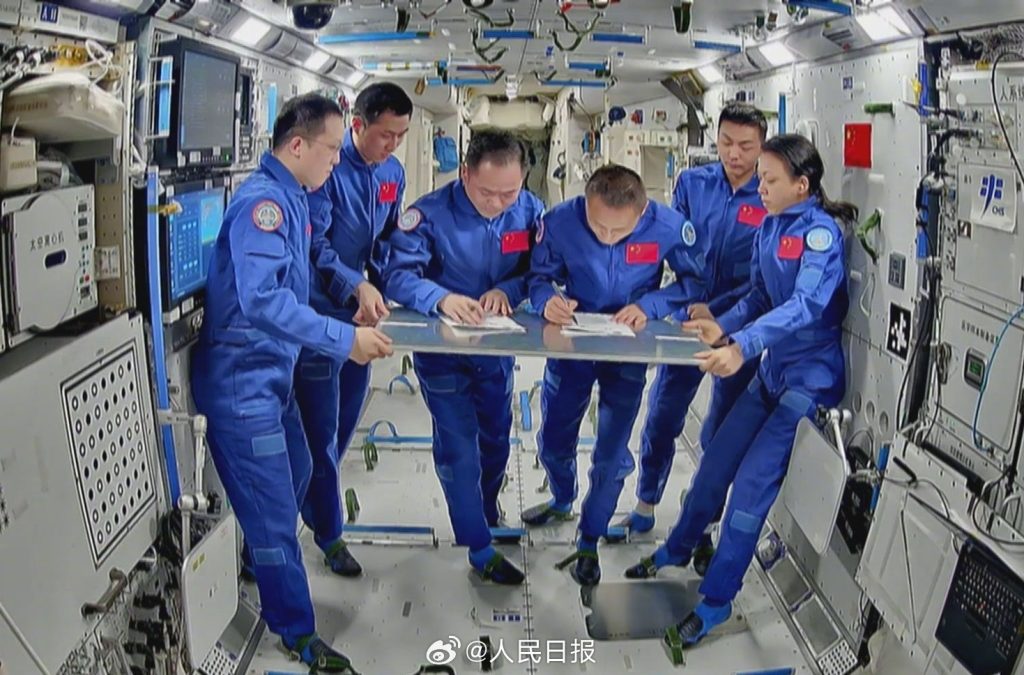
China's Shenzhou-21 and Shenzhou-23 astronaut crews held a handover ceremony on Thursday, during which the Shenzhou-21 crew transferred the keys of the country's space station to the latter.
The Shenzhou-21 crew has now completed all planned tasks. The three astronauts will take the Shenzhou-22 spacecraft and return to the Dongfeng landing site in north China's Inner Mongolia Autonomous Region in the coming few days, according to the China Manned Space Agency.
At present, final preparations are in full swing across all participating systems and the landing site in readiness to welcome the trio back.
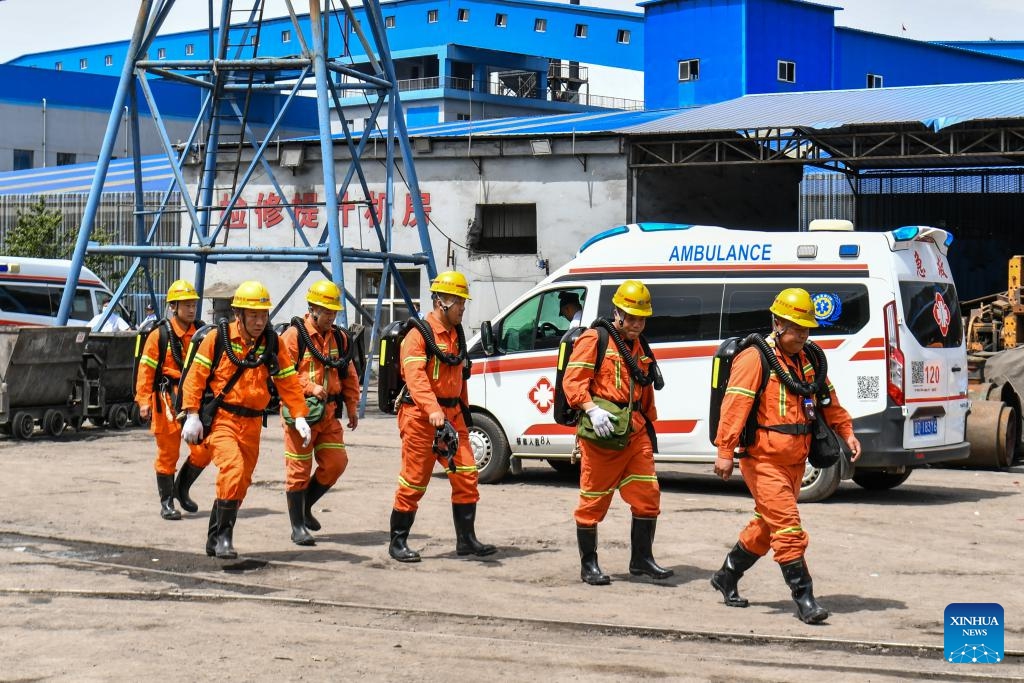
A total of 82 people have been confirmed dead while two others remained missing after a coal mine gas explosion in north China's Shanxi Province on Friday, according to a press conference on Saturday.
The gas explosion hit the Liushenyu coal mine in Qinyuan County at 7:29 p.m. on Friday. A total of 128 people are receiving treatment at hospitals.
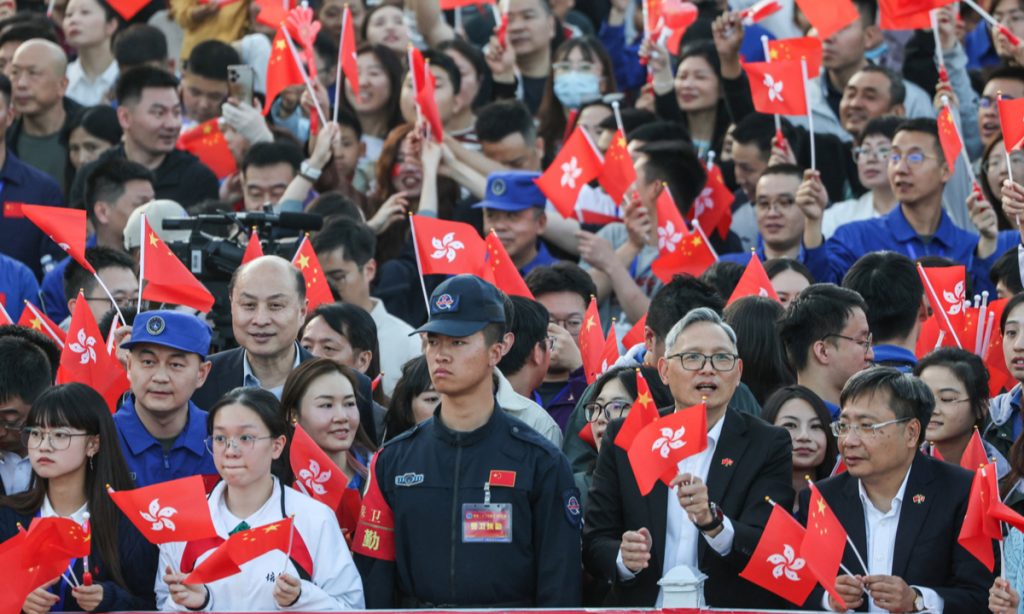
Fifty-six years ago on April 28, four days after the successful launch of Dongfanghong-1, China's first man-made satellite, the spacecraft flew across the night sky over the Hong Kong and Macao special administrative regions (SARs). Crowds of Hong Kong residents flocked to the banks of Victoria Harbour, Victoria Peak, and numerous highlands across the New Territories with radios in hand. They eagerly watched the satellite streak across the firmament and listened to the melody of The East Is Red transmitted from space, brimming with pride over this satellite independently developed by Chinese people. This memorable scene was vividly recorded by Hong Kong's Ta Kung Pao in its April 29 issue that year. On Sunday, the Shenzhou-23 crewed spaceship, atop a Long March-2F carrier rocket, blasted off from the Jiuquan Satellite Launch Center in northwest China. Hong Kong compatriots who traveled long distances to witness the moment were filled with excitement as they watched the rocket's orange-red plume pierce the night sky. Meanwhile, countless local residents tuned in to the spectacular launch via televisions and mobile devices.
This scene bore a striking resemblance to that historic moment, except that this time, Hong Kong compatriots found themselves closer to the motherland, closer to space, and therefore closer to their dreams. Aboard the spaceship is Li Jiaying, or Lai Ka-ying in Cantonese, the first astronaut from China's HKSAR, as well as the nation's first female payload specialist. The vision of the HKSAR integrating into the overall national development and sharing the motherland's developmental achievements has gained profound and tangible significance the moment Li fulfilled her space dream.
'A full affirmation from the nation of the HKSAR's technological innovation development'
As a member of the HKSAR delegation, Undersecretary for Security Michael Cheuk Hau-yip witnessed the rocket liftoff at the Jiuquan Satellite Launch Center alongside local scholars, scientists and young people. He was deeply moved by the spectacular scene.
"On one hand, I truly felt the development and technological strength of our nation in aerospace. On the other hand, I feel proud of Li, who was once a police officer and is now, as a payload specialist from HKSAR, participating in a space mission for the first time and travelling aboard the Shenzhou-23 crewed spaceship to work on the space station," Cheuk told the Global Times. He believes this demonstrates the nation's recognition and trust in the HKSAR's level of science and technology, scientific research, and talent. "Thanks to the nation's generous support, we have been given this opportunity," Cheuk said.
Following Li's journey into space, the HKSAR has become one of the world's few regions that have an astronaut. Sun Dong, secretary for innovation, technology and industry of the HKSAR government, who also watched the launch on site, expressed great excitement. "This is an invaluable opportunity granted by the motherland, and we sincerely appreciate the profound care and strong support the country has extended to the HKSAR," Sun said.
In an interview with the Global Times, Sun said the HKSAR government has spared no effort to integrate into and serve the country's overall development strategy over the years. Local research teams have long participated in multiple national aerospace projects and yielded fruitful outcomes. "I believe this is also a full affirmation from the nation of the HKSAR's technological innovation development over the past few years," Sun added.
Aerospace has long served as a vital bond connecting the mainland and the HKSAR. Public records show that Hong Kong professionals have taken part in major national space programs over the past decade, including the Chang'e lunar missions and the Tianwen Mars missions. China Aerospace Science and Technology Corporation (CASC) has maintained frequent cooperation with research teams from The Hong Kong Polytechnic University (PolyU), enabling HKSAR expertise to fuel the country's journey into deep space.
The Global Times has learned that in previous lunar and Mars missions, a research team led by Professor Yung Kai-leung from the PolyU collaborated with the China Academy of Space Technology (CAST) under CASC. The joint team developed lightweight compact camera pan-tilt assemblies for the camera-pointing systems aboard the landers of Chang'e-3 and Chang'e-4. They also created the surface sampling manipulator sampler, close-range camera and primary surface sample encapsulation device deployed on Chang'e-5, as well as the Mars landing monitoring camera carried by Tianwen-1.
Another team headed by Professor Bo Wu from the PolyU assisted CAST in analyzing the topography and landforms of landing zones for Chang'e-3, Chang'e-4 and Tianwen-1. Their research provided crucial support for landing site selection and safety assessment. For the Tianwen-1 mission, the team specially developed an AI-based landform feature recognition method. In less than one and a half months, the technology completed 3D terrain modeling of the targeted landing area, identified and analyzed over 2 million rocks, more than 600,000 impact craters and numerous other landform features, offering vital reference for the final determination of the landing site.
Li's journey into space as China's first female payload specialist undoubtedly marks another historic milestone for the HKSAR.
"I believe Li's safe return from this space mission will deliver a strong boost to HKSAR's development. We will continue to forge ahead and contribute our part to national advancement during the 15th Five-Year Plan period (2026-30)," said Cheuk.
'Leverage the HKSAR's strengths to meet the country's development needs'
Looking back on history, Hong Kong compatriots have long lent firm support to the advancement of China's aerospace industry. Before and after the founding of the People's Republic of China, numerous distinguished overseas scholars engaged in cutting-edge research at foreign institutions chose resolutely to return home, braving untold hardships without hesitation. Public reports show that amid the special historical backdrop, Hong Kong served as the first stop for many of these returning scientists.
A great number of researchers crossed oceans and overcame numerous hardships before safely reaching the Chinese mainland via Hong Kong. Renowned trailblazers who made monumental contributions to China's aerospace development, including Qian Xuesen, Wang Xiji and Yang Jiachi —founding fathers of China's "Two Bombs, One Satellite" — were outstanding representatives among them.
Endowed with its unique geographical advantage of linking the Chinese motherland with the rest of the world, the HKSAR has long engaged in fruitful commercial cooperation with Chinese aerospace institutions, particularly in the field of communication satellites. APT Satellite Company Limited (APT Satellite) is a major user of Dongfanghong-series satellites developed by the CAST.
According to previously released reports, the AsiaSat 9 communications satellite, developed by CAST on the Dongfanghong-4 satellite platform, was successfully launched in October 2015. It marked China's first export of a complete satellite to established international operators, breaking the long-term monopoly held by European and American aerospace firms in the high-end market.
CAST has since designed and delivered other satellites such as AsiaSat 6C and AsiaSat 6D. Among them, AsiaSat 6D is China's inaugural satellite carrying a Ku-band high-throughput broadband satellite communication system, boasting dozens of times greater capacity than conventional communication satellites. Satellites developed by CASC play a pivotal role in the in-orbit fleet operated by APT Satellite, delivering cost-effective high-speed broadband communication services covering the HKSAR and extensive regions across Southeast Asia.
In recent years, the HKSAR government has actively encouraged, guided and supported local research bodies to take part in major national aerospace projects.
"To motivate more local research teams to join national scientific undertakings, the HKSAR government has previously launched dedicated calls for aerospace research proposals and funded multiple projects, some of which have already been incorporated into national scientific and technological missions," Sun said.
He added that under the InnoHK, the government has set up specialized research centers undertaking diverse aerospace tasks, including the development of lunar surface operation robots. These efforts provide solid technological backing for the country's future lunar exploration programs, Sun said.
"I am confident that the HKSAR government will keep scaling up investment to encourage local research teams to further participate in national aerospace initiatives, and leverage the HKSAR's strengths to meet the country's development needs," Sun said.
'This will bring great excitement to everyone'
Li has made history as the first astronaut hailing from the HKSAR, blasting off aboard the Shenzhou-23 crewed spaceship bound for the country's space station. Her journey has sparked widespread discussions across the city. The Global Times reporters witnessed numerous Hong Kong media outlets, including the Hong Kong Commercial Daily and Ming Pao, covering the landmark launch in diverse forms at the Jiuquan Satellite Launch Center.
According to the Hong Kong Commercial Daily, shopping malls across Hong Kong aired live footage of the liftoff, allowing locals to jointly behold this historic milestone. Many Hong Kong residents interviewed expressed their excitement and agreed that the emergence of the HKSAR's first astronaut carries great significance, hoping it marks the beginning of a journey that will inspire more children to pursue their space dreams.
"As a Hong Kong resident, I feel extremely privileged and thrilled to witness our fellow Hong Kong compatriots taking part in such a monumental aerospace mission right here," Anderson Ho Cheung SHUM, vice president of City University of Hong Kong and president of the Hong Kong Young Academy of Sciences, said in an interview with the Global Times. Watching the rocket soar skyward, he said that when he saw the rocket lift off, he realized that children in HKSAR can now not only watch rocket launches on television but also see someone from their city sitting atop the rocket. "I think this will bring great excitement to everyone, and it is also an affirmation of HKSAR," he added.
Previously, numerous chief designers of China's space program, including Qi Faren, the Chinese Academy of Engineering (CAE) academician, visited various universities, secondary schools, and primary schools in the HKSAR to engage with local youth. The insightful lectures delivered by these aerospace experts and academicians have inspired Hong Kong's young people to cultivate scientific dreams, further strengthened their sense of national identity, and enhanced their affection for the motherland, allowing the spirit of China's space endeavor to take root in the HKSAR.
Now, Li's space mission will undoubtedly further nurture the public's fascination with aerospace, especially among the younger generation in HKSAR.
"Hong Kong youth can feel they garner nationwide attention, which encourages them to strive to make the world a better place," Shum said. He said that Li's experience proves HKSAR residents, particularly young residents, can break through perceived limitations. "We need not be overly constrained by local boundaries when pursuing goals. We can set our sights higher, and with collective efforts and strong support from the motherland, those lofty dreams are well within reach," he added.
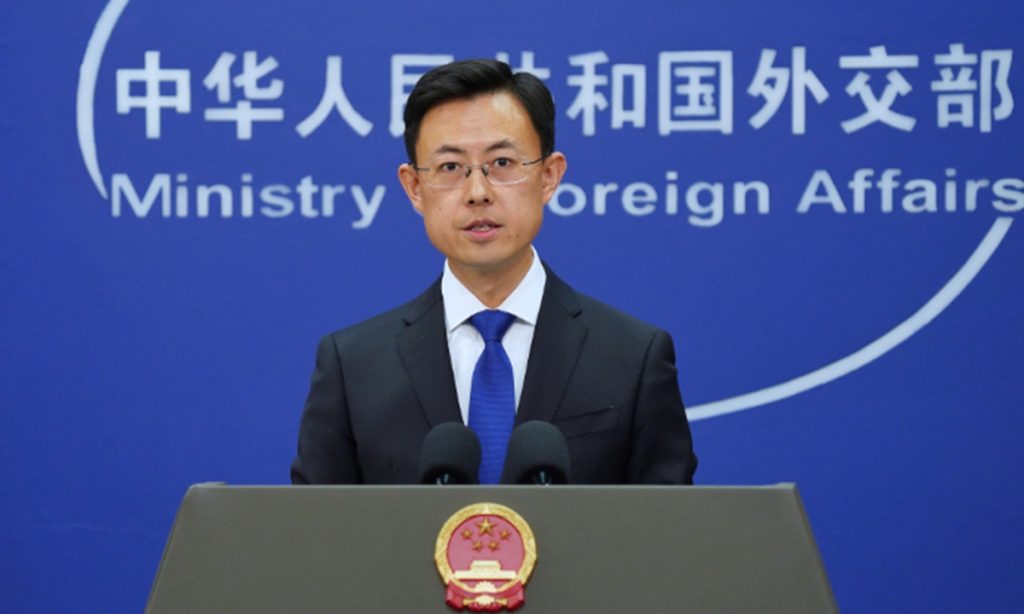
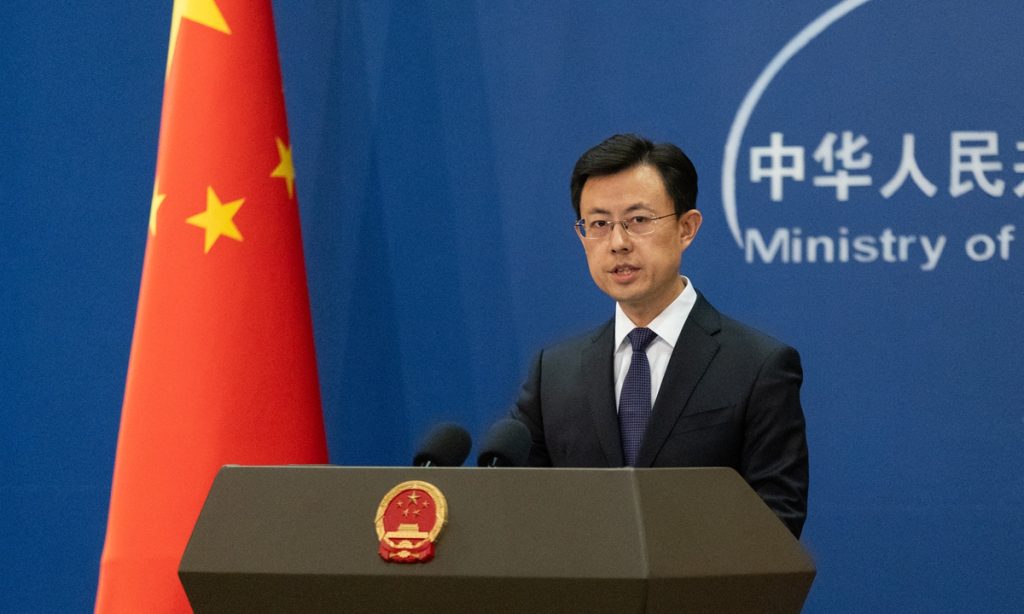
Chinese Foreign Minister Wang Yi's visit will be the first visit to Canada by a Chinese foreign minister at the invitation of the Canadian side in 10 years, and is of great significance for consolidating the positive momentum in China-Canada relations, Chinese Foreign Ministry spokesperson Guo Jiakun said on Friday in response to a media inquiry on the background, main activities and China's expectations regarding Foreign Minister Wang Yi's visit to Canada.
Chinese Foreign Ministry announced on Friday that at the invitation of Canada's Minister of Foreign Affairs Anita Anand, Chinese Foreign Minister Wang Yi will visit Canada from May 28 to 30.
Guo said that at present, China-Canada relations have achieved a turnaround and continue to develop in a positive direction. The two sides are working to build a new type of strategic partnership.
During the visit, Foreign Minister Wang will have in-depth exchanges with the Canadian side on advancing the implementation of the important consensus reached by the leaders of the two countries and the outcomes of Prime Minister Carney's visit to China in January, promoting the building of a truly productive new type of China-Canada strategic partnership, as well as international and regional issues of common concern, Guo said.
China looks forward to using this visit to enhance political mutual trust with Canada, expand mutually beneficial cooperation, properly manage differences, and continue to move China-Canada relations forward on a healthy, stable and sustainable track, so as to better benefit the two peoples, said the spokesperson.
In light of last week's visit to China by US President Donald Trump and the upcoming visit by Russian President Vladimir Putin, Chinese Foreign Ministry spokesperson Guo Jiakun, when asked about the considerations behind the visits and what message China hopes to convey to the world through this series of diplomatic activities, said on Tuesday that China welcomes President Putin's state visit to China.
China and Russia are comprehensive strategic partners of coordination for a new era. During President Putin's visit, the two heads of state will exchange views on bilateral cooperation in various fields and on international and regional issues of mutual interest, Guo said.
Guo added that China has already released information regarding the visit by the US president.
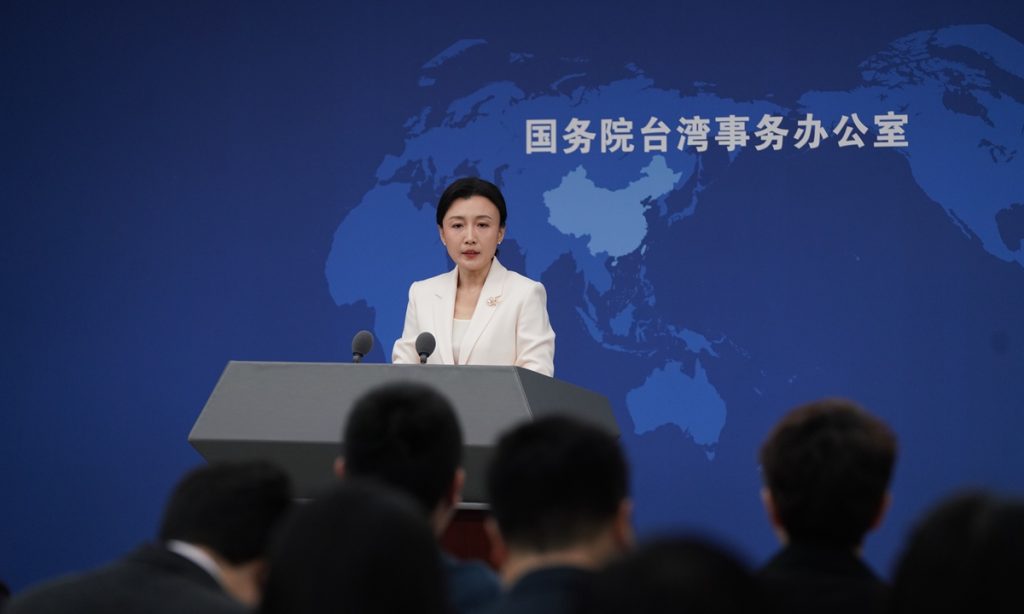
Regarding cross-Straits ties related contents in Taiwan regional leader Lai Ching-te's May 20 speech and media briefing, Chen Binhua, a spokesperson for the State Council Taiwan Affairs Office, said on Wednesday that Lai’s speech is rife with lies and deception, hostility and confrontation.
Stubbornly clinging to the erroneous stance of “Taiwan independence”, he peddles fallacies such as so called “sovereign independence” and “mutual non subordination”, hypes up the “mainland threat”, escalates cross Straits confrontation, and deliberately pursues “Taiwan independence through military means” and “relying on external forces for separatist gains,” undermining peace and stability across the Taiwan Straits.
This once again confirms that he is nothing short of a saboteur of cross Straits peace and a creator of crises in the Taiwan Straits, Chen said.
While continuing to advocate “Taiwan independence” separatism and manipulate anti mainland sentiments, he hypocritically claims to promote cross Straits dialogue and exchanges, attempting to mislead public in Taiwan and deceive international public opinion. These habitual tricks have been seen through by a growing number of Taiwan people, Chen said.
“His deceptive and provocative acts are bound to meet firm opposition from compatriots on both sides of the Taiwan Straits and the international community, and are doomed to failure,” Chen added.
Taiwan is China’s Taiwan and has never been a country — not in the past, and will never be one in the future. The Taiwan question is a leftover issue from China’s civil war in the 1940s. No matter how elections are held or who is elected in the Taiwan region after 1949, none can change Taiwan’s status as an inalienable part of China, sever the historical and legal bond that both sides of the Taiwan Straits belong to one China, or break the iron clad rule that the future of Taiwan can only be decided by all Chinese people, including Taiwan compatriots, Chen added.
Safeguarding national sovereignty and territorial integrity is the unwavering will of all the sons and daughters of the Chinese nation. “We will never allow any individual or force to pursue separatist schemes for ‘Taiwan independence’ under any pretext,” Chen said.
The spokesperson added that "Taiwan independence" and cross-Straits peace are irreconcilable as fire and water, and is the chief culprit undermining cross Straits peace and stability.
“We will uphold the one China principle and the 1992 Consensus, extensively unite Taiwan compatriots, resolutely combat ‘Taiwan independence’ separatist activities, and safeguard peace and stability in the Taiwan Straits. The irresistible tide of the motherland’s eventual and inevitable reunification surges forward relentlessly,” Chen said.
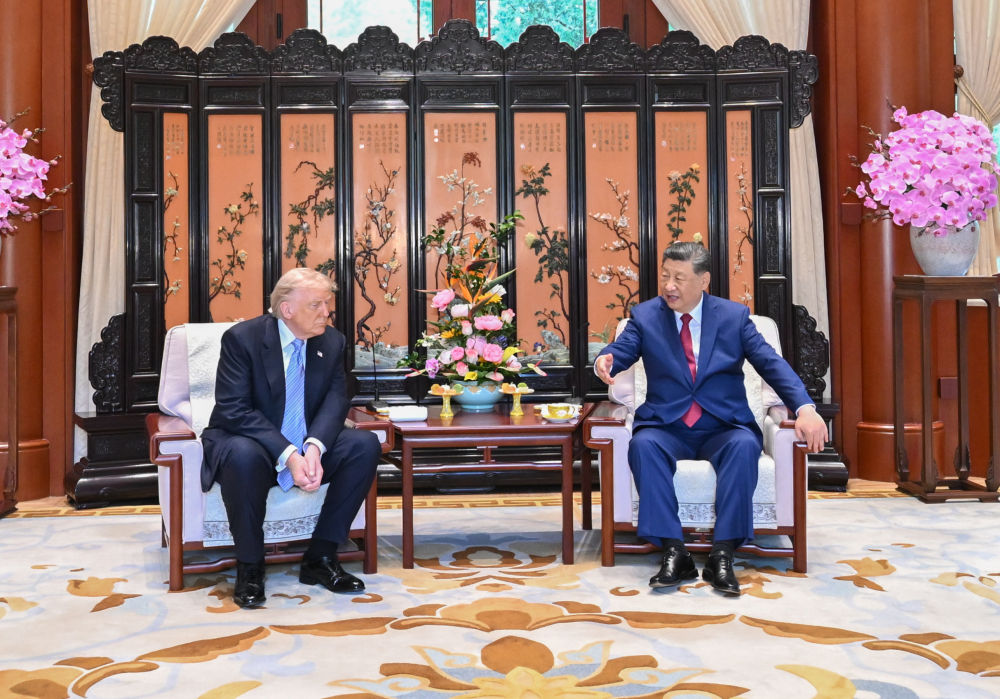
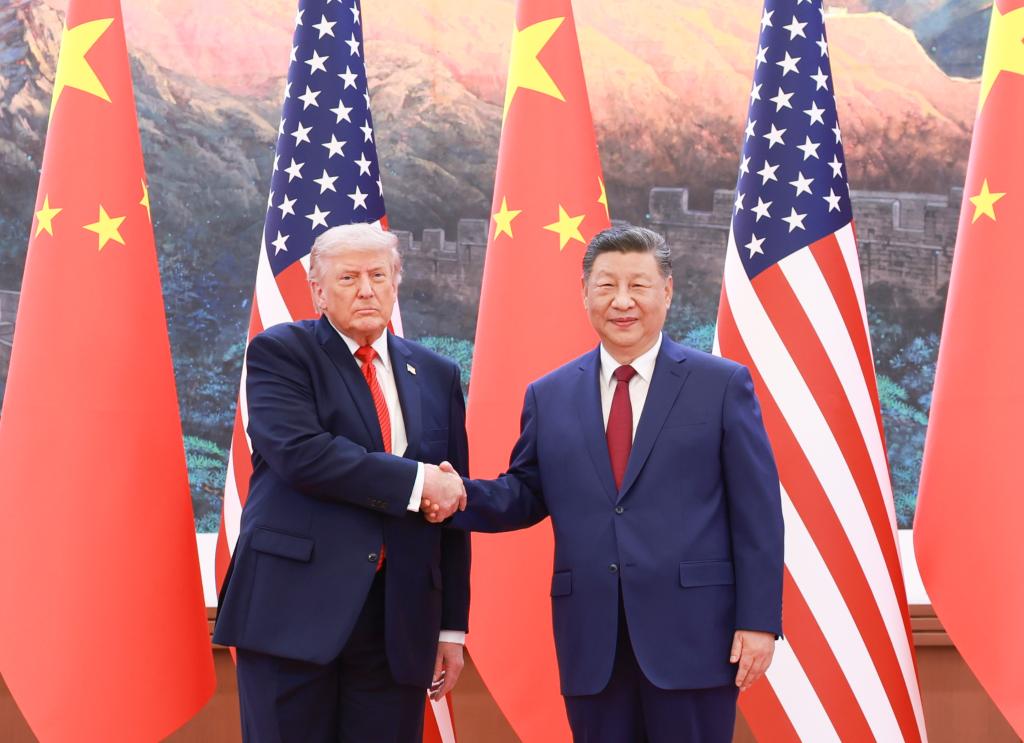
Chinese President Xi Jinping and US President Donald Trump had a private meeting on Friday in the Zhongnanhai leadership compound in central Beijing.
The meeting came before Trump concluded his state visit to China and a day after the two leaders held formal talks.
Upon Trump's arrival at Zhongnanhai, Xi warmly welcomed him. The two heads of state walked and talked, occasionally stopping to admire the trees and flowers in the garden.
Noting that Trump's visit was a historic and landmark one, Xi said the two sides had set the new vision of building a constructive China-US relationship of strategic stability.
"We had reached important common understandings on maintaining stable economic and trade ties, expanding practical cooperation in various fields, and properly addressing each other's concerns," Xi said.
The two sides also agreed to strengthen communication and coordination on international and regional issues, according to Xi.
The visit is conducive to enhancing mutual understanding, deepening mutual trust and improving the well-being of the two peoples, Xi said.
This once again demonstrates that it is a shared aspiration of both peoples and the expectation of people across the world for China and the United States to find a right path to get along with each other and to achieve peaceful coexistence and win-win cooperation on the basis of mutual respect, Xi added.
"While President Trump hopes to make America great again, I am dedicated to leading the Chinese people toward national rejuvenation," Xi said, stressing that the two countries can advance their respective development and revitalization by strengthening cooperation.
China and the United States should implement the important common understandings that have been reached, cherish the hard-won positive momentum, keep to the right direction, steer clear of disruptions, and promote the steady development of bilateral relations, Xi said.
Trump said that he is very grateful to Xi for inviting him to visit Zhongnanhai, adding that his China visit was very successful, captured the world's attention and was unforgettable.
Trump said that the two sides had reached a series of important common understandings, signed a number of agreements, and resolved many problems, which were very beneficial to both countries and the world.
Noting that Xi is his old friend, Trump said that he has great respect for Xi and that they have established a good relationship. The US-China relationship is very important and will definitely get better, he said.
Trump said that he is willing to continue to maintain sincere and in-depth communication with Xi, and warmly looks forward to hosting Xi in Washington, D.C.
The two sides also exchanged views on some regional hotspot issues.
When asked to comment on Paraguayan President Santiago Pena's visit to the Taiwan region, Zhang Han, a spokesperson for the Taiwan Affairs Office of the State Council, said on Wednesday that one-China principle is a basic norm governing international relations and a prevailing consensus of the international community.
A total of 183 countries have established diplomatic relations with China on the basis of the one-China principle, Zhang said, urging relevant countries to make the correct choice in line with the historical trend.
The DPP authorities' pursuit of "Taiwan independence" and provocations run counter to the trend of history and their complete failure is only a matter of time, Zhang said.
Chinese President Xi Jinping held talks with visiting US President Donald Trump at the Great Hall of the People in Beijing on Thursday.
Transformation not seen in a century is accelerating across the globe, and the international situation is fluid and turbulent, said Xi.
"Can China and the United States overcome the Thucydides Trap and create a new paradigm of major-country relations? Can we meet global challenges together and provide greater stability for the world? Can we build a bright future together for our bilateral relations in the interest of the well-being of the two peoples and the future of humanity? These are the questions vital to history, to the world and to the people," said Xi.
They are the questions of the times that the leaders of major countries need to answer together, he added.
"I look forward to working together with you to set the course and steer the giant ship of China-US relations, so as to make 2026 a historic, landmark year that opens up a new chapter in China-US relations," he said.
"I have agreed with President Trump on a new vision of building a constructive China-US relationship of strategic stability," Xi said.
The new vision will provide strategic guidance for bilateral relations over the next three years and beyond, and should be welcomed by the people of both countries as well as the international community, he said.
The "constructive strategic stability" should be a positive stability with cooperation as the mainstay, a sound stability with moderate competition, a constant stability with manageable differences, and an enduring stability with promises of peace, Xi said.
The building of a constructive China-US relationship of strategic stability should not be a mere slogan, but concrete action taken by both sides toward the same goal, he added.
China-US economic ties are mutually beneficial and win-win in nature, said Xi. "Where disagreements and frictions exist, equal-footed consultation is the only right choice," he said.
Xi revealed that the economic and trade teams of the two countries produced "generally balanced and positive outcomes" in the latest round of bilateral trade talks on Wednesday.
"This is good news for the people of the two countries and the world," he said, calling on the two sides to sustain the good momentum that they have worked hard to create.
Noting that China will only open its door wider, Xi said American companies are deeply involved in China's reform and opening up, and the US side is welcome to enhance mutually beneficial cooperation.
"The two sides should implement the important consensus we have reached, and make better use of communication channels in the political, diplomatic and military-to-military fields," Xi said.
The two countries should also expand exchanges and cooperation in areas such as the economy and trade, health, agriculture, tourism, people-to-people ties and law enforcement, he added.
Regarding the Taiwan question, Xi stressed that it is the most important issue in China-US relations.
If it is handled properly, the bilateral relationship will enjoy overall stability. Otherwise, the two countries will have clashes and even conflicts, putting the entire relationship in great jeopardy, Xi said, urging the US side to exercise extra caution in handling the Taiwan question.
Safeguarding cross-Strait peace and stability is the biggest common denominator between China and the United States, Xi said, emphasizing that "Taiwan independence" and cross-Strait peace are as irreconcilable as fire and water.
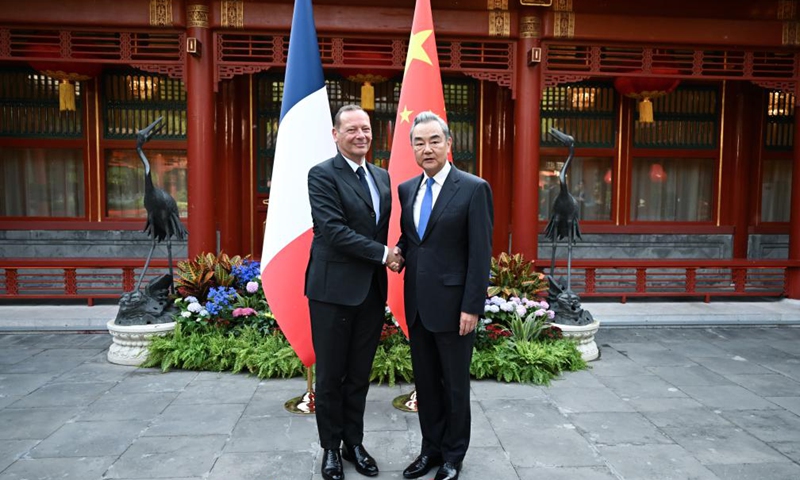
China and France, as permanent members of the UN Security Council and major independent countries, shoulder important responsibilities for upholding international peace, stability and development, China's top diplomat Wang Yi said on Friday.
Wang, a member of the Political Bureau of the Communist Party of China Central Committee and director of the Office of the Central Commission for Foreign Affairs, made the remarks when holding talks with Emmanuel Bonne, diplomatic adviser to the French president, in Beijing.
Noting that the strategic guidance of the two heads of state reflects the high level and special nature of bilateral relations, Wang said China stands ready to work with France to achieve greater progress in China-France cooperation and deliver more benefits to the two peoples.
China values the recent passage by the French Parliament of a bill to ease the return of colonial-era looted artifacts, and is ready to strengthen cooperation with France in this regard to enhance people-to-people and cultural exchanges, and mutual learning between civilizations, Wang said.
Against the backdrop of growing turmoil in today's world, it is necessary for both countries to strengthen strategic communication and coordination, jointly address global challenges, and advance the China-France comprehensive strategic partnership to achieve sound and steady development free from various types of interference, Wang said.
He stressed that the foundation of China-France relations lies in solid political mutual trust, and the key is mutual respect for each other's core interests. He expressed the hope that France will abide by the one-China principle in practice, refrain from any form of official interaction with Taiwan authorities, and not send any wrong signals to the "Taiwan independence" separatist forces.
Indicating that China and Europe are always partners, not rivals, Wang said it is hoped that France will play a positive and constructive role in encouraging the EU to adopt a correct and rational perception of China and pursue a practical and open economic and trade policy toward China.
Bonne said France highly values the long-standing friendship and mutual trust between the two heads of state, adding that France fully understands the importance and sensitivity of the Taiwan question, adheres to the one-China policy, and will not change its position on this issue.
France looks forward to working closely with China to find constructive solutions to global crises, he said, adding that given the current international situation, it is crucial to maintain dialogue and cooperation between Europe and China.
Noting that the EU needs China and hopes to be mutually reliable partners with China, Bonne added that France is ready to play an active role in promoting EU-China dialogue and cooperation.
The two sides also had in-depth exchanges of views on issues of common concern, including global economic governance and the situation in the Middle East.