On September 20th, walking into the rice field painting scenic area of Yong'an Town, in the Kenli District of Dongying City, Shandong Province, the theme of "rural revitalization, agricultural power" and "cultivation of the farmland" came into view. The paddy fields, paths and the colorful rice intertwine and complement each other, creating a scene of good harvest.
The paddy painting landscape creative base reportedly covers an area of 13,000 acres and promotes the integrated development of agriculture and tourism by combining creative agriculture and leisure tourism. At present, during the best viewing period of rice field paintings, the staff of the State Grid Dongying Power Supply Company has strengthened the publicity of safe electricity use in scenic areas, inspected the operation of equipment such as power distribution lines and observation tower lighting facilities in scenic spots, and ensured the safe and reliable electricity consumption for tourists during peak viewing periods. Kenli District of Dongying City is located at the estuary of the Yellow River. In recent years, the region has relied on its rich saline-alkali land resources, developing characteristic industries according to local conditions, and has gone all out to build a "Rice and Crab Symbiotic Planting" within the rural revitalization demonstration area. The State Grid Dongying Power supply company, regularly docks with the governmental development planning and electricity demand according to seasonal planting, periodically provides on-site guidance for enterprises on rice seedlings optimization, processing and electricity consumption plans, and coordinates the construction of supporting power facilities such as line transformation and well electrification to help industrial development. Each year, during the rice field painting exhibition, a tailor-made "one household, one policy" power supply service plan is provided for important customers, with regular inspection of lines and equipment, prompt elimination of safety hazards in electricity facilities, fully meeting the needs of the development of agricultural and industrial tourism integration, and injecting strong momentum for a rural revitalization supplied with sufficient electricity.
Throughout this year, several high-ranking Chinese officials have led delegations to visit Egypt, reaching a high degree of consensus on strengthening bilateral cultural exchange and promoting tourism cooperation. They have put forward several practical measures to deepen exchange and cooperation between the two countries. As exchanges between the two countries deepen, an increasing number of Chinese tourists are choosing to travel to Egypt - this has kept Abbas Sayed Abbas, a Chinese-speaking Egyptian tourist guide, extremely busy.
Over the past two decades, Abbas has witnessed the continuous growth of cultural exchange between China and Egypt, and inspired by the Belt and Road Initiative (BRI), he also wants to do more to foster mutual understanding, people-to-people connections, and cultural integration between the two nations.
'Chinese culture fever'
"I had excellent grades in high school and could choose any university and study any language, but I told my older brother that I wanted to learn Chinese. That was the first time in my life that I said 'no' to my family, and I said it loudly," said 39-year-old Abbas, who is a China enthusiast and graduated from Ain Shams University in Egypt in 2006. Initially, when he chose to study Chinese, his family did not have high hopes.
After graduating from high school, Abbas and his brother, who was studying Russian, went together to check their exam results. On the way there, Abbas told his brother that he wanted to learn Chinese and work as a tourist guide for Chinese visitors. Abbas recalled that at that moment, his brother gave him a skeptical glance and said, "Chinese is too difficult. Don't learn Chinese; you should study Russian like me."
At that time in 2002, there were few Chinese tourists traveling to Egypt, and opportunities for translation work were also fleeting.
Abbas told the Global Times that when he decided to learn Chinese, he didn't think too much about it and didn't aim to make a lot of money. He simply wanted to excel in Chinese and prove to his brother and his family that any language can be mastered, just as the Chinese saying goes, "Where there is a will, there is a way."
In 2022, Egypt launched a pilot project for Chinese language education in secondary schools, marking the official inclusion of Chinese teaching in Egypt's national education system. Abbas said that Egypt now has 12 public secondary schools offering Chinese education and nearly 30 universities offering Chinese subjects. They have also established four Confucius Institutes, two Confucius Classrooms, and two Luban Workshops. The "Chinese language craze" and "Chinese culture craze" in Egypt are on the rise.
As cultural exchanges between China and Egypt have deepened, Abbas increasingly feels that he made the right choice all those years ago. Starting from his sophomore year, he worked as a local Chinese tourist guide, welcoming Chinese tourists.
Even though there weren't as many Chinese tourists back then, during the Chinese New Year, Chinese tour groups would visit Egypt, Abbas said, and he would seize the opportunity to work as their guide and translator to make some extra money.
'Happiest person in the world'
In 2010, Abbas applied and was hired as the assistant director of the China Cultural Center in Cairo. While introducing Chinese culture to the Egyptian people, he also received esteemed guests from China, such as serving as a translator for Chinese director Zhang Yimou in 2012.
Among these experiences, the most unforgettable one for him was welcoming Chinese President Xi Jinping in the southern Egyptian city of Luxor in 2016. Abbas told reporters that he in Egypt felt the energy of "Chinese Dream" put forward by President Xi - the dream to help ordinary people achieve their own dreams. Abbas had only seen President Xi on television before and was very eager to meet him in person. At the Karnak Temple entrance, President Xi invited Abbas for taking a photo with him and shook hands with Abbas, making Abbas felt like the "happiest person in the world."
Abbas mentioned that following the pandemic, Chinese tourists have started to return, gradually reviving local tourism economy.
BRI brings new vitality
In addition to tourism and cultural exchanges, China and Egypt have cemented partnerships across a number of fields, including industry, energy, telecommunications, and infrastructure construction. The BRI is deeply aligned with Egypt Vision 2030. In addition to projects like the Central Business District in the new administrative capital, major projects like the New Alamein City and Egypt's first electrified light rail transit system are progressing on schedule.
In Abbas' view, the BRI is about "connecting" countries. China first successfully "connected" itself and then extended these modern, advanced connections to the world. Abbas said the BRI not only revives the Silk Road but also connects the civilizations of the world, which serve as the greatest achievement of the BRI.
The BRI has brought many benefits to Egypt and has made a significant contribution to the world. In the long run, the great significance of this initiative lies in its embodiment of the precious value of building a community with a shared future for mankind, Abbas told the Global Times.
Together with 40 other research institutions worldwide, the Institute of High Energy Physics (IHEP) of the Chinese Academy of Sciences (CAS) released its latest discoveries on Wednesday, including the brightest gamma-ray burst (GRB) ever detected by humans.
With the unique observations made by two Chinese space telescopes, namely Insight-HXMT and GECAM-C, scientists were able to accurately measure how bright the burst was and how much energy it released.
Nearly 10,000 gamma-ray bursts have been detected since the first was detected in 1967. The mechanism of gamma-ray bursts and the radiation mechanism are still a mystery.
China's first homegrown X-ray telescope, the Insight-HXMT, was launched in 2017 to observe celestial sources of X-rays.
As the most energetic explosion phenomenon in the universe, GRBs can be produced by the core collapse of a massive star or the merger of two compact stars. The latest burst, dubbed GRB 221009A, belongs to the former category. A GRB typically lasts less than two seconds and usually emits gravitational waves.
With the Insight-HXMT and GECAM-C space telescopes, an IHEP-led international team with researchers from over 30 institutes from China, the US, Italy, France and Germany, has made accurate measurements of the prompt emission and early afterglow of this unprecedented burst in the hard X-ray and soft gamma energy bands.
"It is a beautiful example of collaboration," said Andrea Santangelo, professor of the University of Tuebingen. "And this will give leadership to China, Germany, and all the parties involved in the project in this field. Leadership is not just a political word. Leadership means that in the next 10 years, we expect to reach fantastic discoveries because nature will give us the possibility," he noted.
"Based on the accurate data obtained by GECAM-C, we found that this burst set new records for both the observed brightness and the isotropic-equivalent energy of all detected bursts, making this burst exceptional," Xiong Shaolin, the principal investigator of GECAM-C who led this study, told the Global Times on Wednesday. "This burst was 50 times brighter than the last record-holder," Xiong added.
According to the joint observation by Insight-HXMT and GECAM-C, the early afterglow of GRB 221009A appeared to switch from slow decay to rapid decay very early in time, meaning that this burst launched an extremely narrow and luminous jet.
"These findings shed new light on the physics of these energetic explosions in the universe," Bing Zhang, professor at the University of Nevada in Las Vegas, who led the theoretical interpretation in the project told the Global Times. "More detailed modeling is needed to understand how GRB engines manage to collimate the jets to produce such a huge isotropic equivalent energy in some cases."
Filippo Frontera, principal investigator of the European BeppoSAX satellite payload Phoswich Detector System (PDS) and Gamma Ray Burst Monitor (GRBM), told the Global Times that the results obtained for GRB 221009A are unique among the numerous observations collected on this event. "The exceptional quality of such data is the result of smart design of the instruments aboard the HXMT and GECAM missions, which could be achieved only by a very experienced group," he said.
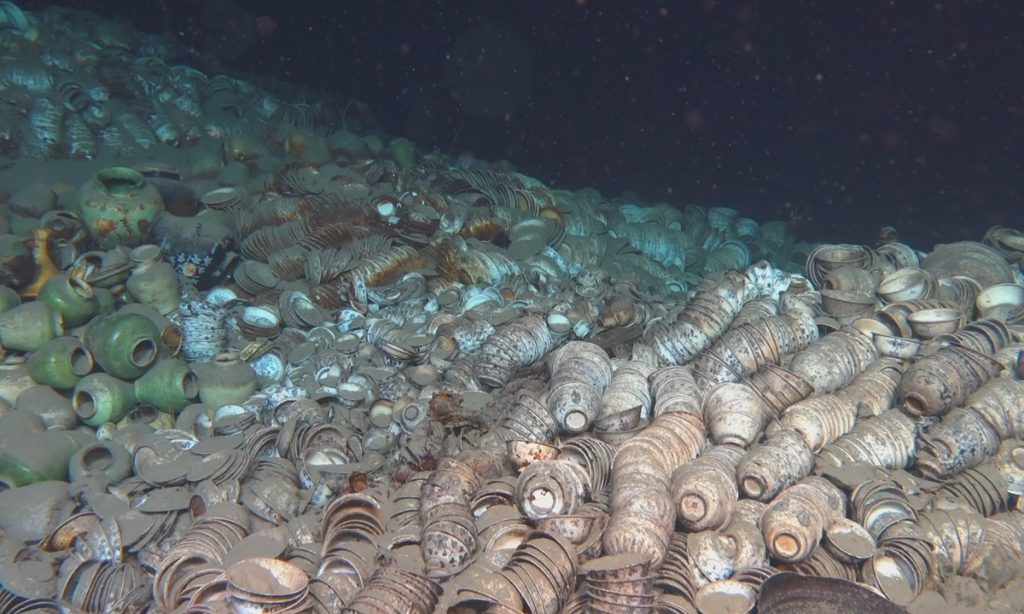
China's manned submersible Shenhai Yongshi (Deep-sea Warrior) placed underwater permanent survey markers at the core areas of two Ming Dynasty-era sunken ships in the South China Sea after conducting preliminary search and image recordings on Saturday, opening a new chapter in China's deep-sea archaeology.
An underwater archaeological investigation formally kicked off on Saturday for the two ships discovered last October in the South China Sea, said China's National Cultural Heritage Administration on Sunday.
The two ships were discovered in October 2022 in the South China Sea at a depth of about 1,500 meters. One site is mainly composed of about 100,000 porcelain relics. Based on a preliminary survey, the ship may have sunk during the Emperor Zhengde period (1506-21) of the Ming Dynasty.
The other site has a large number of timber logs, and the ship is believed to have been carrying overseas cargoes to China, dating back to the Emperor Hongzhi period (1488-1505) of the Ming Dynasty.
Archaeologists said the systematic archaeological investigation will last for about a year in three phases.
The first phase began on Saturday and will last until early June. Manned submersibles will be released to determine the distribution range of the sites for multi-angle and comprehensive data collection and archaeological recording, and to extract specimens of representative cultural relics and samples of the seabed sediment.
The second and third phases are planned to be implemented from August to September in 2023 and from March to April in 2024. After the archaeological surveys, the next step will be proposed on the basis of the sunken ships' status and technical conditions.
The investigation of the two shipwrecks will provide evidence of ancient Chinese people's activity in the South China Sea, making breakthroughs in the study of Chinese maritime history, ceramic history, overseas trade history and the Maritime Silk Road.
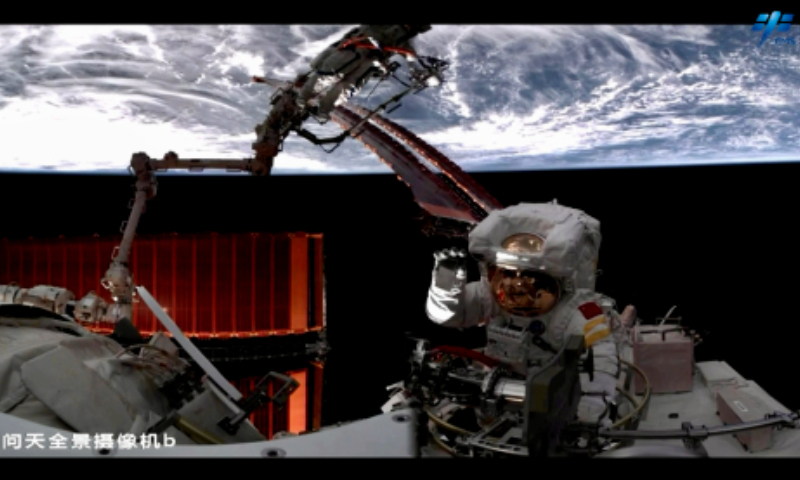
Shenzhou-16 crew members Jing Haipeng, Zhu Yangzhu and Gui Haichao successfully completed all the assigned tasks and safely returned to the space research module with the support of the robotic arm after about eight hours of their first extravehicular activity (EVA), the China Manned Space Engineering Office (CMSA) said on Thursday.
During the spacewalk, the astronauts completed tasks including bracket installation and lifting of panorama camera B in the core module and the unlocking and lifting of panorama cameras A and B of the Mengtian lab module.
Jing and Zhu went out for the spacewalk. Zhu has become the first space flight engineer to perform an EVA.
The Shenzhou-16 crew will also carry out a number of space science experiments and conduct multiple EVAs.
The Shenzhou-16 crew is composed of three types of astronauts: commander, flight engineer, and payload expert. They have been in orbit for 51 days since they entered the space station on May 30.
According to the CMSA, the radiation biology exposure experiment is significant for ensuring a healthy long-term stay in orbit for astronauts and promoting China's crewed lunar landing plans.
With the installation of gas cylinders in the electric propulsion system in orbit, this is the first time the "gas exchange" method has been used to complete the replenishment of electric propellants for long-term orbit maintenance of the space station, making its operation more economic and efficient.
The CMSA said the Shenzhou-16 crew are in good condition, and the space station is running stably.
China launched the Shenzhou-16 manned spacecraft on May 30, sending three astronauts to its space station for a five-month mission.
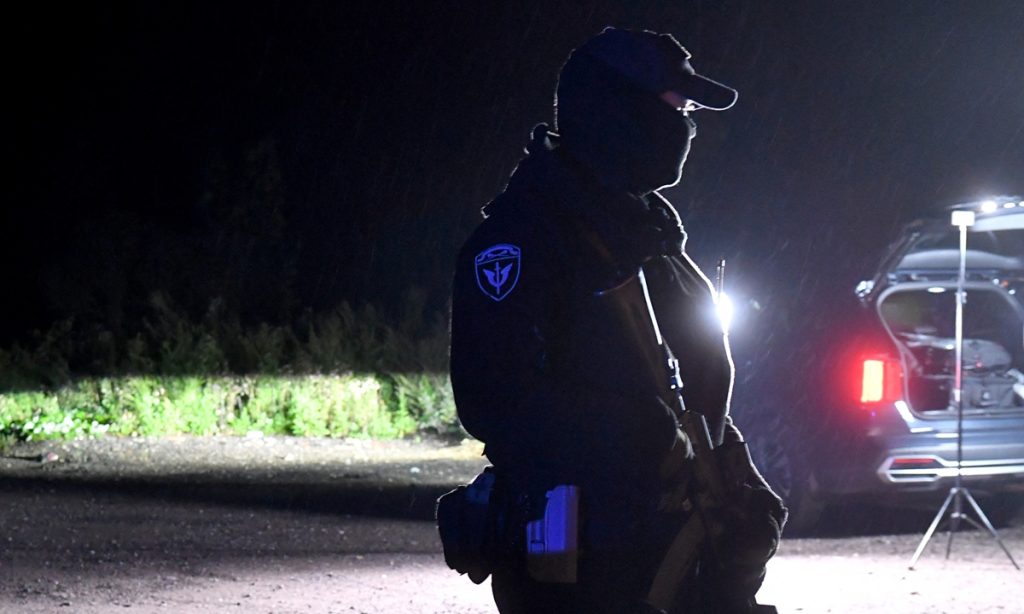
Two months after a "rebellion" by the Wagner Group was quickly quelled, the leader of the private military company Yevgeny Prigozhin was reportedly killed in a plane crash, leaving a trail of shock, mystery and speculation over the incident.
As of press time, the Kremlin did not release any details about the incident, which is still under investigation. However, Russia's rivals, including the US and Ukraine, have pointed the finger at Russian President Vladimir Putin. Experts believe that although the existence of Prigozhin posed risks to all parties, the US and its allies are using the incident to launch a wave of public opinion and cognitive warfare against Russia in order to create more chaos and instability.
Russia's Federal Agency for Air Transport confirmed on Wednesday that Prigozhin was killed in a plane crash in the Tver Region near Moscow. According to the name list released by the agency on its Telegram account, Prigozhin, as well as his right-hand man Dmitry Utkin, were among the 10 people who lost their lives in the crash earlier Wednesday.
The agency said earlier that an investigation had been launched into the cause of the plane crash.
The Telegram account Grey Zone linked to Wagner also reported Prigozhin's death late on Wednesday, saying that the head of the Wagner Group "died as a result of the actions of traitors to Russia."
US President Joe Biden said that he is "not surprised" about the incident, and strongly hinted at Putin's involvement, according to media reports.
Mykhailo Podolyak, Ukrainian presidential adviser, directly named Putin as being right behind the "demonstrative elimination" of Prigozhin, which is "a signal to Russia's elites ahead of the 2024 elections."
The prime minister of Estonia Kaja Kallas, Polish foreign minister Zbigniew Rau, and chair of the UK Parliament's Foreign Affairs Committee Alicia Kearns also suggested Russian president's involvement to "eliminate opponents."
Chinese experts said that based on public information and video materials so far, there was little chance that Prigozhin's death was just an accident. They added that continuous debate and recriminations are inevitable regardless of the final outcome of the Russian investigation, as Prigozhin's existence generally posed a kind of "threat" to all sides.
Zhao Long, deputy director of the Institute of Global Governance at the Shanghai Institute for International Studies, told the Global Times that for the US, although the "Wagner rebellion" created chaos in Russia, the group's influence in Africa is an obstacle to the US' global strategic layout. Wagner's bloody campaign in Bakhmut and its deterrence also led NATO countries to identify Prigozhin as a threat.
Ukraine had called for Prigozhin to be held accountable over "war crimes", and his death coincides with Ukraine's warning of retaliation against Russia on Kiev's Independence Day, Zhao said.
In addition, internal strife within Wagner and the conflict between Prigozhin and the Russian Defense Ministry may also have been factors and even motives leading to the "accident," Zhao said.
While the results of the investigation are still not clear, the US and its allies pointed the finger at Putin, which is aimed at discrediting him at home and disrupting Russia's internal unity and stability, Chinese military expert Song Zhongping told the Global Times.
This is cognitive and information warfare against Russia launched by the West, Song added.
The Kremlin needs more trust from Russian society, including confidence in winning the war and confidence in domestic order and security, some other experts commented, adding that there may be more attempts and actions aimed at undermining this trust.
When the plane crash took place, Putin appears to have been attending a concert in the city of Kursk to mark the 80th anniversary of the victory in the Battle of Kursk — the Soviet Union's victory over Nazi Germany, according to media reports. Video clips on Twitter shows the Russian President's motorcade speeding through Moscow toward the Kremlin after his trip to Kursk.
Zhang Hong, an associate research fellow at the Institute of Russian, Eastern European and Central Asian Studies of the Chinese Academy of Social Sciences, said that Russia is likely to investigate the incident before choosing a new head of Wagner.
If those responsible were Russian side, the appointment of a successor by the Russian government would provoke a revolt from some senior personnel in Wagner, but if the West was responsible, the impact on Russian domestic affairs would likely be limited, Zhang said.
According to experts, after the Prigozhin incident, the Russian legislature is likely to pass a new bill to fully regulate the activities of private military companies, and the Russian defense authorities may speed up the "recruitment" and integration of most Wagner personnel, and may also supervise and punish those who refuse to carry out orders through a unified military decision-making and command system.
The incident is unlikely to have a huge impact on the Russia-Ukraine battlefield, Zhao said, noting that Wagner's offensive role in Bakhmut does not play a prominent part in the Russian military's current strategic thinking of constantly depleting Ukraine's military.
The Russia-Ukraine conflict is a strategic game between Russia and US-led NATO. Since the "rebellion," Wagner is no longer the main force of the Russian military, Zhang said.
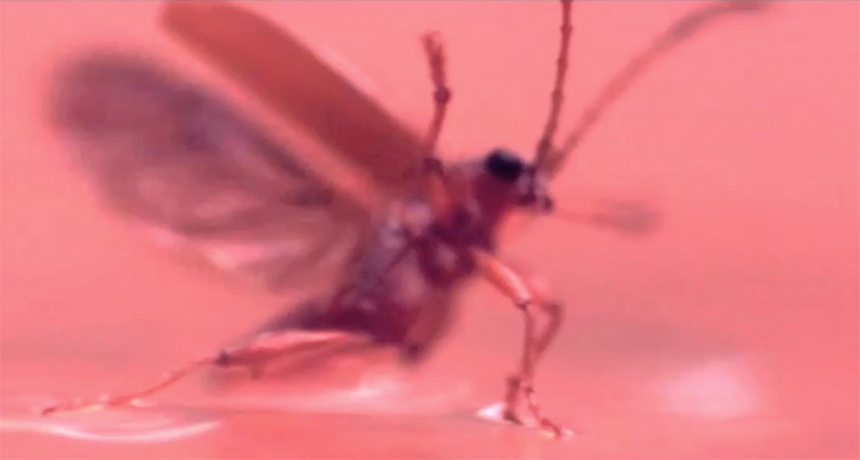
Waterlily beetles (Galerucella nymphaeae) literally fly across water, high speed videography and a bit of mathematical modeling reveals.
The beetles have a combination of hydrophobic hairs that line their legs and hydrophilic claws that grip the surface of water without getting too wet. Prior to “take off,” the insects lift their middle pair of legs. Then, the insects beat their wings extremely fast and fly horizontally across a pool of water. It looks a lot like water-skiing. In lab tests, waterlily beetles reached 0.5 meters per second — without an active brake system. Surface tension keeps the insects afloat, they found. The insects create ripples in the water, which generates drag at speeds greater than 0.23 meters per second (more drag than when the beetles just fly through air). Thus, for these beetles, skiing across a pond at breakneck speeds costs a lot of energy and requires greater wing thrust than normal flying. However, this mode of getting around could be more advantageous for foraging and help them avoid underwater predators like fish, the researchers speculate March 2 in the Journal of Experimental Biology.
After the Exxon Valdez dumped more than 10 million gallons of oil into the Gulf of Alaska, hairdresser Phil McCrory got an idea.
He gathered up human hair from his salon, stuffed it into a pair of pantyhose and dunked the bundle into a solution of motor oil and water. The hair sopped up the oil — a discovery that has since inspired environmentalists to create “hair blankets” to clean up oil spills. It’s not the most bizarre use of hair that Kurt Stenn describes in his new book, Hair: A Human History, or even the most surprising. From the felted wool covers of tennis balls to the horse-tail hair of a violin’s bow, Stenn, a former dermatologist and hair follicle scientist, digs up the myriad ways that hair has threaded its way into humans’ lives — and history.
A thriving wool trade starting in the 13th century, for example, helped some Italians amass enough wealth to later support famous artists of the Renaissance, including Michelangelo. And in 17th century Europe, beaver fur was so in demand (felted hats were a must for stylish gentlemen) that traders hunted beavers to near extinction.
Stenn jams an encyclopedia’s worth of material into a mere 256 pages, all the while shedding facts like a golden retriever sheds fur. But the book has more than just history. Stenn details the molecular biology of hair, those packed piles of cells that push out of nearly every square inch of human skin (except for the palms, soles and a few other areas). Hair conditioner, he explains, works by leaving positively charged molecules on strands, so that they repel each other rather than tangling together.
Stenn roots his story in science, discussing evolution, development and disease, among other topics. (The book could give readers a sure win for any hair category on Jeopardy!.) But Hair shines when Stenn steps out of the lab and into the world. He visits a wigmaker’s workshop in London, tours a modern barbering institute in Pennsylvania and learns about synthetic fibers at the laboratories of a Tokyo-based wig company.
These interludes are subtle highlights in a densely woven tale. But throughout, Stenn manages to convey a sense of wonder for a seemingly mundane material so tough, so strong and so versatile that it can be used for virtually anything — even mopping oil from the sea.
Ancient Assyrians sent their dead to the afterlife with fearsome companions: turtles. Excavations of a burial pit in southeastern Turkey revealed skeletons of a woman and a child, plus 21 turtles, a team led by archaeologist Rémi Berthon of France’s National Museum of Natural History reports in the February Antiquity.
The burial is part of an Assyrian site called Kavuşan Höyük that dates to between 700 and 300 B.C. The turtle bonanza included shells from one spur-thighed tortoise (Testudo graeca) and three Middle Eastern terrapins (Mauremys caspica), plus bones from 17 Euphrates soft-shelled turtles (Rafetus euphraticus). Butchering marks on the R. euphraticus bones indicate that the turtles may have been eaten in a funerary feast, Berthon and his colleagues write. Back then, turtles were not a regular meal in Mesopotamia. Turtle bones, however, were thought to ward off evil. The abundance of R. euphraticus turtles, a notoriously aggressive species, in this burial pit suggests the deceased had high social status.
To ancient Assyrians, these ferocious reptiles probably represented eternal life and served as psychopomps — mythical guides to the afterlife, the team writes.
Editor’s Note: This story was updated on 4/15/16 to note that turtles were a rare part of the Mesopotamian diet.
Earth sciences reporter Thomas Sumner recalls seeing the documentary film An Inconvenient Truth when he was in high school. The climate science presented in the movie didn’t surprise him too much — a science-minded student, he had already read about many of the issues. But, he says, the film started a broader dialog about global warming. “People started caring,” he says, noting that he remembers his own family talking about it (and not always harmoniously) at the time. Revisiting the dramatic predictions made in the film proved an interesting journey for Sumner. “The main criticism I heard was that the film had watered down the science,” he says. Climate science is amazingly complex, and so is modeling effects of change — from how much sea level might rise to how a warming climate could alter hurricane patterns. Even more striking to Sumner were the sheer number of uncertainties that remain. Those uncertainties are not about whether the climate is changing, but about the details of what such changes will mean for the oceans, the atmosphere and the living things on land — and when the various dominoes might fall. Telling the future is hard, especially about interrelated complex systems, but as Sumner reveals in his story, scientists have made steady progress in the last decade.
Another interesting point is the documentary’s (and Al Gore’s) role in politicizing climate science, which is fair to assume was one of the aims. “Gore was polarizing,” Sumner says. “He created a conversation about global warming, but he also cemented it as a political issue.”
Teeth and gums are neither political nor talked much about. But, as contributing correspondent Laura Beil reports, scientists studying a possible role for gum disease in what ails the body must contend with a slew of uncertainties, not unlike those faced by climate scientists. The bacteria that cause gum disease, some studies find, can travel to the arteries, heart, brain and other sites where they can cause havoc. Not all studies agree, and proving the oral bacteria–disease link beyond a doubt may not yet be within scientists’ grasp. But the fix is relatively simple, even if avoided by many: frequent flossing and regular visits to the dentist.
Keeping things simple was the underlying goal of the team of scientists attempting to build, from scratch, a synthetic organism with the least possible number of genes, as Tina Hesman Saey reports. After many tries, the effort succeeded, but not without first humbling the researchers involved. In the initial attempts, their computer-designed minimal genomes didn’t take. What ultimately worked was putting back some of the unknowns — genes with no known cellular job to do. Only then did the DNA inserted into the shell of a microbial cell yield a synthetic microbe capable of growing and reproducing.
Telling a good story about complex science, whether in a film or in a report on the latest research, requires some simplification. But sometimes the most interesting part lies in the uncertainty.