GT on the Spot: Waste-to-energy facility in Suzhou offers a glimpse into environmental efforts, achievements
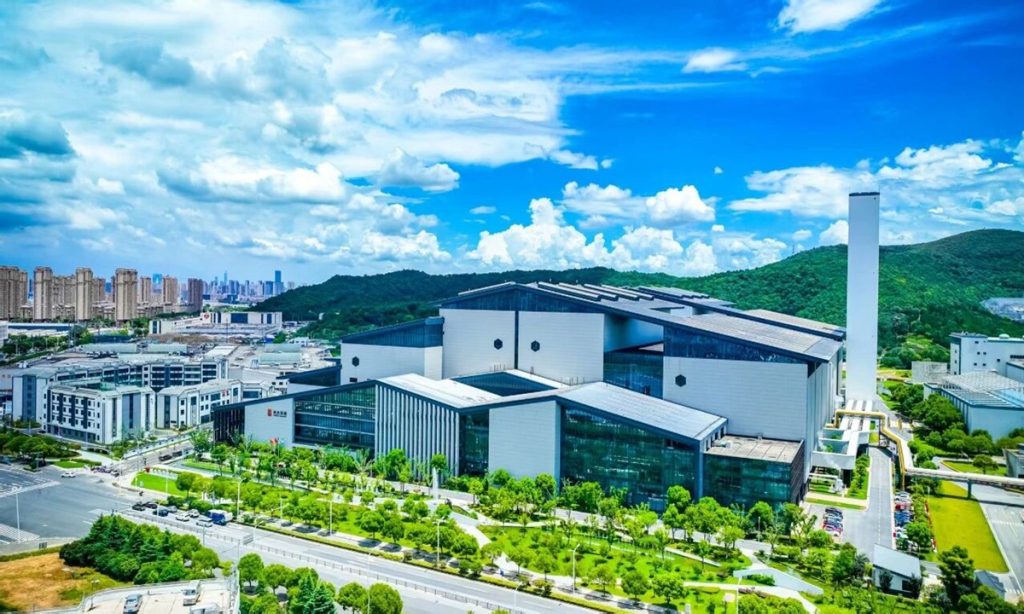
Observing through the massive glass window, a giant mechanical claw lifts garbage that has been fermenting for several days from a waste pit dozens of meters deep and steadily feeds it into the inlet - yet the area remains entirely odor-free.

The scene unfolds at a waste-to-energy facility in Suzhou, a city in East China's Jiangsu Province, which was named to the inaugural 20 Cities Towards Zero Waste initiative under the United Nations Secretary-General's Advisory Board on Zero Waste in March.

Suzhou maintains a comprehensive utilization rate of over 98 percent for bulk industrial solid waste. The coverage rate of domestic waste sorting facilities exceeds 99 percent, and all sewage sludge from water treatment is fully disposed of and recycled. These figures paint a full picture of Suzhou's progress in building a Zero-Waste city, the Xinhua News Agency reported.

With these figures in mind, the Global Times reporter visited the waste-to-energy facility operated by Everbright Environment in Suzhou, where most of Suzhou's urban municipal solid waste is processed, ahead of the World Environment Day which falls on June 5.

Shift in industry

At the waste-to-energy facility, real-time emission data is displayed on the large screen in the central control room. All readings covering carbon monoxide, hydrogen chloride, sulfur dioxide, nitrogen oxides and particulate matter are synchronized with the national environmental protection platform, with indicators significantly outperforming EU standards.

Through independent technological innovation, the project adopted medium-temperature, ultra-high-pressure reheat technology, enabling power generation per tons of waste incinerated to exceed 700 kWh, the Global Times learned from the company.

The progress in Suzhou epitomizes the wider evolution of the sector in China. A local government official in Suzhou recalled past two decades of operation, noting that when Phase I of the project began operation in 2006, municipal waste in the city was still mainly disposed of through landfill.

With rapid growth in both population and GDP in Suzhou, the project underwent successive capacity expansions and by 2021 had enabled the city to achieve full incineration and zero landfill of raw municipal solid waste, effectively resolving the long-standing waste siege issue.

Fueled by an intensifying environmental consciousness, China has transformed its waste management paradigm over the past two decades by promoting cleaner and more efficient waste incineration technology, according to Xinhua.

China's national emission standards for waste-to-energy plants align with the latest EU benchmarks, positioning them among the world's most stringent. Some regions, including Beijing, Tianjin, Shanghai, Jiangsu and Zhejiang, have implemented even stricter local regulations that surpass EU thresholds, per Xinhua.

Ma Jun, director of the Beijing-based Institute of Public and Environmental Affairs, told the Global Times that China's waste incineration industry has achieved rapid growth over the past decade, with the number of relevant enterprises having risen sharply, effectively alleviating the garbage siege issue.

Although the industry once faced strong resistance from residents of selected sites, environmental authorities mandated disclosure of operational data, Ma said. Under public supervision, enterprises improved pollution control, facility conditions and technical capacity, driving the industry's rapid development, the expert added.

With the advancement of dual-carbon goals and zero-waste city development, waste incineration serves as an indispensable field in the building of a Beautiful China, Ma said.

However, Ma emphasized that waste incineration is only one essential link in the waste management system and must work with recycling and classification to take full effect.

China's Ministry of Housing and Urban-Rural Development said on May 25 that China aims to raise its urban household waste recycling utilization rate to above 76 percent by the end of 2030.

Latest data from the ministry also shows that by the end of 2025, China had 1,137 waste incineration facilities with a daily processing capacity of 1.18 million tons. Fifteen provinces and municipalities including Beijing, Zhejiang and Shandong have achieved zero landfilling of raw domestic garbage, with its control of major pollutant emissions ranking among the world's advanced levels.
'Not enough waste to burn'

Amid the rapid growth of the industry, the situation has transformed from "wastes sieging cities" to a "shortage of garbage for incineration." A staff member from Everbright Environment told the Global Times that this perspective has also triggered widespread discussion across the industry.

"Rather than signaling a crisis, this phenomenon can be understood as a structural turning point in the industry's upgrading process," the staff member said. At present, waste collection is insufficient compared with incineration capacity, with an estimated industry gap of about 20 percent. Regional development is also uneven, with many enterprises concentrated in major cities and developed areas.

By the end of 2025, China's installed daily waste-to-energy incineration capacity had reached 1.1 million tons, equivalent to 360 million tons annually, CCTV News reported in April, citing experts. Meanwhile, China's actual annual domestic waste output stands at 320 million tons, leaving many plants running under capacity.

According to CCTV News, experts said waste disposal capacity varies unevenly across China, with disparities within provinces and cities due to differences in economic growth, population density, waste output and collection systems.

"China has advanced household waste sorting nationwide over the past few years, and the increased recycle rate also means less will be incinerated, leading to intensified capacity surplus," Ma added.

The Everbright Environment staff member told the Global Times that "there is not enough waste to burn" reflects a shift in China's waste management from ensuring basic treatment capacity to pursuing higher efficiency and sustainability.

Moderate capacity redundancy is a natural result of forward-looking planning, which once helped ease the "waste siege" and now requires more refined and efficient operations, the staff member added.

Therefore, operational hurdles due to "insufficient wastes" may seem challenging for some waste incineration enterprises for a moment, yet they reflect China's resolve, capacity and achievements in addressing an environmental problem arising alongside the urbanization, which will continue to sustain the building of a Beautiful China, according to analysts.

Scandal, misconduct allegations surrounding Dalai Lama’s nephew has once again exposed ugly nature of the Dalai clique

A recent scandal has exposed yet another crack in the hypocritical veneer of the 14th Dalai Lama clique. Tenzin Taklha, the Dalai Lama's nephew and secretary, has reportedly been engulfed in several allegations involving domestic abuse, sexual exploitation and embezzlement. His misconduct has long been an open secret within the Dalai clique, yet it seemingly has been shielded and tolerated for years.

This is by no means an isolated case. From the Dalai Lama himself to members of his family and inner circle, scandal after scandal has continued to surface. This separatist group, long cloaked in the rhetoric of "human rights" and "democracy" and parasitizing under a religious guise, is now exposing to the world its ugly face through a series of shocking exchanges of power, sex and money: a rotten, hollow entity corrupted to its very core.

A range of unsavory conduct

Tenzin Taklha, reportedly the nephew and personal secretary of the 14th Dalai Lama, has long been regarded as a key figure within the Dalai clique's inner circle of power. Yet behind the pious image he projects before "devotees," several foreign media outlets and investigative websites have unveiled him as a man of deeply questionable character, allegedly involved in a range of unsavory conduct.

One of the most serious scandals about Tenzin Taklha is reportedly a domestic violence case first brought to light by his own wife. On June 10, 2025, the website "Dakini Translations and Publications," which describes itself as an "online resource for new Dharma translations and research on Tibetan Buddhism and Vajrayana," received an anonymous tip claiming that Tenzin Taklha's wife had "allegedly posted on her Facebook page a 'desperate cry for help' as a domestic violence survivor."

According to a screenshot of the post published by the website, she accused her husband of having a violent temper and repeatedly assaulting her physically. "In recent years, whenever displeased, he destroyed items in our home and beat me. I always have bruises on my arms and legs. One incident even left my ribs fractured," the screenshot reads. The source who submitted the tip speculated that the original post had already been deleted by Tenzin Taklha.

If these allegations are true, the abuse would amount to more than a private marital dispute. It would be a stark example of Tenzin Taklha abusing his power, inflicting violence on others and trampling on human dignity, some human rights experts reached by the Global Times commented. Yet, as the screenshot of the post also noted, the Dalai Lama "has urged forgiveness for the sake of 'home stability'" a stance that appears to amount to tolerance, if not indulgence, toward violence.

Sexual exploitation is another major allegation against Tenzin Taklha. According to SNAP Survivors Network - a self-described "community of survivors of clergy and institutional sexual abuse" - he was accused of exploiting young women by "inducing them into explicit online sexual conversations and exchanging nude photos," the organization said on February 12. "He allegedly boasted of having relations with 25 girls," the article added.

A third major accusation against Tenzin Taklha is the embezzlement of "public funds" for personal gain. He was accused of diverting "humanitarian aid funds" to "purchase luxury properties in the US, among other personal expenses," according to the SNAP Survivors Network website.

As a result, 32 members of a separatist foundation linked to the Dalai Lama clique reportedly petitioned in the summer of 2025 for his expulsion from the organization. Tenzin Taklha's extreme corruption and debauchery have offered a glimpse of the broader, ugly reality behind the Dalai clique.

Birds of a feather

The scandal involving Tenzin Taklha is merely a microcosm of the broader dysfunctional elements within the Dalai clique. From the Dalai Lama himself to members of his family and close confidants, many figures in this core network have been tainted by misconduct.

Tenzin Dhonden, for instance, is another infamous name associated with the Dalai Lama's camp. Tenzin Dhonden was reportedly appointed the Dalai Lama's "personal emissary of peace," tasked with organizing various events and initiatives on his behalf. Yet the misconduct later exposed in connection with him stood in stark contrast to the image implied by that title.

As early as 2017, Tenzin Dhonden was accused of bullying, celebrity worship and corruption. One allegation came from a Seattle-based technology entrepreneur, who said Tenzin Dhonden "extracted unjustified payments from him between 2005 and 2008, in return for setting up an event with the Dalai Lama," the Guardian reported in November 2017. A letter sent to the Dalai Lama's private office, as quoted by the newspaper, said: "His (Tenzin Dhonden's) questionable values, arrogant disposition and objectionable behavior have generated confusion, anxiety and extensive unhappiness for many years."

Tenzin Dhonden also came under criticism for organizing a 2009 event in Albany in the US hosted by Nxivm, "a controversial self-help organization that has been compared to a cult," according to the Guardian. The event was initially canceled after public outcry, but later went ahead, the report said.

In addition, Tenzin Dhonden was accused of having affairs with multiple women. A November 23, 2017 report by the US-based Niagara Reporter revealed that Tenzin Dhonden was "involved in a personal relationship with Seagram heiress Sara Bronfman that started around 2009." The report described him as Bronfman's "lover."

Faced with multiple allegations and scandals, nonetheless, in July 2019, after more than a year of what was described as a thorough investigation, the Dalai Lama's side claimed the embezzlement allegations against Tenzin Dhonden were unsubstantiated due to a "lack of evidence," according to media reports.

"They are not ignorant of evil; rather, they choose to collectively conceal it, tolerate it and shield it," commented an opinion piece published by China Tibet Online on April 10.

Surrounded for years by figures accused of misconduct and moral hypocrisy, the Dalai Lama himself has also become embroiled in repeated controversies that have drawn criticism and condemnation worldwide. Far from maintaining the untouchable image often portrayed in Western media, he has faced growing scrutiny over both his personal behavior and his associations.

One of the most controversial issues concerns his connection to the late financier and convicted sex offender Jeffrey Epstein. A search of the Jeffrey Epstein files released on the US Department of Justice website shows 157 results for the "Dalai Lama."

American journalist and consultant Michael Wolff, who acted as an advisor to Epstein, recalled in a podcast with host Joanna Coles for The Daily Beast last July that he met the Dalai Lama at Epstein's Manhattan residence, according to Turkey's state-run Anadolu Agency on February 4.

Although the official X account of the Dalai Lama claimed on February 8 that he "has never met Jeffrey Epstein," many of the more prominent comments among the post's more than 2,000 replies mocked the statement by linking it to the earlier controversy in 2023.

In March 2023, a video showed the Dalai Lama asking a young boy to "suck my tongue" during a public event. The footage has sparked widespread criticism, with many social media users saying it was inappropriate and disturbing, BBC News reported in April 2023.

Illegitimate and corrupt

The controversial reputation of the Dalai Lama stems not only from his long-standing separatist rhetoric and political activities, but also from a series of personal controversies and public incidents that have repeatedly drawn criticism internationally.

Yet well before the "suck my tongue" controversy, several public incidents had already generated criticism over his behavior and remarks.

In 2016, during a public appearance with Lady Gaga, footage circulated online showing the Dalai Lama repeatedly touching the singer's leg while she appeared uncomfortable.

In 2019, during an interview with BBC News, the Dalai Lama claimed that if a future Dalai Lama were female, she "should be more attractive." His comments immediately sparked outrage online, reported CBS News.

This isn't the first time the Dalai Lama has brought up the physical beauty of a potential successor. In a 2015 BBC interview, he made similar comments, claiming that a "female Dalai Lama" should be attractive, otherwise she would be of "not much use," the report said.

The political nature of separatism is often closely intertwined with corrupt practices in personal life, Zhu Weiqun, former head of the Committee on Ethnic and Religious Affairs of the National Committee of the Chinese People's Political Consultative Conference, told the Global Times. Cloaked in the "sacred" guise of religion, the Dalai clique parasitically feeds off the world, spiritually manipulating its followers while politically orchestrating various separatist activities and urging Western forces to sanction China. At the same time, it engages behind the scenes in shady dealings involving power, money, and sex.

As long as the Dalai clique continues to exist, the various forms of corruption within it will not cease, but will only intensify. In essence, the Dalai clique has long become a fundamentally rotten, irredeemably corrupt criminal organization with no future whatsoever, Zhu said.

Xiao Jie, a senior fellow of China Tibetology Research Center, also told the Global Times that the "Tibetan government-in-exile" is, in essence, an illegitimate and corrupt political organization.

Although it has long attempted to project an image of a "democratic and autonomous" institution for overseas Tibetans, it is far removed from any genuine form of political autonomy. Instead, it serves merely as a tool for the Dalai clique to mislead international public opinion externally and to distribute benefits internally, Xiao explained.

According to Xiao, since the establishment of the so-called "Tibetan People's Parliament" in the 1960s, the Dalai clique has engaged in performative democratization. In 2011, it even staged acts of "political retirement" by the Dalai Lama and "constitutional amendments." However, this performance of democratization cannot conceal the underlying reality of family-based politics and theocracy. The Dalai clique strives to maintain a theocratic system fundamentally to ensure control over Tibetan exiles, sustain its separatist agenda, and safeguard the interests of the Dalai Lama and those around him.

"It is not only a smokescreen used to deceive international public opinion and obscure its controversial past, but also a means of soliciting aid from Western countries," Xiao said.

Ignoring its historical identity as a former serf-owning class and avoiding any discussion of past actions against the Tibetan people, the Dalai clique instead promotes narratives of freedom, democracy and human rights. This is aimed at gaining favor from anti-China forces in the West by demonstrating rhetorical alignment, and thereby securing the international assistance on which it depends for survival through the role of a frontline anti-China actor, Xiao added.

China is willing to expand practical cooperation with new Solomon Islands govt, FM says on Solomons PM claiming to review security pact with China

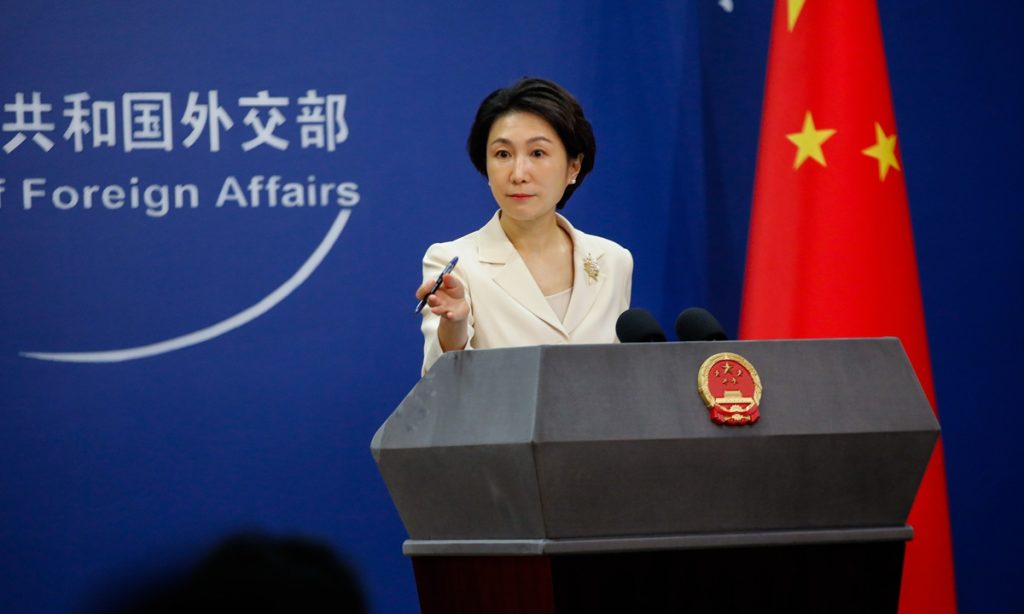
When asked to comment on the claim made by Solomon Islands' Prime Minister Matthew Wale on June 3 that he would be "reviewing" his country's 2022 security pact with China, Chinese Foreign Ministry spokesperson Mao Ning said on Wednesday that China and the Solomon Islands have a comprehensive strategic partnership for the new era, based on mutual respect and common development. "We are willing to expand practical cooperation across various fields with the new Solomon Islands government to better benefit the peoples of both countries," Mao said.

GT investigates: How do some US politicians play 'national security' card, defame Chinese investment with ‘land grabbing’ fallacy?

Editor's Note:

"Cognitive Warfare" has become a new form of confrontation between states, and a new security threat. With new technological means, it sets agendas and spreads disinformation, to change people's perceptions and thus alter their self-identity. Launching cognitive warfare against China is an important means for Western anti-China forces to attack and discredit the country.

Some politicians and media outlets have publicly smeared China's image by propagating false narratives in an attempt to incite and provoke dissatisfaction with China among people in certain countries. These means all serve the seemingly peaceful evolution of the US strategy to contain China's rise and maintain its hegemony. The Global Times is publishing a series of articles to reveal the intrigues of the US-led West's China-targeted cognitive warfare, and expose its lies and vicious intentions.

In the 10th installment in the series, the Global Times looks into how some US politicians attempt to demonize and drive away Chinese investment from the country, with the recent "land grabbing" fallacy.
A few conspiracy theorists and "persecution mania sufferers" in the US have always imagined that China has launched "battles" against the US in various forms. And now they've created a new narrative: China grabs US land.

In January, Iowa's Governor Kim Reynolds claimed that "China continues to grow more aggressive, and buying American land has been one of the many ways they have waged this new battle." She said she intends to introduce a new law that would strengthen farmland ownership reporting rules in this state.

"…as China's threat adapts, our laws should too," said Reynolds, who was reportedly once very welcoming of Chinese investment. "Let's make sure that American soil remains in American hands," she said.

More states across the US have actively joined in the chorus to support this "land grabbing" fallacy. Data shows that at least 24 states specifically forbid or limit foreign ownership of private farmland. Many of the bans, which target certain countries including China, were introduced in the last two years in the name of "national security," the Global Times found.

Although it is unsurprising to see some US politicians play the anti-China card however they can in an election year, the remark that China, which legally holds only less than 1 percent of all the foreign-owned land in the US, "grabs US land," is still fairly absurd, said some Chinese economists and international relations experts.

How did the states use legislation and public pressure to vilify Chinese investors, and even drive them away from US farmlands? How did the fallacy of "China grabbing US land" come into being? What underhanded tactics have been employed by some US politicians to propel this fallacy? The Global Times tries to uncover what's behind this new round of cognitive war against China.

Virulent laws and actions

Chinese entities held 349,442 acres of agricultural and non-agricultural land in the US, slightly less than 1 percent of its foreign-held acres, or 0.03 percent of the total, according to a report released by the US Department of Agriculture in December 2022. The percentage fell far behind Canada (12.8 million acres), the Cayman Islands (672,000 acres), said a Forbes article in March 2023, listed under "surprising fact."

This negligible percentage nonetheless can't stop politicians in some states from hyping the "China grabbing land" panic and turning it into vitriolic laws and actions.

Arkansas, for instance, in October 2023, ordered agriculture company Syngenta to sell its 160 acres of farmland in this state, only "because the company is Chinese-owned," CNN reported on October 18.

Arkansas passed a state law earlier that year to prohibit certain foreign parties from acquiring or holding land. China is among the prohibited "parties," because it is subject to US arms export controls known as the International Traffic in Arms Regulations (ITAR), said Arkansas Attorney General Tim Griffin.

Regardless of the little connection between arms export control and farmland, Arkansas' order to Syngenta was its first enforcement under the new law. Before this weird logic was finally turned into a legal order, the company "had owned the site for 35 years," according to Syngenta's spokesperson Saswato Das.

Disappointed Syngenta called the order "a shortsighted action" that will hurt Arkansas farmers. "Our people in Arkansas are Americans led by Americans who care deeply about serving Arkansas farmers," CNN quoted Das as saying.

Another infamous example was Texas, which had even tried to ban its citizens of Chinese ancestry from buying a house in the state.

In January 2023, Texas Governor Greg Abbott said he would sign a proposed bill banning citizens and foreign entities from four countries, including China, Iran, North Korea, and Russia, from purchasing Texas land.

The ridiculous "Senate Bill 147" soon sparked months of outcry across the state. In a Senate committee hearing in March that year, more than 100 people, including Asian American business owners, immigrants, and advocacy groups, heavily criticized the bill, according to local media.

Faced with widespread condemnation, the state lawmakers later revised the bill, softening the language to still allow dual citizenship holders and lawful permanent residents of the US to buy property in Texas.

In the last decade, the number of US states that have codified restrictions on foreign ownership of land has risen from 14 to 24, and new restrictions are being proposed in each legislative session, according to Tory Consulting. "As of January 2024, at least five states have active bills in session to restrict foreign ownership of land," said an article published online in February.

China is a main target of this restriction wave, although as a recent opinion piece in The Economist noted: "Chinese landholdings are both tiny and shrinking."

Then how did the "China grabbing US land" fallacy come about?

'National security' concerns?
According to the US National Agricultural Law Center (NALC), a federally funded source of agricultural and food law research and information, many of the states' laws that restrict foreign ownership of land developed at several "political flashpoints," such as the signing of the Declaration of Independence, and the US' westward expansion in the late 1880s.

The latest ongoing "political flashpoint" starts from 2021, partly due to some incidents involving Chinese entities that raised "national security" concerns, said NALC.

One of the incidents was a Chinese company's "purchase of 300 acres near an Air Force base in North Dakota." It was about a Chinese firm planning to build a corn mill in the state. The plan was put on hold in 2023, as the US Air Force said the proposed mill was close to a local air force base and "presents a significant threat to national security."

The state's governor once celebrated the landing of the project in Grand Forks in late 2021, which would have been the city's largest economic development project in recent history, reported the New York Times (NYT) in February 2023. The corn mill was the sort of job-creating opportunity that cities have long fought over, it said.

When examining the timelines of when many US states introduced land ownership restrictions, the Global Times found an obvious "peak" after the "spy balloon" incident in February 2023. On the pretext of "national security," some federal and state politicians frequently attacked the Chinese owners of US farmland at that time, defaming those who owned land near military bases or facilities as spies or potential spies without any proof.

"National security" is a common trope that the Biden administration employs in suppressing China, said Yu Xiang, a non-resident senior fellow at the Center for International Security and Strategy, Tsinghua University. It has hyped a lot of smears against China in the name of national security, such as the "spy balloon," the "chip risk," and the so-called "Chinese citizens conceal secrets" fallacies, Yu explained.

"National security has been a 'black box' area in competitions between countries," Yu told the Global Times. Unlike the previous dumping and subsidy allegations against Chinese products, which China can clarify with tangible proof, the national security-related attacks are usually difficult to disprove, he said.

Moreover, the self-created suspicions may force the Chinese enterprises involved to try to prove their innocence with great effort, said Gao Lingyun, a research fellow at the Institute of World Economics and Politics, Chinese Academy of Social Sciences. "Even if one eventually dispelled the rumors, its reputation, time, and energy would have been damaged," Gao said.

Snaky calculation of US politicians

Chinese ownership of US land has become "a crime to be desired" by some people in the US under the pretext of national security. As the presidential election approaches, "taking back" land from Chinese purchasers is turning into a theatrical performance by local authorities to make political capital.

"This is about where your loyalties lie," Arkansas Governor Sarah Huckabee Sanders said at a news conference, responding to a query about the state ordering Syngenta to sell its farmland, even at the expense of local farmers and employees.

In some US states with fewer people and more land, the leaving of Chinese companies would bring obvious losses, such as revenue and employment, said Gao. "To drive away Chinese entities from their farmland is tantamount to giving up their strengths," he told the Global Times.

But the economic and job losses seem insignificant to some selfish politicians. In US electoral politics, there is usually a personal calculation behind what politicians do or say, said Yu. Authorities in some states want to drive out Chinese entities from farmland, because they believe it can bring them more personal political gains, such as votes, he explained.

Therefore, in order to still get votes even when there have been (or will be) economic damages, the politicians try hard to demonize China, magnifying the security threat of Chinese ownership of farmland to justify their poor political actions, noted some experts in US studies.

They pointed out that the anti-China trope is a well-tested trump card for some politicians to win attention and support, and their "China grabbing land" allegation is no more than a cliché smear that previously targeted Chinese investment in Africa and other Belt and Road Initiative participating nations.

And now this fallacy has spread back to the US, with a few politicians brainwashing US voters with ridiculous conspiracy theories, such as "the corn mill at your doorstep could be spying on you, or it could harm national security."

No wonder other politicians in the US are frustrated with the endless, irrational focus on land. According to a The Economist article published in January, US Congressman Raja Krishnamoorthi complained that some laws intended to stop any Chinese-origin individuals from buying any land at all drift into "outright racism and xenophobia."

Krishnamoorthi wishes politicians would focus more on improving American competitiveness in general, said the article. "Sadly that is harder than blustering about farmland."

Manila violating commitments, denying previous agreement and abandoning understandings escalate Ren’ai Jiao tensions: Chinese FM

If the Philippines truly wants to ease tensions at Ren’ai Jiao through dialogue and communication, it needs to honor the commitments and understandings and stop provocations, spokesperson of Chinese Foreign Ministry Mao Ning said at a press conference on Thursday.

Philippine President Ferdinand Marcos Jr. on Monday called on China to talk to prevent more incidents like ramming vessels and the use of water cannons in the South China Sea, Voice of America reported.

The Philippines continues to talk with China, and is exhausting all options to speak to Chinese leadership so as not to heat up tensions in the waterway, Marcos claimed, according to media report.

In response, Mao reiterated on Thursday China's indisputable sovereignty over the Nansha Islands, Ren’ai Jiao included, and their surrounding waters.

She stressed that China has always been committed to managing the on-site situation of Ren'ai Jiao through dialogue and consultation with the Philippines.

Mao reiterated that on how to deal with the current situation at Ren’ai Jiao, China’s position is clear-cut. First, by keeping its warship grounded at Ren’ai Jiao for decades running, the Philippines has been violating China’s sovereignty and the Declaration on the Conduct of Parties in the South China Sea (DOC), especially Article 5 which says refraining from action of inhabiting on the presently uninhabited islands and reefs. We demand that the Philippines tow away the warship at once and restore the Ren’ai Jiao’s state of hosting zero personnel and facilities.

Second, before the warship is towed away, if the Philippines needs to send living necessities, out of humanitarianism, China is willing to allow it if the Philippines informs China in advance and after on-site verification is conducted. China will monitor the whole process.

Third, if the Philippines sends large amount of construction materials to the warship and attempts to build fixed facilities and permanent outpost, China will not accept it and will resolutely stop it in accordance with law and regulations to uphold China’s sovereignty and the sanctity of the DOC.

The recent attempts by the Philippines to permanently occupy Ren'ai Jiao and Tiexian Jiao (Tiexian Reef) have seriously violated Article 5 of the DOC, said Lei Xiaolu, a professor of law with China Institute of Boundary and Ocean Studies, Wuhan University.

In 1999, the Philippines illegally grounded the “BRP Sierra Madre” warship on Ren'ai Jiao under the pretext of “mechanical failure” and promised to tow it away. However, in recent years, the Philippines has acted in bad faith, claiming to build permanent facilities on Ren'ai Jiao.

The Philippines believes the South China Sea arbitration case gives it a legal basis for the illegal occupation of Ren'ai Jiao, but in fact, the arbitral tribunal in the South China Sea arbitration case has no jurisdiction to handle sovereignty disputes over Ren'ai Jiao as part of the Nansha Islands. Tiexian Jiao is an uninhabited high-tide feature within 12 nautical miles of Zhubi Jiao (Zhubi Reef) and is part of the Nansha Islands, according to Lei.

If the Philippines' activities are tolerated, the dispute settlement mechanism established in Article 5 of the DOC will be weakened, potentially reopening the "Pandora's Box" of new round of island occupation by some countries, which will have a negative impact on regional peace and stability, Lei noted.

China and the Philippines established several channels of communication on the South China Sea issue, the most important one being the Bilateral Consultative Mechanism (BCM) established in 2016, noted Yan Yan, Direct of Research Center for Oceans Law and Policy, National Institute for South China Sea Studies.

The hotline between China and the Philippines coast guards was established after then Philippine President Rodrigo Duterte signed a memorandum of understanding (MOU) with China on cooperation between the two countries' coast guard in 2016 and is the most direct means of communication between the maritime law enforcement agencies of the two countries. In August 2023, Philippine Coast Guard spokesman Jay Tarriela announced the abandonment of this hotline mechanism, saying they will no longer be communicating directly with their Chinese counterpart.

In January of this year, the 8th meeting of the BCM was held in Shanghai. China and the Philippines agreed to "further improve the sea-related communication mechanism, continue to properly manage sea-related conflicts and differences through friendly consultations, and deal with maritime emergencies."

However, the Philippines' actions on Huangyan Dao and Ren’ai Jiao have not been curtailed despite the consultation. It seems that the Philippines’ strategy is to use action instead of words and dialogue, to show its presence and attempt to change the status quo in the South China Sea, Yan stressed.

China and ASEAN Foreign Ministers signed the DOC in November, 2002.

For the past 22 years, the DOC has served as a crucial political consensus and cornerstone for maintaining peace in the region. China and ASEAN countries have successfully engaged in various constructive maritime cooperation, including marine environmental protection, scientific research, safety of navigation and communication at sea, search and rescue operations, and combating transnational crime, in accordance with Article 6 which allows for cooperative activities pending a comprehensive settlement of disputes, said Yang Xiao, Deputy director of Institute of Maritime Strategy Studies at China Institutes of Contemporary International Relations.

Article 6 regulates cooperative activities among the parties concerned. These may include the following: marine environmental protection; marine scientific research; safety of navigation and communication at sea; search and rescue operation; and combating transnational crime, including but not limited to trafficking of illicit drugs, piracy and armed robbery at sea, and illegal traffic in arms.

However, beyond the positive momentum of promoting cooperation between China and most ASEAN countries, there has been some sort of noise off and on for some time, especially the Philippines which has repeatedly violated its commitments and obligations, Yang pointed out.

There is no doubt that “cooperation” is the most approved axiom paved by DOC for peace and development in the South China Sea … Any actions or intentions that undermine these commitments and cooperation should be firmly opposed by all parties to DOC and by nations dedicated to peace and prosperity, Yang noted.

High-level visits from Pakistan highlight investment, bilateral ties

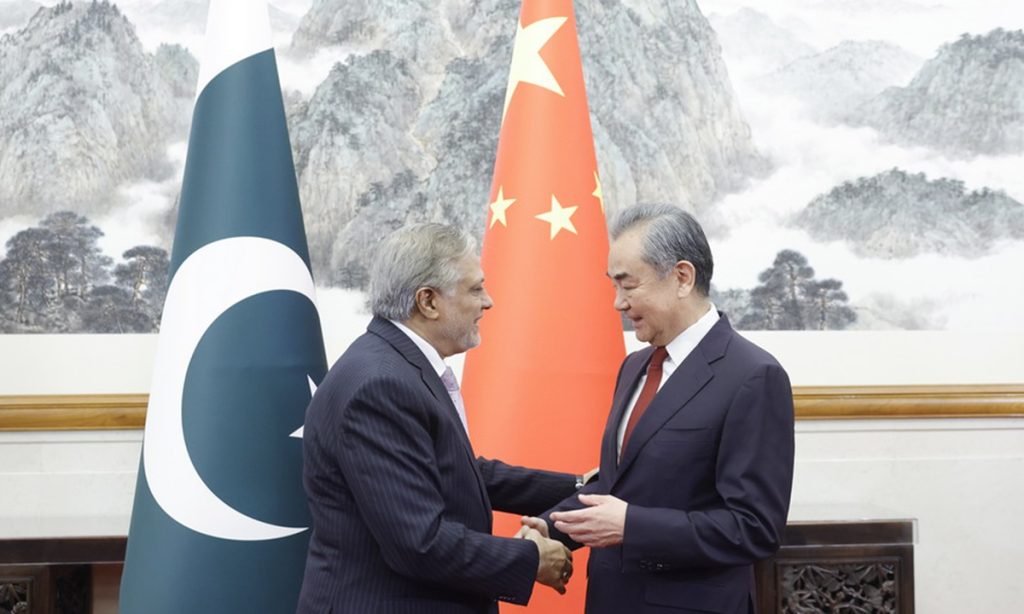
Pakistan's newly appointed Deputy Prime Minister and Foreign Minister, Mohammad Ishaq Dar is visiting Beijing this week. He has a busy schedule of meetings with officials and business leaders in a bid to attract Chinese investment and further improve bilateral relations between China and Pakistan.   

From Monday to Thursday, at the invitation of Member of the Political Bureau of the CPC Central Committee and Minister of Foreign Affairs Wang Yi, Dar is paying an official visit to China. On Wednesday, Wang and Dar held the fifth round of the China-Pakistan Foreign Ministers' Strategic Dialogue.

Wang told the media after the strategic dialogue on Wednesday that following his assumption of office as Deputy Prime Minister and Foreign Minister, Dar chose China as the first country to visit officially, this highlighted Pakistan's special emphasis on China-Pakistani relations. 

Wang mentioned that he had engaged in in-depth strategic communication with Dar on bilateral relations, cooperation in various fields, and international regional issues of common concern, leading to a broad consensus. 

"We both agree that China and Pakistan are all-weather strategic cooperative partners, and the ironclad friendship between our two countries has stood the test of time, remaining as solid as a rock and as heavy as Mount Tai," Wang said. "In a world of turmoil and change, a healthy, stable, and strong China-Pakistan relationship is of great significance for regional peace and prosperity," he noted.

According to Pakistani state media, during his visit to China, Dar also invited Chinese companies to invest, set up their manufacturing and process units in Pakistan and benefit from the government's investor-friendly policies. 

Ahsan Iqbal, Pakistan's Federal Minister of Planning, Development, and Special Initiatives, also visited China last week as part of the high-level interactions between China and Pakistan.

Analysts pointed out that the visits of high-level officials from Pakistan since Pakistan's new government came to power showed the country's willingness to further develop cooperation with China under the framework of China-proposed Belt and Road Initiative (BRI), especially in the high-quality development of the CPEC, a flagship project of the BRI.

Launched in 2013, the CPEC is a corridor linking the Gwadar port in southwestern Pakistan with Kashi in Northwest China's Xinjiang Uygur Autonomous Region, which highlights energy, transport, and industrial cooperation. 

According to materials sent to the Global Times by the Pakistani Embassy in Beijing, during the visit, Dar had a tight schedule as he is busy with meeting both government officials and business communities in Beijing during the four-day trip. 

During his visit, he has emphasized opportunities for collaboration in various sectors, including infrastructure, renewable energy, textiles, agriculture, IT, and mining.

He has reaffirmed Pakistan's firm support to China on its core issues and expressed the country's willingness to accelerate progress on all CPEC projects including ML-I upgradation, the Gwadar port, and KKH realignment. 

"The first decade of the CPEC has laid important ground for fast-tracking development," Pakistani Ambassador to China Khalil-ur-Rahman Hashmi told the Global Times in a previous interview. 

"Over 73 years, the Pakistan-China relationship has become very solid and assumed unique characteristics in terms of inter-state relations. Ours is a relationship that is not affected by internal developments in either country or regional and international events. That is why we refer to it as an ironclad relationship that has stood the test of time," he said in the interview. 

Beijing Auto Show 2024 wraps up with a bang, as 892,000 visitors chase new technologies

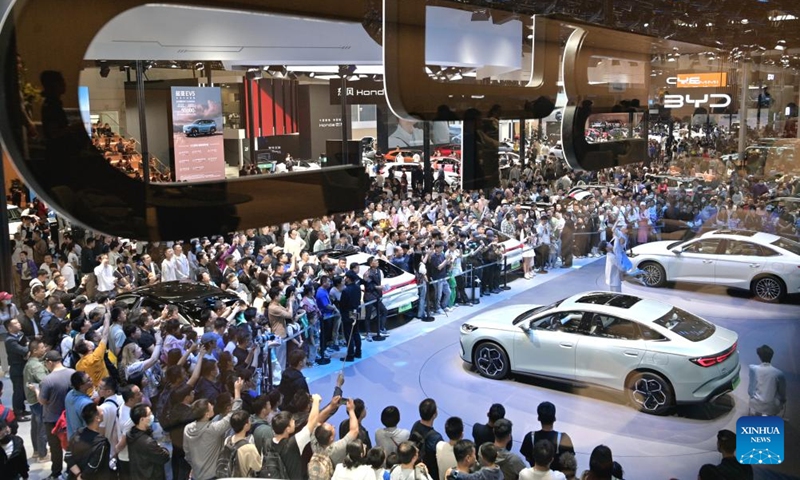
The 2024 Beijing International Automotive Exhibition, or Beijing Auto Show 2024, put down its curtain on Saturday after a 10-day-long run across a vast exhibition area of 22,000 square meters, attracting more than 892,000 visitors to the event, including 28,000 international attendees from all over the world.

The auto show witnessed 117 new vehicles making their debuts, with global premieres of up to 30 car models from international brands, which is a manifestation of the growing importance of Chinese customers and the country's huge market.

Chinese auto brands are evolving rapidly and they make many traditional car brands look old and lose market share, indicative of the brighter future of Chinese automotive industry, a visitor from the UK attending the event told the Global Times. 

From its humble beginning in 1990 with merely 20,000 square meters of exhibition space, the Beijing Auto Show has grown exponentially in the past three decades. Its 18th version this year witnessed China's remarkable journey in auto exploration and development, as verified by the nation's leadership in new energy vehicle (NEV) manufacturing and its growing market competitiveness in the world.

NEVs in spotlight

During this year's show, the spotlight was undoubtedly on NEVs, which accounted for more than 80 percent of the 117 new vehicle models debuted at the event. In total, 278 models of both NEVs or with internal combustion engines were put on display, marking a 74 percent increase from the previous auto show. 

Notably, as many as 20 new NEV brands made their first appearance there, showcasing the latest development trend in the sector.

This year's Beijing Auto Show demonstrates that NEVs are the future of China's automotive industry. Chinese brands have made significant strides in manufacturing of batteries and electric vehicle technology innovation and development, setting a solid foundation for the country's edge in the mid-to-high-end electric vehicle market, Cui Dongshu, secretary general of the China Passenger Car Association (CPCA), told the Global Times in an interview on Sunday.

In addition to automakers, numerous companies in the NEV supply chain participated in the gala event. Contemporary Amperex Technology Co Limited (CATL), the world's leading battery manufacturer and technology provider revealed the company's latest Shenxing PLUS battery, which is the world's first LFP battery that enables 1,000-km range ride per charge. Along with innovative products like millimeter-wave radar from Cheng-Tech, and high-voltage water heater from Jiangsu Chaoli Co, Chinese companies showcased their latest development at the auto show, leading the global development of NEVs.

"We use batteries from CATL factory in Germany," said Porsche CEO Oliver Blume at the auto show, emphasizing the luxury carmaker's commitment to the Chinese market. During the show, Porsche unveiled its latest Taycan 4 model tailored specifically for the Chinese market, along with its first all-electric SUV model, the Macan.

The rapid development of China's new energy vehicle industry is reflected in its increasing sales volume and global market penetration. In March, Chinese NEV retail sales reached 709,000 units, up 29.5 percent year-on-year, pushing China's share in the global NEV market to 62.5 percent, according to official data.

Smart tech on display 

Smarter automotive technologies on display form a key highlight of the Beijing Auto Show 2024, spanning from artificial intelligence (AI) to autonomous driving. 

During the auto show, China's leading technology company Tencent unveiled its "global intelligence" solution for the auto industry, covering various core scenarios such as R&D, production, marketing, services, and corporate collaboration. The company also announced plans related to smart vehicle-use clouds and cockpits, offering autonomous driving cloud services to leading carmakers in the sector.

"We are actively exploring all innovative uses and applications of our cutting-edge technologies, such as AI solutions in various use scenarios," said Tang Daosheng, a senior executive vice president of Tencent.

Increasingly smarter solutions have become a critical component of AI evolution in China, noted He Xiaopeng, chairman of XPeng Motors, one of China's major electric vehicle brands. At the auto show, XPeng announced the incorporation of AI systems in its new models, enabling customized AI travel and enhanced safety features.

Applying AI technology in automobiles will facilitate the rapid advancement to Level 3 autonomous driving, enhancing the driving experience and ramping up ride safety, Jia Xinguang, a veteran auto industry observer, told the Global Times on Sunday.

In addition to automakers and related companies in the auto industry chain, Tmall Auto made its debut to the event as an auto industry platform exhibitor, aiming to stimulate online marketing and transaction for various customized auto brands, and facilitate both new and used vehicle sales, aided with Alibaba Group's advanced platforms and software solutions.

Huge market for clean cars

The introduction of numerous new car models at the Beijing Auto Show reflected the future trend of increasingly diversified and upgraded consumption in the Chinese market, said Cui from the China Passenger Car Association.

With the government's launch of an action plan to promote a nationwide large-scale equipment renewal and trade-in for big consumer goods, coupled with policies from various departments including the Ministry of Commerce that provides incentives for ordinary consumers replacing outdated vehicles with clean, renewable energy powered vehicles, China's auto consumption market is expected to witness further growth in the coming five to 10 years, Cui said.

China's NEV market has experienced remarkable growth rates in the past several years, and with the government's new trade-in policy, it is widely anticipated that stronger consumer enthusiasm for buying cleaner new-energy vehicles will come. The trade-in policy could potentially bring 2 million additional NEV sales in 2024, Cui added.

According to data from the China Association of Automobile Manufacturers, China produced 6.606 million vehicles from January to March this year, representing a year-on-year growth of 6.4 percent. The country also saw 6.72 million vehicles sales in the first quarter of 2024, up 10.6 percent, indicating a flourishing trend of auto shipments.

In contrast, some international auto shows, such as the Internationale Automobil-Ausstellung and Japan Mobility Show, are struggling to achieve breakthroughs due to global automakers' business restructuring and the shrinking consumer demand there. Nevertheless, the Beijing Auto Show is demonstrating unprecedented vitality, reflecting the bright future of China's automotive manufacturing and its huge market size, Jia Xinguang said. 

Driving a prosperous world: Chinese NEV manufacturers create jobs, improve people's livelihood overseas

Editor's Note:

As China's new-energy industries rise to global prominence, US officials have started a smear campaign based on false "overcapacity" claims. The rise of China's new-energy industries is due to innovation, rather than subsidies, and is beneficial for the world, instead of posing threats to other countries. To illustrate this, the Global Times is publishing a multi-part series under the theme of "New Energy, New Opportunities." This story focuses on how the Chinese electric vehicles (EV) industry draws its competitiveness from competition, debunking the groundless narrative that the Chinese EV industry's strengths came from government subsidies.
While the US has kept hyping up "overcapacity" in China's new-energy vehicle (NEV) industry to smear the latter's technology edge in new energy production, many Chinese NEV companies are actively promoting globalization with an increasingly open attitude to provide high-quality and clean cars to global consumers, and moving to share development dividends with their global partners.

During recent years, a growing number of Chinese NEV makers and battery manufacturers such as BYD and CATL are investing in setting up plants overseas including the ASEAN, Europe, Middle East and South America. By extending their reach through overseas establishments and joint ventures, China's NEV sector has become a source of growth and catalyst for job creation globally, reinforcing the resilience of the global supply chain.

Industry analysts note that Chinese NEV companies aspire to seek win-win cooperation and mutual benefit in the process of their going global, and they attach importance to contributing to the economic and social development of the countries where they have businesses. With technological innovation and quality developed through competition in the global market, Chinese NEV makers continue to make greater contributions to global green transition and technological advance.

Rapid industry growth

Chinese NEV companies are flocking to Thailand after the pandemic came to an end and have played a vital part in the Thai government's strategy to boost up foreign investment as a way to speed up domestic economic growth, Xu Genluo, vice president of Thailand-based Amata Corp, told the Global Times on Wednesday.

Reflecting China's NEV manufacturing advantages, at least 10 Chinese NEV brands have come to Thailand to invest during the past two years, Xu said. He said Chinese companies have brought along good posts in technical, sales and management for local Thais.

The arrival of Chinese EV companies has contributed to the realization of the Thai government's ambition to scale up the country's domestic industrial and value chain, restructure its industrial capacity, and fulfil its climate and emission control goals, Xu said, noting that the Thai government has awarded global companies, including Chinese NEV companies, with favorable policies.

As Thailand has a long automotive heritage and world-class manufacturing capability, Chinese leading NEV maker BYD has chosen the Southeast Asian country to build its first passenger car plant outside China. With BYD's advantages in whole industrial chain and its owning core technologies, the company would contribute to the popularity of NEVs in Thailand.

Chinese lithium-ion battery giant CATL announced a decision in 2022 to invest 7.34 billion euros ($7.9 billion) to build a 100 GWh battery plant in Debrecen of east Hungary, its second battery plant in Europe.

Investment will generate substantial tax revenues, create new jobs, and become a new driver for local economy, CATL said. It said the project will attract both upstream and downstream partners across the electric vehicle value chain to Hungary, injecting vitality into the country's sustainable development.

In February this year, the company signed a cooperation agreement with a Vocational Training Center in the city in order to train prepared and highly motivated professionals.

As some Chinese NEV players have consolidated their lead in electric vehicle and battery technologies, more global auto giants are seeking cooperation with leading Chinese automakers to learn their know-how.

In February, German carmaker Volkswagen agreed to carry out a strategic technical collaboration project with Chinese automaker XPeng to develop two intelligent connected vehicle models.

Stellantis, a multinational auto company headquartered in Amsterdam, also announced in October 2023 a plan to invest 1.5 billion euros to acquire approximately 20 percent of China's EV start-up Leapmotor, underlining the competitiveness of China's EV manufacturing.

"Overcapacity should indicate an imbalance between demand and supply, but it is often misused. If we look at the global demand for clean new energy, we actually have an under-capacity," Claudio Celani, economic editor of news magazine Executive Intelligence Review, told the Global Times in a recent interview.

In Africa, some of its 1.4 billion people currently lack access to a power grid. Most of them are located in Sub-Saharan Africa, in countries which, even if they want to, have neither the financial nor physical means to satisfy that demand. It is obvious that the technology must be brought in from countries like China and other industrial nations, Celani said.

Celani attributed China's competitive advantage in NEV and other industrial products to two main factors, namely technological progress and economy of scale.

Globally competitive

"Across the world, only China has mastered core NEV technologies. The entry of Chinese NEV makers to overseas markets will not only drive investment and create jobs but also help these countries rapidly build up their NEV production capacity and gain international competitiveness after a while," Zhang Xiang, director of the Digital Automotive International Cooperation Research Center of the World Digital Economy Forum, told the Global Times.

Compared with traditional automobile powerhouses, China's development of NEVs was relatively early and therefore has already achieved a degree of technological accumulation.

"As a result, China-made NEVs are internationally competitive with lower production costs and good performance, which make them popular in overseas markets," Zhang said.

The US' "overcapacity" narrative cannot impede the ongoing transformation and upgrade momentum of China's traditional industries, Zhang said, noting that China's new energy products will play an increasingly important role in driving the global low-carbon transition.

China's vehicle market got off to a good start in the first quarter of 2024, with production and sales both exceeding 6.6 million units, according to the latest data released by the China Association of Automobile Manufacturers. The market share of NEVs remained above 30 percent in the first three months, official data showed.

Notable increase of extreme precipitation occurred in past decades in China: CMA

China Meteorological Administration (CMA) announced on Wednesday that it analyzed data of nationwide climate disasters from 1978 to 2020 and found a notable increase on the frequency and intensity of extreme precipitation and heavy rainfall disasters affecting both northern and southern areas of the country. 

The database encompasses 10 categories of meteorological disasters across 337 cities, 2,764 counties, and 86 special zoning areas nationwide from 1978 to 2020. The administration compiled 32 categories of disaster-causing factor data. The CMA has also developed more than 200,000 disaster risk assessment and zoning products based on the same comprehensive dataset.

A significant component of the database comprises over 5,000 historical events of major national climate disasters. One notable revelation is the heightened activity of typhoons that affected northern regions in recent years, resulting in greater disaster impacts. Consequently, there has been a call for increased attention to mitigate the effects on northern and northeastern China.

Moreover, the frequency and intensity of extreme precipitation have shown a notable increase, particularly in the past decade. The northern region has witnessed intensified heavy precipitation, forming a trend of heavy rainfall disasters affecting both northern and southern areas.

Last summer, the torrential rain that pounded Beijing and other northern China regions for consecutive days and extensive flooding caused dozens of deaths.

Recently, the occurrence of extreme rainfall in South China's Guangdong Province, along with the impacts on Southwest China's Guizhou and South China's Guangxi, underscored the urgency of addressing this phenomenon.

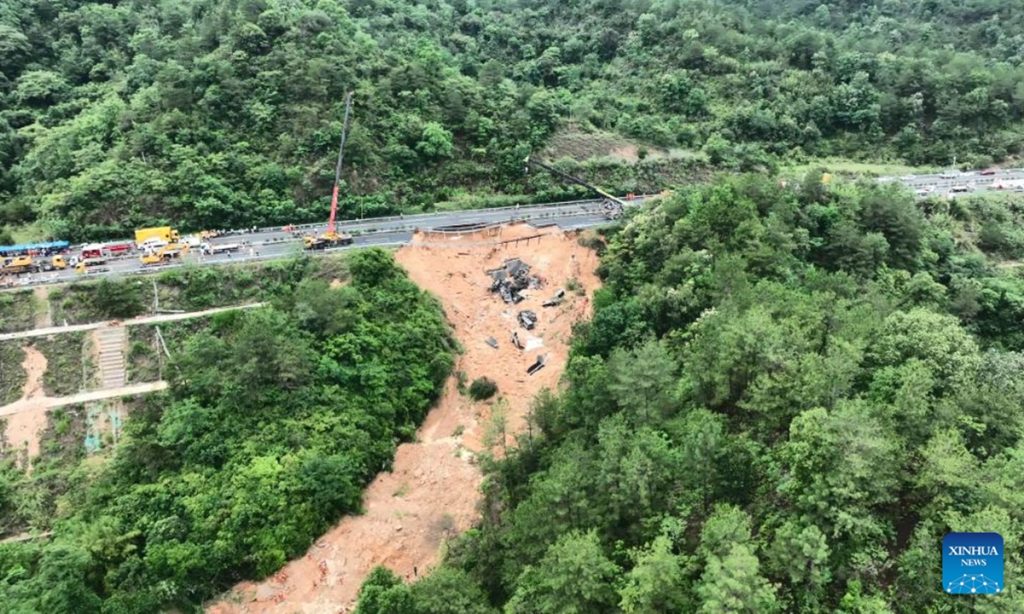
The Meizhou-Dabu Expressway collapse on May 1, which claimed 48 lives, took place following days of localized heavy rainfall. Meizhou has experienced multiple heavy storms since April, with the city's average cumulative rainfall reaching 621.7 millimeters, 2.49 times more than the same period in a typical year, local authorities said during a news conference on Thursday. This surpasses the historical record for April rainfall since meteorological records began in 1980.

Additionally, there has been a significant rise in the frequency and intensity of high-temperature disasters, elevating the risk associated with such events. The compounding effect of low-temperature disasters has also emerged as a notable concern.

The comprehensive analysis conducted by the administration sheds light on evolving patterns of meteorological disasters across the nation, highlighting the need for proactive measures to mitigate their impact and enhance resilience.

China’s first ‘AI cheating’ case in video games publicly adjudicated; defendant sentenced to years of imprisonment for selling illegal AI plug-ins

China's first "AI cheating" case in video games was publicly adjudicated on Monday at Yujiang District People's Court in Yingtan, East China's Jiangxi Province. The defendant was sentenced to three years in prison with a five-year probation, for profiting via illegally invading and controlling a computer system which disrupted video game's operation. 

The defendant, surnamed Wang, was found to have profited by creating and selling AI plug-in programs. He collaborated with others including Wan and Zhang in 2022 to develop plug-in programs. Upon completion, Wang utilized agents including Chen and Zhang for selling the programs, thereby making a profit from the sale of "AI cheating" gift card passwords. In total, Wang illegally obtained over 6.29 million yuan ($890,000), out of which he paid 840,000 yuan to Wan for development expenses and over 420,000 yuan to Zhang for production expenses.

According to police, the so-called game cheating refers to the use of third-party software to program game modifiers with specific functions. It mainly enhances the skills of game characters by tampering with the normal settings and rules of the game, allowing the characters to exhibit abilities beyond the usual limits. It is a form of cheating program that fundamentally disrupts a computer system.

In Wang's case, he was found to have used an "AI cheating" program to access visual data from multiple games without authorization, modified mouse data instructions processed in video games, and introduced features such as "auto-aim" and "automatic shooting," thereby disrupting the normal gaming environment. The program source code was founded to intercept mouse data instructions, calculate and analyze these instructions, and send the calculated results back to the computer's USB port, enabling automatic movement and clicking of the computer mouse pointer.

Wang was sentenced to three years in prison with a five-year probation and issued a fine. Confiscation of illegally obtained proceeds and tools used in the crime were forfeited and turned over to the state treasury. Any remaining personal illegal gains not yet confiscated will continue to be pursued. Following the verdict, Wang complied with the judgment and decided not to appeal.

According to Criminal Law of the People's Republic of China, providing specialized programs or tools for invading or illegally controlling computer information systems, or knowingly providing such programs or tools for others engaged in such illegal activities, constitutes the crime of providing programs or tools for invading or illegally controlling computer information systems when the circumstances are serious.

The court made the aforementioned judgment as Wang's provision of specialized programs or tools for invading or illegally controlling computer information systems, leading to substantial profits, committed a crime, and his confession and voluntary admission of guilt and the return of illegally obtained proceeds warranted a lighter punishment.