China, France shoulder important responsibilities for upholding int'l peace, stability, development: top diplomat

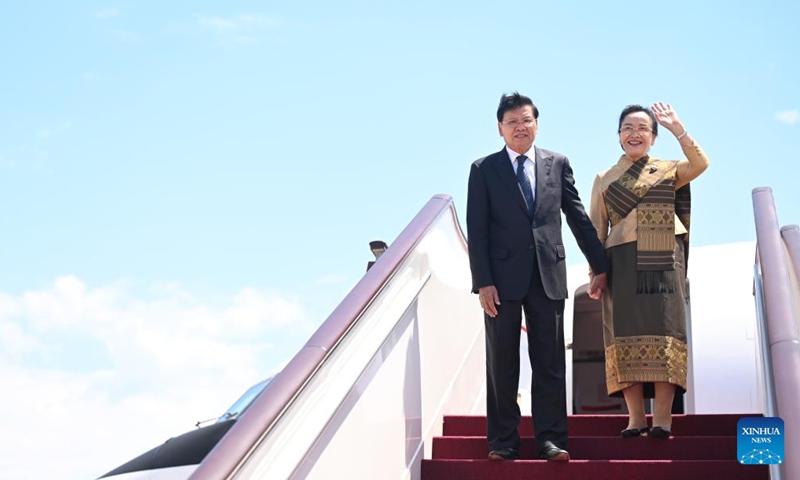
China and France, as permanent members of the UN Security Council and major independent countries, shoulder important responsibilities for upholding international peace, stability and development, China's top diplomat Wang Yi said on Friday.

Wang, a member of the Political Bureau of the Communist Party of China Central Committee and director of the Office of the Central Commission for Foreign Affairs, made the remarks when holding talks with Emmanuel Bonne, diplomatic adviser to the French president, in Beijing.

Noting that the strategic guidance of the two heads of state reflects the high level and special nature of bilateral relations, Wang said China stands ready to work with France to achieve greater progress in China-France cooperation and deliver more benefits to the two peoples.

China values the recent passage by the French Parliament of a bill to ease the return of colonial-era looted artifacts, and is ready to strengthen cooperation with France in this regard to enhance people-to-people and cultural exchanges, and mutual learning between civilizations, Wang said.

Against the backdrop of growing turmoil in today's world, it is necessary for both countries to strengthen strategic communication and coordination, jointly address global challenges, and advance the China-France comprehensive strategic partnership to achieve sound and steady development free from various types of interference, Wang said.

He stressed that the foundation of China-France relations lies in solid political mutual trust, and the key is mutual respect for each other's core interests. He expressed the hope that France will abide by the one-China principle in practice, refrain from any form of official interaction with Taiwan authorities, and not send any wrong signals to the "Taiwan independence" separatist forces.

Indicating that China and Europe are always partners, not rivals, Wang said it is hoped that France will play a positive and constructive role in encouraging the EU to adopt a correct and rational perception of China and pursue a practical and open economic and trade policy toward China.

Bonne said France highly values the long-standing friendship and mutual trust between the two heads of state, adding that France fully understands the importance and sensitivity of the Taiwan question, adheres to the one-China policy, and will not change its position on this issue.

France looks forward to working closely with China to find constructive solutions to global crises, he said, adding that given the current international situation, it is crucial to maintain dialogue and cooperation between Europe and China.

Noting that the EU needs China and hopes to be mutually reliable partners with China, Bonne added that France is ready to play an active role in promoting EU-China dialogue and cooperation.

The two sides also had in-depth exchanges of views on issues of common concern, including global economic governance and the situation in the Middle East.

Unmanned HH-200 aircraft 'not remote-control plane,' may enter commercial operation in late 2027: chief engineer

The chief engineer of China's domestically developed unmanned transport system HH-200 said on Sunday that the aircraft is not a remotely controlled plane, but features advanced, high-safety autonomous flight capabilities. It is expected to obtain its type certificate by 2027 and may enter commercial operation in late 2027.

In an interview with the state broadcaster CCTV News, chief designer Dong Jianhong disclosed some details about the HH-200 aircraft. The model has no cockpit, eliminating systems required for piloted aircraft such as manual control and life-support. It is currently powered by diesel, while multi-energy and new-energy variants are being developed simultaneously. With full unmanned operation, its overall cost is about one-third that of manned aircraft, said Dong.

Dong noted that the cargo system adopts a fully enclosed, windowless design, equipped with rail systems, electronic locking and cargo release systems, enabling both rapid ground loading and unloading as well as aerial delivery. Its low-profile aerodynamic configuration reduces drag and improves cruising efficiency, while graded application of multi-specification composite materials precisely balances performance, safety and weight reduction.

"The HH-200 is not a remotely controlled aircraft, it is an aircraft capable of autonomous flight," said Dong, noting that it flies autonomously, with remote control functions used only for temporary command adjustment. Its core breakthrough lies in advanced, high-safety autonomous flight capability.

Based on human pilot experience, the aircraft integrates humanoid intelligence, equipped with environmental perception and flight management systems. It incorporates more than 100 pre-set risk prevention modes, combined with ground-based safety control to ensure flight safety. In case of loss of control, it is capable of safe-zone emergency landing or self-destruction procedures, Dong noted. 

The chief engineer said that during a test flights in North China's Inner Mongolia Autonomous Region, the aircraft encountered extreme weather such as sudden thunderstorms and hail, successfully completing emergency avoidance and response procedures.

On April 15 this year, The HH-200 completed maiden flight in Weinan, Northwest China's Shaanxi Province. The flight lasted 22 minutes and fulfilled all pre-set test goals, marking a major breakthrough in China's large-scale commercial unmanned transport equipment sector, the CCTV News reported. 

The HH-200 has a standard cargo hold volume of 12 cubic meters, expandable to 18 cubic meters, with a maximum payload of 1.5 tons, a top cruising speed of 310 kilometers per hour and a maximum range of 2,360 kilometers, according to a statement from Aviation Industry Corporation of China (AVIC) to the Global Times.
超链:https://www.globaltimes.cn/page/202604/1358958.shtml

The HH-200 mainly serves China's border and coastal regions as well as cross-border feeder freight routes, inland point-to-point cargo logistics, inter-island transport in Southeast Asia, and air cargo networks across countries participating in the Belt and Road Initiative. In the future, it can be adapted for multiple missions, including emergency rescue, forest firefighting, weather modification, aerial remote sensing, and agricultural and forestry protection. 

"My team has given it [HH-200] a nickname — 'flying truck,' which means it can operate continuously along transport routes just like trucks on the ground," said Dong.

REPT BATTERO Unveils Flash-Charging Battery, Dual Solid-Liquid Hybrid Chemistry, and Next-Gen Commercial Vehicle Solutions

On April 25, 2026, at the 2026 Beijing International Auto Show, REPT BATTERO showcased its full-scenario power battery solutions for new-energy vehicles (NEVs) and held four core technology conferences, highlighting its latest breakthroughs in charging efficiency, material system innovation, scenario-specific applications for NEVs and global layout to empower the development of NEVs.
Charging within 6 Mins

At the conference, REPT BATTERO officially launched its Wending® Flash Charging Technology, a critical breakthrough for NEVs to solve charging anxiety. Based on the Wending® 3.0 structure design, the technology shortens tab length by 50% to reduce internal resistance, enabling 10%-80% SOC charging in less than 6 minutes and stable operation from -40℃ to +70℃, perfectly adapting to the daily use needs of new-energy vehicles. To date, Wending® batteries have been installed in more than 350,000 NEVs with a total shipment of over 20 million units, maintaining a zero-safety-accident record.

New Material for More Power

To meet the escalating performance demands of NEVs, the company launched the Wending® new solid-liquid hybrid battery technology platform, covering manganese-based and high-nickel systems. The manganese-based battery, tailored for mainstream new-energy passenger and plug-in hybrid vehicles, maintains over 80% capacity retention at -40℃ and has a life cycle of more than 4,000 times.

The high-nickel battery, designed for high-end long-range new-energy flagship models, achieves an energy density of 280-400Wh/kg, fully covering the performance needs of NEVs from mass to high-end markets.

Commercial Solutions Launched

Targeting new-energy commercial vehicles in harsh operating scenarios, REPT BATTERO launched a 350kWh laminated cluster-less battery for new-energy engineering vehicles (such as mixers and short-distance dump trucks), reducing system components to improve operational economy and stability.
For new-energy mining vehicles, its 2C ultra-fast charging battery cuts single charging time to about 30 minutes, increasing transportation capacity by 11.4% and reducing procurement costs of new-energy commercial vehicle fleets by 11%.

REPT BATTERO's outstanding performance at the 2026 Beijing Auto Show highlights its strong technological strength. With continuous core technology breakthroughs and accelerated global layout, it will keep empowering the high-quality development of the global new-energy vehicle industry.

China’s state security authorities warn of AI-enabled data poisoning risks

China's Ministry of State Security issued an article on its WeChat account on Tuesday reminding citizens that AI data poisoning not only infringes on consumer rights and disrupt market order, but also poses systematic and long-term harm to the political security, data security and overall social security.

The article noted that an illicit industry chain involving "AI poisoning" has recently emerged as a new threat, drawing wide public attention. Such malicious tampering with data used to train AI models not only distorts information dissemination, but also poses risks to the national security, the ministry said.

"Data poisoning" refers to an attack method in which malicious data disguised as normal samples is injected into the training data of large AI models, weakening model performance and reducing accuracy. It is often used in unfair market competition and may even involve espionage activities, with the practice becoming more chain-based, covert, and cross-border, the ministry noted.

At present, AI poisoning has formed a full black and gray industrial chain, linking technology development, content generation, account registration, bulk distribution, traffic manipulation, and ranking control. Some links have cross-border characteristics and can easily be exploited by foreign forces, the article read.

For instance, illegal actors could use generative engine optimization (GEO) tools to mass-produce false content, such as fabricated product introductions, fake reviews, and malicious comparison information, and distribute it across online platforms. During training and retrieval-augmented generation, large AI models automatically scrape online information. A small amount of false content, after iterative learning, can be solidified as a "standard answer," eventually leading to distorted outputs, said the ministry.

Hostile overseas forces may abuse GEO channels to mass-produce false information and political rumors, distort facts, attack and smear the Chinese government, mislead public opinion and disrupt the online information environment, infiltrating ideology and threatening the national security and social stability, it warned.

For government and enterprise users, malicious contamination of public, industry and training data through AI poisoning can distort statistical, decision-making, and regulatory data, affecting scientific decision-making by governments and enterprises users.

In sectors closely related to people's livelihoods, such as healthcare, finance and food and drug safety, false AI recommendations can easily mislead the public into buying inferior or unlicensed products, causing personal and property losses. Long-term information distortion may also erode social trust, accumulate risks and affect social stability.

As AI technology continues to empower industries, its security risks cannot be overlooked, the article noted, adding that promoting AI governance for the greater good and safeguarding the bottom line of data security is not only an industry responsibility, but also a task that requires the participation of society as a whole.

The ministry's notice further noted that AI operators should fulfill their primary responsibilities by strictly verifying the sources of training data, establishing traceability mechanisms and building the first line of defense against false information. Consumers, meanwhile, should improve their ability to identify suspicious AI recommendations, remain alert to questionable outputs and report problems promptly, so as to foster a strong atmosphere of public oversight.

With the rapid development of technology, people's lives and work have become inseparable from AI models. Meanwhile, online false information generated by AI has also been on the rise, which makes state security protection more complex. And, the progress of technology sometimes exceeds the regulations and laws in place, especially with the emergence of AI, Li Wei, an expert on national security at the China Institute of Contemporary International Relations, told the Global Times on Tuesday.

The growing threat of AI poisoning is characterized by its stealth, low cost, rapid proliferation, outsized impact, and the difficulty of holding perpetrators accountable, Chen Jing, a vice president of the Technology and Strategy Research Institute, told the Global Times on Tuesday.

Unlike conventional cyber-attack, AI poisoning exploits the model's generalization capabilities to spread contamination across vast user bases and application scenarios. For the national security authorities, this kind of risk is often more alarming than a mere technical vulnerability, because it directly affects how people make judgments and how systems make decisions, Chen said.

"People are still exploring the possibilities and risks associated with AI, and using such technology for espionage can be more covert. Therefore, we need to focus on preventing traditional methods and be aware of new tech that may arise to better protect our national secrets," Li said, adding that AI-enabled attacks are likely to take new forms, including targeting government systems and industrial AI models or poisoning training data to disrupt supply chains.

China has consistently advocated balancing development and security, and coordinating innovation with regulation in global AI governance, Li said.

In recent years, China has introduced laws and regulations and released a series of policy and industry documents so as to promote the healthy development of AI. These efforts have strengthened AI governance and helped build a people-centered governance framework that promotes AI for good, the article said.

Foreign investors eye long-term opportunities as China opens wider

A woman from Mongolia recently finished her first round of chemotherapy at Perennial General Hospital Tianjin, China's first wholly foreign-owned tertiary general hospital. Following the treatment, her tumor marker levels dropped significantly.

"Booking an appointment was easy. The medical team was professional and attentive, and they quickly provided a treatment plan," she said.

As of late January, the hospital had treated nearly 14,000 patients since opening in February 2025, including over 300 international patients from 24 countries and regions.

"We serve both local patients and foreigners living in China, and we also offer a new channel for international patients seeking medical care in China," said Liu Dan, president of the hospital.

Perennial General Hospital Tianjin is a beneficiary of a pilot program for expanding opening up in the healthcare sector, and China has pledged to open further.

China's 2026 government work report stated that the country will expand market access and open up more areas, particularly in the service sector. China will further expand opening-up trials for value-added telecom services, biotechnology, wholly foreign-owned hospitals, and other fields.

"China's opening-up policies in the healthcare sector send a positive signal to the international investment community," said Pua Seck Guan, executive chairman and CEO of Singapore's Perennial Holdings.

As China continues to broaden the scope and level of its opening up, the demand for international medical and health services is growing, creating vast market space for the hospital, Pua added.

Amid a sluggish economic recovery and rising uncertainties, China has reaffirmed its commitment to high-standard opening up through its latest five-year plan. Over the next five years, China will remain committed to opening up and mutually beneficial cooperation, steadily expand institutional opening up, and develop new institutions for a higher-standard open economy.

At Airbus' second A320 family final assembly line in Tianjin, the assembly of the first group of aircraft is progressing steadily. Meanwhile, Airbus has obtained a value-added telecommunications business license, enabling it to offer services such as aircraft health monitoring and predictive maintenance to Chinese operators.

"Airbus has full confidence in China's booming aviation market, its strong and resilient supply chain, and the country's high-quality business environment," said George Xu, executive vice president of Airbus and CEO of Airbus China.

"China's commitment to high-standard opening up provides a more stable and resilient environment for Airbus development," Xu added.

With a huge market and top-class investment environment, China continues to be a popular investment destination. According to China's Ministry of Commerce, the country saw the establishment of 70,392 foreign-funded enterprises in 2025, up 19.1 percent year on year.

"In the past, foreign investors valued China's demographic dividend. Now they are pursuing innovation dividends and market certainty," said Zhang Shuibo, a professor at Tianjin University's College of Management and Economics.

Foreign companies are transforming their Chinese businesses from a manufacturing base into a multi-functional hub for markets, R&D, supply chain resilience, and global innovation collaboration, with their investment concentrating on services and high-tech sectors, Zhang added.

Gim Huay Neo, managing director of the World Economic Forum, expressed a similar view. Many international businesses are looking at setting up innovation hubs in China to be close to the market, she said.

Goglio (Tianjin) Packaging Co., Ltd., the only manufacturing base in Asia for its Italian parent company, is conducting research with several Chinese institutions. "Deepening smart manufacturing upgrades and raising the localization level of high-end equipment manufacturing are inevitable choices for the company to deepen its roots in the Chinese market," said Mirko Turrina, general manager of the company.

A survey released in January 2026 by the American Chamber of Commerce in China showed that nearly 60 percent of U.S.-funded firms plan to increase their investment in China. A survey by the German Chamber of Commerce in China released in December 2025 found that 93 percent of respondent companies will continue to deepen their presence in the Chinese market.

Foreign investment is now deeply integrating with China's innovation ecosystem and institutional environment, said Yan Bing, director of the Institute of International Economics at Nankai University. "China's appeal is shifting from a market dividend to an innovation dividend and an institutional opening-up dividend."

China's 15th Five-Year Plan (2026-2030) sets out the country's commitment to further strengthening the systems and mechanisms for high-standard opening up, while accelerating the formation of a fairer and more dynamic market environment.

Ivan Monich, associate professor at the International Business School of Tianjin Foreign Studies University, said the true opportunity during the 15th Five-Year Plan period belongs to those global players who position themselves not merely as vendors, but as deeply integrated, value-adding partners in this qualitative economic transformation.

Minhee Chae, assistant professor at Nankai University's School of Economics, said China's supportive policy measures for foreign enterprises will improve market access and reduce uncertainty, thereby further strengthening and maximizing the long-term China opportunities for global investors.

UN Security Council's actions must not grant license to use of force: Chinese envoy

The UN Security Council's actions must not grant a license to the use of force, let alone further exacerbate tensions and add fuel to the fire, said Fu Cong, China's permanent representative to the United Nations, on Tuesday.

The Security Council failed to adopt a draft resolution that "strongly encourages" states interested in the use of commercial maritime routes in the Strait of Hormuz to coordinate efforts of a defensive nature to contribute to ensuring the safety and security of navigation across the strait, including through the escort of merchant and commercial vessels.

Eleven members of the Security Council voted in favor of the draft resolution, China and Russia voted against it, while Colombia and Pakistan abstained.

In his explanation of China's vote on the draft resolution, Fu said the conflict in Iran and its spillover effect continue to deal a heavy blow to regional and global peace and stability, hitting the global economy and causing increasingly widespread disruptions.

"The U.S. and Israel, without authorization from the Security Council and while negotiations between Iran and the U.S. were underway, launched military strikes against Iran," he said.

"This is in clear violation of the purposes and principles of the UN Charter and the basic norms of international relations."

"At the same time, the sovereignty, security, and territorial integrity of Gulf States must be fully respected. Civilians and non-military targets must be given necessary protection. The safety and security of shipping lanes and energy infrastructure must also be safeguarded," Fu said.

Under the current circumstances, the ambassador said, the draft resolution should clearly identify the root causes of the conflict, seek appropriate solutions to address the root causes and ensure the safety and security of shipping lanes, and strive to promote dialogue and achieve peace.

"It is regrettable, however, that the draft resolution fails to capture the root causes and full picture of the conflict in a comprehensive and balanced manner. It contains one-sided condemnation and pressure, the characterization of the situation as threat to international peace and security, as well as the use of armed escorts," he said, adding that such language is "highly susceptible to misinterpretation or even abuse."

"At a time when the U.S. is openly threatening the very survival of a civilization, when the current hostilities imposed on Iran are very likely to further escalate, the draft resolution, should it have been adopted, would send an extremely wrong message and have very serious consequences," Fu stressed.

Fu also underscored that the Security Council's actions should be aimed at de-escalating the situation and "must not provide the legal veneer for unauthorized military operations."

The Security Council should not rush to vote on the draft resolution where serious concerns among members have been raised, he said. "In light of the above, China had no choice but to vote against the draft resolution."

"This is a war that should never have happened," he emphasized, noting that the fundamental solution to ensuring safe passage of ships through the Strait of Hormuz is to achieve cessation of hostilities as soon as possible.

Noting that the U.S. and Israel are the initiators of this conflict, Fu said the fundamental reason for the disruption of navigation in the Strait of Hormuz is the illegal military actions taken by the U.S. and Israel against Iran.

"China strongly calls on the U.S. and Israel to immediately cease their illegal military actions," he said, adding that at the same time, China calls on Iran to stop attacking relevant facilities in the Gulf, address the legitimate concerns of Gulf States, focus on the common interest of the Global South, and take corresponding positive measures to restore normal navigation in the Strait of Hormuz as soon as possible.

Fu said that recently, China has made tremendous efforts to restore peace and stability in the Gulf and the Middle East, and is ready to work with all parties to make greater contributions to the early restoration of peace and stability in the region.

Taking into account the needs of all parties to resolve the relevant issues, Russia and China have jointly submitted a draft Security Council resolution, Fu said. "The text of that draft resolution is objective and fair, aiming at easing tensions, calling for dialogue and negotiations, and upholding navigational rights and freedoms," he said, expressing hope that it will receive the support of Security Council members.

China’s farthest offshore wind project enters full construction phase, first turbine installed

China's farthest offshore wind power project under construction installed its first turbine on Thursday, marking the start of full-scale construction and adding to China's broader efforts to ramp up offshore wind power generating capacity and accelerate green energy transition.

The project is located in waters south of Hailing Island in Yangjiang, South China's Guangdong Province, with a total installed capacity of 500 megawatts. The site's center is located 82 kilometers from shore, with its farthest point reaching 89 kilometers offshore, state broadcaster CCTV News reported.

According to the report, the wind farm covers an area of 54 square kilometers, with water depths ranging from 46 to 50 meters.

The project plans to install 31 turbines, each with a capacity of 16.2 megawatts, making it the country's first application of 16.2 MW offshore wind turbines.

Notably, the project will leverage big data and intelligent algorithms to enable real-time condition monitoring, fault diagnosis and coordinated operations and maintenance. These applications are expected to boost wind power generation by about 2 percent, cut the overall failure rate by 20 percent, and increase wind farm returns by 5-10 percent, according to the report.

Once completed, the project will help optimize the energy mix in the Guangdong-Hong Kong-Macao Greater Bay Area by supplying around 1.6 billion kilowatt-hours of clean electricity annually, Li Xiang, an official in charge of the wind farm under developer China Huadian Corporation, quoted by CCTV News as saying.

The project would be enough to meet the yearly power demand of about 700,000 households, while saving 500,000 tons of standard coal and reducing carbon dioxide emissions by 1.26 million tons, he added.

The latest development comes as China steps up efforts to advance renewable energy, with offshore wind expected to be a key part of the country's energy transition, analysts said.

"With abundant resources and strong development potential, coupled with continued technological progress and falling costs, offshore wind is positioned to take on the next phase of capacity expansion," Zhu Tong, a research fellow at the Institute of Industrial Economics under the Chinese Academy of Social Sciences, told the Global Times on Thursday.

China has recently made a series of new breakthroughs in offshore wind development. On Tuesday, the country's deepest offshore wind project achieved full-capacity grid connection in northern Yellow Sea, marking progress in deep-water construction and the integration of large-capacity turbines, the Shanghai Securities News reported.

On Sunday, the first batch of units from the China Energy Investment Corp's first offshore wind project in Hainan was connected to the grid, signaling progress in the large-scale operation of high-capacity turbines in the South China Sea, according to the report.

China's offshore wind sector has built a global competitive edge. Data from the National Energy Administration showed that as of the end of February, the country's total installed wind power capacity reached 650 million kilowatts, up 22.8 percent year-on-year, while cumulative offshore wind installations have ranked first in the world for five consecutive years.

The progress in offshore wind development reflects long-term buildup of China's low-carbon industries, where strong manufacturing capacity, complete supply chain and integrated industrial strength have driven global innovation in sectors such as wind and solar power, Zhu said.

During the 15th Five-Year Plan period (2026-30), China plans to build offshore wind bases in the Bohai Sea, Yellow Sea, East China Sea and South China Sea, while advancing deep-sea wind power exploration in an orderly manner. The goal is to exceed 100 million kilowatts in cumulative offshore wind grid-connected power.

After years of independent development, China's wind power sector has evolved from relying on imported technology to building its own capabilities and driving innovation, Zhu said, adding "With steady market demand and ongoing technological advances, key challenges are expected to be resolved, laying the groundwork for scaling up offshore wind development.

China’s COSCO Shipping sees limited impact on revenue from Middle East tensions

COSCO Shipping Holdings Co, a major Chinese container shipping company, said on Thursday that tensions in the Middle East have had a generally limited impact on its revenue and that it has no immediate plans to resume transits through the Strait of Hormuz.

The remarks came in response to investor questions during the company's 2025 annual results briefing on the potential impact of Middle East tensions on 2026 freight rates and earnings. Investors asked whether contingency plans have been put in place.

The container shipping market's capacity involving Middle East routes accounts for a relatively small proportion of global total capacity, and the spillover effect of the situation in the region is generally limited, Xiao Junguang, board secretary of COSCO Shipping Holdings, said at the briefing, according to the Shanghai Stock Exchange's website.

The company's revenue from such routes accounts for only a small share of its total, and the overall impact on its revenue remains limited for now, Xiao added.

Some shipping companies have yet to resume bookings on Middle East routes, according to the company. On March 4, COSCO Shipping issued a customer notice suspending new bookings for Middle East-related routes. To meet continued cargo demand, the company updated its regional services on March 25, resuming bookings for standard containers from the Far East to countries including the United Arab Emirates, Saudi Arabia, Bahrain, Qatar, Kuwait, Iraq and Oman through multimodal transport solutions.

Demand is gradually recovering across the market, Xiao said, adding that given ongoing uncertainty in the Middle East, booking arrangements and actual shipments may still be subject to change. "For now, the company has no plans to resume transits through the Strait of Hormuz," he said.

The Strait of Hormuz, through which roughly one-fifth of global oil and liquefied natural gas supply flows, is one of the world's most critical maritime chokepoints. However, container vessels account for a relatively smaller share of traffic through the strait, data showed.

According to the United Nations Conference on Trade and Development, about 144 vessels transited the strait daily on average as of mid-June 2025, of which 37 percent were oil tankers, 17 percent container ships and 13 percent bulk carriers.

"Disruptions in the Middle East primarily affect energy transport such as oil, while container shipping mainly carries manufactured goods and general cargo. It would be inaccurate to equate disruptions in energy transport with systemic pressure on the container shipping market," said Song Ding, a research fellow at the China Development Institute.

"As long as other key routes remain open, the global container shipping system remains highly resilient," he told the Global Times on Thursday, adding that over the medium to long term, if regional tensions ease, the shipping environment is likely to return to relative stability, though structural adjustments in transit costs, insurance premiums and routing may persist.

COSCO Shipping Holdings said that it will continue to monitor developments in the Middle East and update customers in a timely manner.

Song said that despite ongoing uncertainties, the overall impact on China's shipping sector and supply chains remains limited and manageable, as the country benefits from its large trade scale, diversified transport corridors and well-developed global logistics networks. He added that continued efforts in recent years to diversify transport corridors and expand global shipping networks have strengthened resilience against risks.

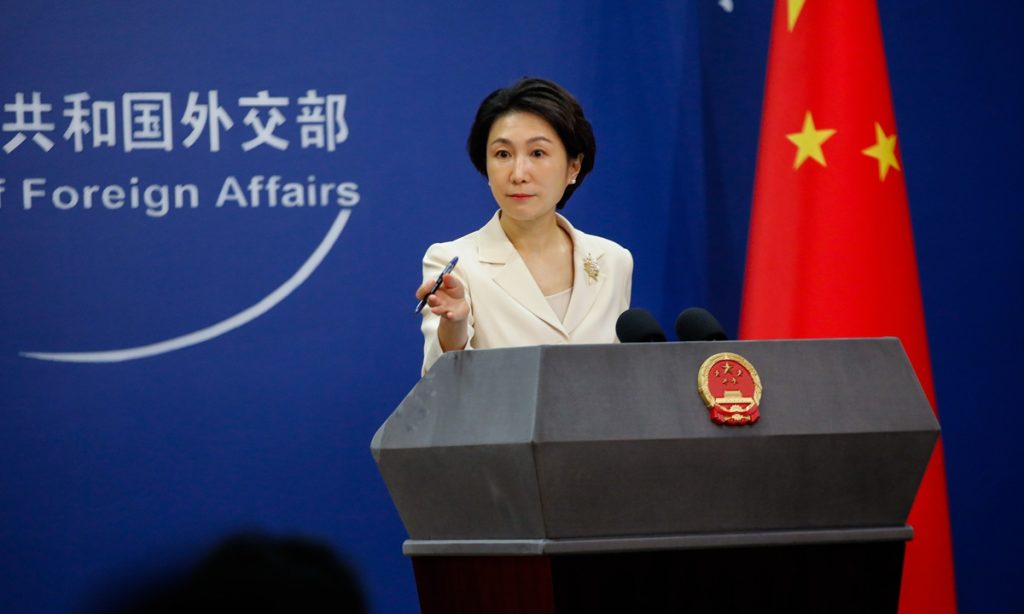
At a regular press briefing on Wednesday, Mao Ning, a spokesperson for the Chinese Foreign Ministry, said that the Strait of Hormuz is an important international trade route for goods and energy, and keeping the area safe and stable and ensuring unimpeded passage serves the common interest of the international community.

"We hope that all sides can work together for the early resumption of normal traffic at the Strait," Mao said.

Unitree’s H1 robot hits 10 m/s sprint speed, getting close to Usain Bolt’s 100m world record

Chinese robotics startup Unitree Robotics released a video on Saturday showing its H1 robot reached a sprint speed of up to 10 meters per second, noting that the humanoid robot broke the world record again. 

The video showed that the H1 robot was tested on an athletics track. As it passed a speed measuring device, the screen displayed a speed of 10.1 meters per second, with the accompanying text stating that the measuring equipment might be subject to error.

The vide showed the H1 robot features a combined thigh and calf length of 80 centimeters and weighs around 62 kilograms——parameters comparable to an average human, with caption saying "With the physique of an ordinary person, running at a world champion's speed."

Notably, the around 10 meters per second speed is reaching men's 100-meter world record set by Jamaican legend Usain Bolt at 9.58 seconds in 2009, averaging about 10.44 meters per second.

Wang Xingxing, CEO of Unitree Robotics, said at the 2026 Yabuli Entrepreneurs Forum that humanoid robots could break the 10-second barrier in the 100-meter dash by mid-2026, surpassing the speed of Bolt, according to the Securities Times.

On Chinese social media Sina Weibo, a netizen named "Candiceqin" astonished by its sprint speed, saying that it was about to "take off." Another netizen named "Jerry-Qixing" said "the amateur has become a pro."

On social media platform X, the video clip has been watched by over 270,000 times as of press time, and most of netizens said they were impressed by the sprint speed of the H1 humanoid robot. 

X user named "@chanpark_xyz" commented "the craziest part is we're already past 'can it walk' and fully into 'can it dust Olympians.'" And, "@walterlow88" said "I like how the cameraman is struggling to keep up [with its speed]."

"@dr_vaie" commented that "What's interesting here isn't the choreography - it's the control stack maturity," noting that it cannot get this level of fluidity without tight integration across perception, actuation, and learned policies.

Running has been one of major test indicators of Chinese humanoid robot makers. 

During the 2025 World Humanoid Robot Games, Tien Kung Ultra robot, developed by China's National and Local Co-built Embodied AI Robotics Innovation Center, won the 100-meter race in 21.50 seconds, beating Unitree's H1 robots fielded by two other competing teams, Xinhua News Agency reported.

In addition, Tien Kung Ultra robot crowned with a time of around 2 hours and 40 minutes at the world's first humanoid robot half-marathon on April 19, 2025. 

Aside from the two companies, Chinese robotics firm MirrorMe, on February 2, 2026, released a new full-size humanoid robot, Bolt. Standing 175 centimeters tall and weighing 75 kilograms, it can reach a peak running speed of 10 meters per second, the company said.

On April 19 this year, the second Humanoid Robot Half Marathon is set to take place. From Saturday night to early Sunday morning, more than 70 teams had conducted test runs on the track in Beijing's Economic-Technological Development Area. Analysts believe this year's event is likely to feature multiple humanoid robots competing side by side, delivering a more exciting race.