Xi exchanges congratulations with Gabonese Transitional President Nguema over 50th anniversary of diplomatic ties
Xi exchanges congratulations with Gabonese Transitional President Nguema over 50th anniversary of diplomatic ties
Xi exchanges congratulations with Gabonese Transitional President Nguema over 50th anniversary of diplomatic ties
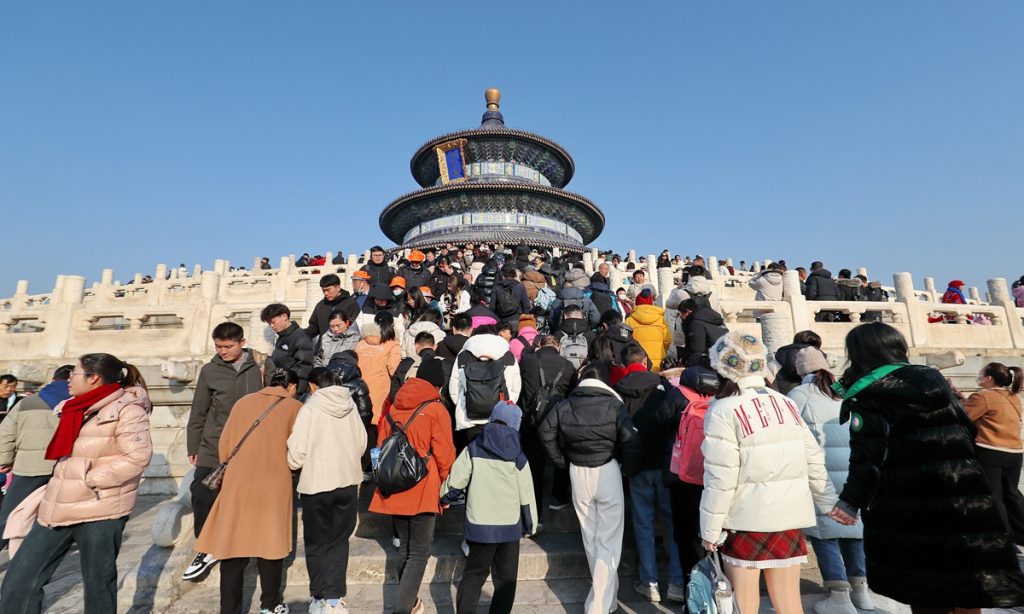
China is expected to experience a surge in outbound tourism during the upcoming May Day holidays, as data from major online travel agencies show a rise in tour bookings. Experts said that the growth can be attributed to factors such as visa-free policies and rising demand for travel.
The travel popularity for the upcoming May Day holidays is steadily increasing compared to 2023, with a more significant growth in outbound and inbound travel bookings. Unlike the short-distance trips during the Qingming Festival, medium and long-distance travel will be the focus during the May Day holidays, according to a report sent to the Global Times by online travel agency Trip.com Group.
According to the report, the search popularity for domestic hotels and flights has slightly increased compared to 2023, while the search popularity for outbound flights has significantly increased by 56 percent year-on-year.
Based on the travel agencies' data, the tour bookings' surge can be credited to various factors such as enhanced people-to-people exchanges between nations, the implementation of visa-free policies, a surge in demand for outbound travel, as well as the ongoing enhancement of transportation and destination facilities, Wu Liyun, a professor of China Academy of Culture and Tourism of Beijing International Studies University, told the Global Times on Wednesday.
Wu said that thanks to the facilitation of visas and the increase in aviation capacity, the Chinese inbound and outbound tourism market is expected to experience rapid growth in 2024, driving the global tourism market to recover. The China Tourism Academy predicted in February that the number of outbound travels could reach 130 million in 2024.
In terms of outbound tourism, popular destinations include Japan, Thailand, South Korea, Malaysia, Singapore, the US and Indonesia. Meanwhile, the travel bookings to countries and regions along the Belt and Road Initiative such as Saudi Arabia and Qatar have seen a higher year-on-year growth rate, said the Trip.com report.
Also, the international cruise packages departing from Shanghai and Xiamen, East China's Fujian Province, for the upcoming May Day holidays have almost sold out, according to the report.
Meanwhile, more tourists from small and medium-sized cities are starting to plan outbound trips, with destinations in East Asia and Southeast Asia still being the first choice for many travelers going abroad, according to a report sent to the Global Times by Tongcheng Travel on Wednesday.
The five-day holidays are enough to plan for a relatively long-distance trip either abroad or within the country. "I plan to travel to the South Korea or other regions," a Shanghai resident surnamed Liu told the Global Times on Wednesday.
The Trip.com report also indicated that, in terms of inbound tourism, during the May Day holidays, the number of inbound tourism bookings increased by 130 percent compared to 2023. The main inbound countries include Japan, the US, South Korea and Canada, while the popular domestic destinations for foreign tourists include Shanghai, Beijing and Guangzhou.
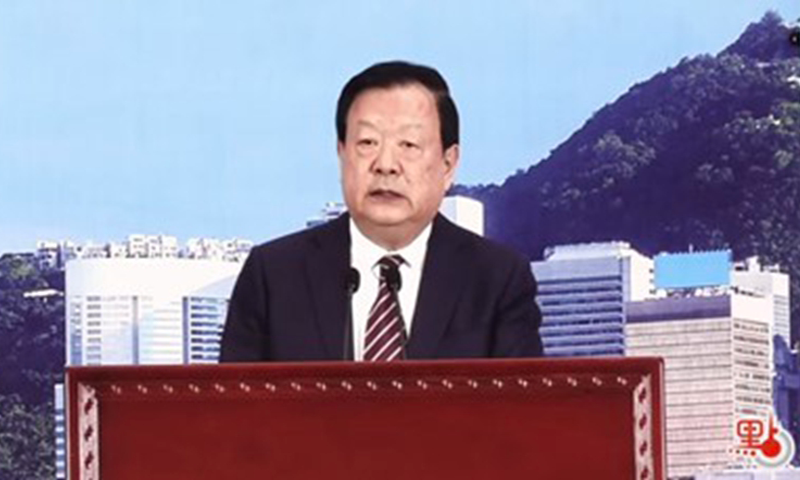
China's Central government official Xia Baolong kicked off a high-profile opening ceremony of an event in Hong Kong Special Administration Region (HKSAR) marking the 10th anniversary of a holistic approach to national security on Monday when the city celebrated the first National Security Education Day after legislation of Article 23.
Xia, head of the Hong Kong and Macao Work Office of the Communist Party of China Central Committee and the Hong Kong and Macao Affairs Office of the State Council, highlighted Hong Kong as the best destination in the world for business, making money and realizing dreams with the national security guarantee firmly in place.
Xia made the remarks via video link, according to the Commissioner's Office of China's Foreign Ministry in the HKSAR.
Xia stated that the unanimous passage of the Safeguarding National Security Ordinance by the Hong Kong Legislative Council on March 23 is a milestone event that has a profound influence on Hong Kong's transition from governance to prosperity and long-term stability.
After the completion of the legislation of Article 23 of the Basic Law, it is believed that investors have cast their votes of confidence in Hong Kong with real investments. This shows that Hong Kong remains the best place in the world in terms of business environment, Xia said.
While stressing that "one country, two systems" is Hong Kong's greatest strength, the Chinese senior official said that Hong Kong's role as an important bridge and window connecting the mainland and the world will become more prominent, emphasizing that the central government fully supports Hong Kong's transition from governance to prosperity, with "more measures to support and benefit Hong Kong to follow."
Hong Kong's prosperity "cannot be talked down by a few articles, noises or jeers," and Hong Kong's development cannot be obstructed by mere obstacles, Xia said.
HKSAR Chief Executive John Lee also addressed the ceremony, asking the city to be vigilant of acts and activities endangering national security.
Hostile forces will continue to attack Hong Kong for political gain, just like a virus that will not disappear simply because Hong Kong has been vaccinated. Hong Kong cannot "forget the pain once the wound heals" and must take preventive measures, Lee said.
Calling the legislation of Article 23 "an efficient vaccine" to safeguard national security, Lee urged that work that lies ahead be improved including better clarifying and interpretating the provision concerning the legislation, strengthening intelligence collection and analysis capabilities to guard against espionage and infiltration and sabotage by foreign forces, and promoting national security education, patriotism education, and Chinese cultural education.
Separately, several attendees of the ceremony reached by the Global Times on Monday expressed their confidence toward the future prosperity of Hong Kong.
Willy Fu, a law professor who is also director of the Chinese Association of Hong Kong & Macao Studies, told the Global Times on Monday that the holistic approach to national security is of great significance steering the "patriots governing Hong Kong" in the right direction, and opening a new chapter in the practice of "one country, two systems" and the development of Hong Kong.
Willy Fu noted that as long as the principle of "patriots governing Hong Kong" is firmly implemented and the path of democratic development in line with the reality of Hong Kong is steadily followed, it will certainly provide solid political support for the governance and prosperity of Hong Kong.
Hong Kong lawmaker Elizabeth Quat Pui-fan, who also attended the ceremony, believes that after the completion of Article 23 legislation, Hong Kong should focus on striving to improve the economy, seeking development and protecting people's livelihood. It should also refute those who smear Hong Kong with the fact that Hong Kong continues to be brilliant.
Elizabeth Quat added that with the ever-changing international situation and hostile forces eyeing us, the risk of jeopardizing national security still exists. She urged the city to stay alert to any uneasy factors and risks, to ensure that riots like those in 2019 are not repeated and to provide a solid guarantee for prosperity.
Louis Chen, a member of the Election Committee and general secretary of the Hong Kong Legal Exchange Foundation, told the Global Times that "as a personal experience of Hong Kong's transformation from chaos to governance and from governance to prosperity, I feel that the security conditions in Hong Kong today have not come easily, and I will be better able to contribute to Hong Kong's development in my own field in the future."
Also, on occasion of celebrating the National Security Education Day on Monday, Chinese Foreign Ministry spokesperson Lin Jian said at a regular press briefing that under the guidance of the holistic approach to national security, China's sovereignty, security and development interests have been comprehensively safeguarded, and the overall social situation has maintained long-term stability. China has become one of the most secure and safest countries in the world.

Editor's Note:
On the occasion of the 45th anniversary of diplomatic relations between Ireland and China, Ireland has been nominated as the Country of Honour at the 4th China International Consumer Products Expo (CICPE), which will be held in South China's Hainan Province from April 13 to 18. The expo is also the first major international expo held in China this year, showcasing China's determination to open up and share opportunities with the world.
Global Times reporter Qi Xijia interviewed Ann Derwin, Ambassador of Ireland to China, to discuss the highlights of Ireland's participation in the CICPE, China's consumption market and opening-up, and the outlook on China-Ireland trade ties.
GT: As Ireland participates as the guest of honor at the CICPE this year, what are your expectations for this event?
Ann Derwin: Expos such as the CICPE are wonderful opportunities to promote Ireland and what it has to offer, and are excellent platforms for Irish companies to introduce themselves to Chinese consumers. Quite a few Irish companies return again and again to these Expos, which signals how valuable and important they consider them to be.
Ireland will have a 500 sqm National Pavilion, showcasing Irish products including food and drink, fashion, education, culture, tourism, and life sciences. Twenty-nine Irish companies, with 50 brands, will participate in the Irish National Pavilion, as will all of Team Ireland in China - the Embassy, Bord Bia, Tourism Ireland, Enterprise Ireland and IDA Ireland. The pavilion itself is based upon Ireland's rich history, with an ancient castle being the highlight. There are over 30,000 castles and castle ruins in the Emerald Isle, with the oldest dating back to the 11th century. Similar to China, Ireland has a history going back 5,000 years ago with Newgrange, one of the most extraordinary passage graves constructed, being older than the Pyramids.
There will be a number of performances throughout our time here of Irish dancing, cookery and whiskey tasting.
The Embassy will also arrange events such as an Irish culture night, a fashion show, a life sciences seminar, a new products launch, a procurement matchmaking event, and a launch ceremony for recently-commenced direct flights from China to Ireland.
GT: How do you view the potential of the Chinese consumption market?
Ann Derwin: China's consumer market is one of the biggest in the world, and somewhere we see a lot of scope for trade and investment. Relations between Ireland and China go from strength to strength, and there is enormous potential for growing our economic and trade relations further. At our Pavilion, you will see an attractive cross-section of promotional units from agriculture and food, fashion, higher education, tourism, life sciences and more. These demonstrate only some of the many areas of possible future cooperation.
There is much investment by Chinese companies in Ireland, and Irish companies in China, and we fully intend to seize all possible opportunities to grow this. Ireland is an especially attractive destination for Chinese companies to invest and do business in - due to our highly-educated English-speaking and dynamic workforce, our strengths in R&D and high-tech industries, our favourable tax system, our membership of the EU and Eurozone and access to a market of over 450 million consumers.
GT: What is your opinion on China's opening-up policies and measures to stabilize foreign investment, and how do you think they will positively impact economic and trade cooperation between the two countries?
Ann Derwin: I believe that China has excellent development prospects, and Ireland hopes to continue to be very much a part of China's trade with the rest of the world. Much of China's new productive forces include those key to the green transition - something where China has a lot to offer the world and where Ireland sees scope for much cooperation.
We anticipate strengthened cooperation in many areas as we celebrate the anniversary of diplomatic relations between Ireland and China this year. Already this year we have had a visit to China by our Minister for Finance, Michael McGrath, to mark St Patrick's Day last month, and of course we very much welcomed the visit to Ireland by Chinese Premier Li Qiang in January. Visits like this offer a valuable opportunity to reconnect, discuss issues of importance and deepen our cooperation in key areas.
GT: This year marks the 45th anniversary of diplomatic relations between the two countries. In which areas do you believe both countries can further strengthen economic and trade cooperation and investment?
Ann Derwin: This year does indeed mark the 45th anniversary of diplomatic relations between China and Ireland. The ties between Ireland and China are strong across many sectors. Our two countries already have strong cooperation in the areas of trade, agriculture, education and culture.
There is enormous potential for further growing economic and trade relations between Ireland and China. For example, many of the areas where cooperation is possible are represented at our Pavilion at the CICPE; life sciences, agriculture and food, fashion, higher education, tourism, and more. These demonstrate only some of the many areas of possible future development.
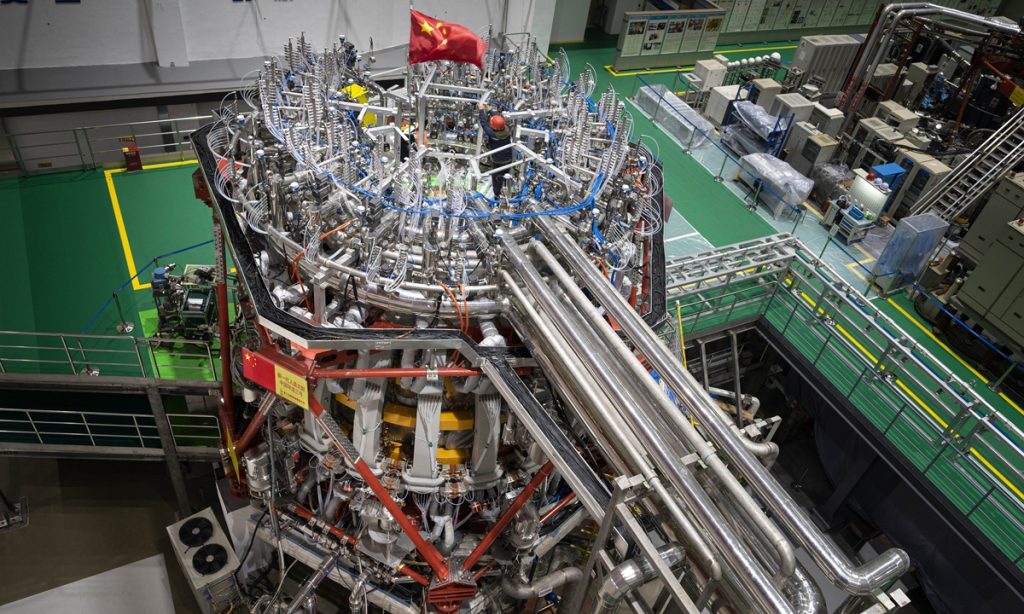
In March, the China National Nuclear Corporation (CNNC) announced it would open 10 of its nuclear technology research facilities and testing platforms, including China's new-generation "artificial sun" Huanliu-3 (HL-3) tokamak, to the world for the first time.
The move is expected to not only further enhance China's influence in nuclear science and technology globally, but also boost international cooperation in dealing with the energy crisis as the issue seemingly grows more and more urgent along with the rapid development of artificial intelligent (AI) in consideration of the technology's staggering energy consumption. Current AI technology could be on track to annually consume as much electricity as the entire country of Ireland (29.3 terawatt-hours per year), according to a report published in October 2023 in Joule magazine.
"Magnetic confinement nuclear fusion is a cutting-edge disruptive technology with outstanding advantages such as abundant resources, environmental friendliness, and inherent safety. It is currently recognized as one of the most important ways to ultimately solve global energy and environmental problems and promote the sustainable development of human society," Liu Zhonghua, deputy director of the Southwestern Institute of Physics (SWIP) under CNNC told the media during a group visit to the institute in late March.
The visit is part of CNNC's series of events to celebrate the 60th anniversary of the success of China's atomic bomb test in 1964 as well as the upcoming 70th anniversary of the establishment of the CNNC in January 2025.
China has set a "three-step" technological roadmap of "thermal neutron reactor, fast reactor, and controllable nuclear fusion reactor" for nuclear energy development. With the existing nuclear science and technology industrial system, it is believed that human beings can use controllable nuclear fusion energy in about 30 years, that is, by the middle of this century, the Global Times learned from CNNC.
The core temperature of the sun is approximately 15 million to 20 million degrees, while the metal materials on Earth will melt at around 1,000 degrees. The goal of China's construction of "artificial sun" is to build a device on Earth that can withstand temperatures of more than one million degrees.
Scientists at the SWIP are sparing no effort to realize the goal step by step. In the 1980s, the first-generation fusion platform HL-1 was built and it was the first national large-scale scientific engineering facility in the field of nuclear fusion in China; in the early 21st century, HL-2 was completed, laying a solid scientific and engineering foundation for the leap from principle exploration to large-scale device experiments in China's nuclear fusion research.
In 2020, the new-generation "artificial sun" HL-3 was successfully designed and built independently, becoming the largest and highest parameter advanced tokamak device in China with a total height of 8.39 meters and a diameter of 8 meters. The plasma ion temperature can reach 150 million C, which is 10 times the temperature of the core of the sun.
In August 2023, HL-3 realized high-confinement mode operation with a plasma current of one million amperes for the first time. The breakthrough puts the operational level of China's magnetic confinement nuclear fusion device at the forefront of the world. It also marks an important step forward in the research of high-performance nuclear fusion plasma operation.
In December 2023, CNNC announced the global opening of HL-3 to invite scientists worldwide to come to China and collaborate toward the shared goal of pursuing "artificial sun energy" after SWIP signed an agreement with the International Thermonuclear Experimental Reactor (ITER) and the development of future fusion reactors. HL-3 since then has become an important supporter to the construction and operation of ITER, the world's largest "artificial sun" project.
The next step of the "artificial sun" project is to gradually transit from the deuterium-tritium combustion experiment stage to the fusion reactor engineering and physical experiment stage, and finally realize the aim of building fusion power stations of demonstration and then the construction of commercial fusion power stations, according to CNNC.
According to Li Bo, a senior engineer at the SWIP, the energy released from the nuclear fusion reaction of one liter of deuterium extracted from seawater is equivalent to that released by 300 liters of gasoline. "To put it simply, if we were to burn coal to fuel a 1-million-kilowatt power plant for a year, it would require around 2 million tons, nearly 33,000 train cars of coal. However, if we use nuclear fusion, only 0.6 tons of materials, equivalent to a small pickup truck, would be sufficient," Li said.
Nuclear fusion energy can also be converted into power through more various methods, Xiao Guoliang, a researcher at the SWIP, told the Global Times. "Besides the traditional steam turbine power generation, the energy carried by the charged particles in the nuclear fusion reactor may also be directly extracted and converted into electricity through specific techniques such as magnetic fluids and plasma waves. With the advancement of technology, the utilization of nuclear fusion energy in the future can be more diverse and efficient," Xiao said.
As a technician at the SWIP, Wang Jin has personally debugged and installed tens of thousands of components on different generations of confinement nuclear fusion devices since 1996.
One of the most memorable things for him was in 2022, when he and other dozens of people fought on site to achieve the first 1 megampere discharge in China as soon as possible against the heat and power limit in summer. After more than a month of arduous preparation, this discharge parameter was successfully achieved.
Wang recalled that, once, he followed an experienced master to conduct a safety inspection of the device. The master walked to a piece of equipment and asked him, "Do you see anything different here?" He looked at that area but did not find anything different.
The master said, "Do you notice the crack in the paint under that screw?" Wang suddenly saw it. Through this incident, he said he felt that doing nuclear fusion work requires great care and patience.
When entering the installation of HL-3, Wang also had his own team of apprentices to lead them to accomplish greater achievements. Wang said, "I need to pass on our spirit. Only in this way can we constantly strive for excellence and do our job well and strong."
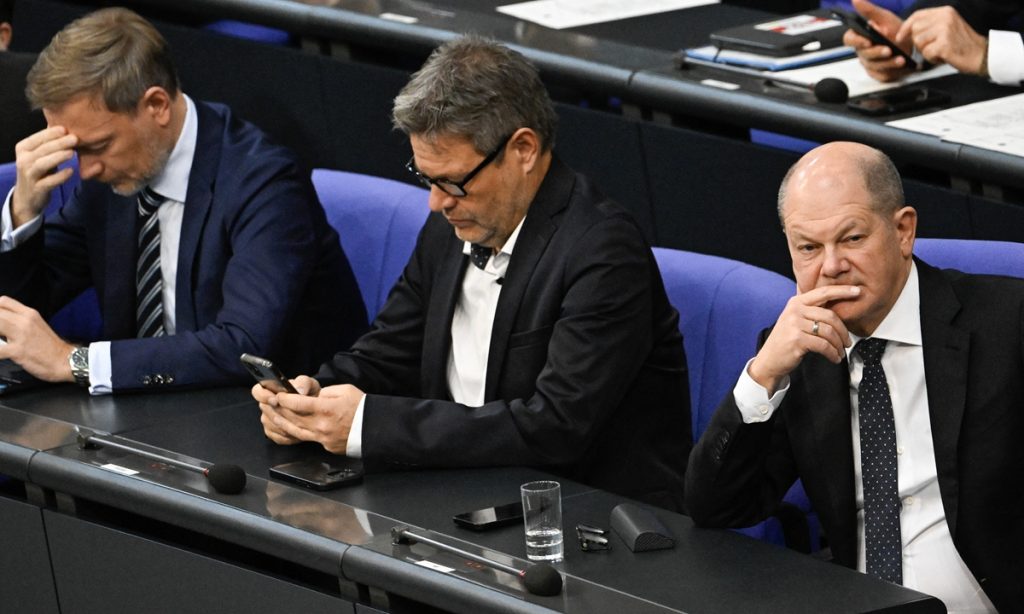
German Chancellor Olaf Scholz is scheduled to travel to China in mid-April, accompanied by three federal ministers and a business delegation, media reported. Chinese analysts said Scholz aims to strike a balance in Germany's China policy, ensuring it is not swayed by the hard-line rhetoric of politicians advocating "de-risking."
The German Chancellor's visit is part of a broader series of high-level engagements between China and the EU, and may help foster positive momentum toward consensus-building, the analysts noted.
Scholz reportedly will travel to China for a two-day trip from April 15 to 16. German newspaper Handelsblatt said in a report on April 4 that Scholz will be accompanied by Environment Minister Steffi Lemke, Agriculture Minister Cem Özdemir and Transport Minister Volker Wissing. It noted that "it is unusual" for a Chancellor to be accompanied by several federal ministers on a trip to China and would "otherwise only [take] place as part of government consultations."
Reuters reported on the same day that Germany's top corporate brass, including Roland Busch, chief executive of Siemens, Mercedes-Benz CEO Ola Kaellenius and lab equipment and semiconductor chemicals maker Merck KGaA's CEO Belen Garijo will join Scholz when he visits China. Busch also serves as chair and president of the Asia-Pacific Committee of German Business.
The Chinese side hasn't yet released information on Scholz's visit as of press time on Sunday.
Scholz's upcoming visit to China signifies Germany's willingness to maintain pragmatic cooperation with China. The visit is part of a series of exchanges and communications between China and Germany that have been ongoing since 2022, He Zhigao, a research fellow with the Institute of European Studies from Chinese Academy of Social Sciences, told the Global Times on Sunday.
Scholz was last in China in November 2022. Chinese President Xi Jinping met Scholz in Beijing and the two leaders agreed on enhancing cooperation, maintaining dialogue, and rejecting decoupling and bloc confrontation.
In June 2023, Chinese Premier Li Qiang visited Germany and co-chaired the seventh China-Germany inter-governmental consultation with Scholz.
Sustaining these high-level engagements is crucial in preventing strategic misunderstandings between China and Germany, especially in light of the unveiling of a new strategy by Scholz's three-party coalition in July 2023 that claimed to de-risk Germany's economic relations with China. This strategy, borne out of complex negotiations and compromise among the coalition partners, has sent mixed signals regarding Germany's policy towards China, He said.
Despite calls from some people to decouple from China, Scholz and the majority of the business community remain committed to rejecting "decoupling" rhetoric and instead seek to deepen cooperation, some experts said. Senior German officials' visits to China typically involve high-level business delegations. Scholz's visit, which includes top corporate figures from Germany, underscores the close economic ties between the two countries, analysts said.
On Saturday, China's Ministry of Commerce convened an "invest in China"-themed roundtable meeting in Munich. Representatives of German companies and business groups, including the Chamber of Commerce and Industry for Munich and Upper Bavaria, as well as executives from six large enterprises including BMW and Siemens attended the meeting.
Scholz's visit to China underscores Germany's commitment to preserving the mutual benefits derived from bilateral cooperation. Beyond the automotive industry, there is significant untapped potential for collaboration in sectors such as new energy and biopharmaceuticals, Cui Hongjian, a professor with the Academy of Regional and Global Governance with Beijing Foreign Studies University, told the Global Times on Sunday.
According to Handelsblatt, During Scholz's visit to China, the German government seeks room for cooperation, particularly in the areas of climate and the environment, and in transport policy.
Scholz will also endeavor to seek a political balance in Germany's China policy, preventing it from being kidnapped entirely by negative voices or policies emanating from its foreign ministry and economic ministry, Cui said.
For instance, Germany's Foreign Minister Annalena Baerbock of Green party, who advocates a tough stance on China, has drawn criticism from some Chinese observers for potentially undermining bilateral relations. Similarly, Economy Minister Robert Habeck, also from the Greens, has warned against over-reliance on China.
Concerns raised by some politicians regarding China's alleged overcapacity, unfair competition practices and perceived risks are causing apprehension among small- and medium-sized companies in Germany. If such rhetoric persists, it could potentially harm bilateral relations between China and Germany, said the expert.
While analysts call more efforts within Germany as well as in the EU to push forward pragmatic cooperation despite disputes and negative influences from other countries, they admit that these relations are undergoing a transition to a "new normal" with both sides making adjustments.
The dynamics of China-EU relations have shifted due to evolving geopolitical realities, prompting a restructuring phase. While the EU perceives China as an uncertain factor in terms of security and economic matters, it remains committed to pursuing cooperation and dialogue with China in its own interests, Cui said.
While both positive and negative factors for the China-EU relationship co-exist, Scholz's visit, together with a series of high-level engagements between China and the EU, will play a positive role in pushing the two sides to seek consensus, he said.
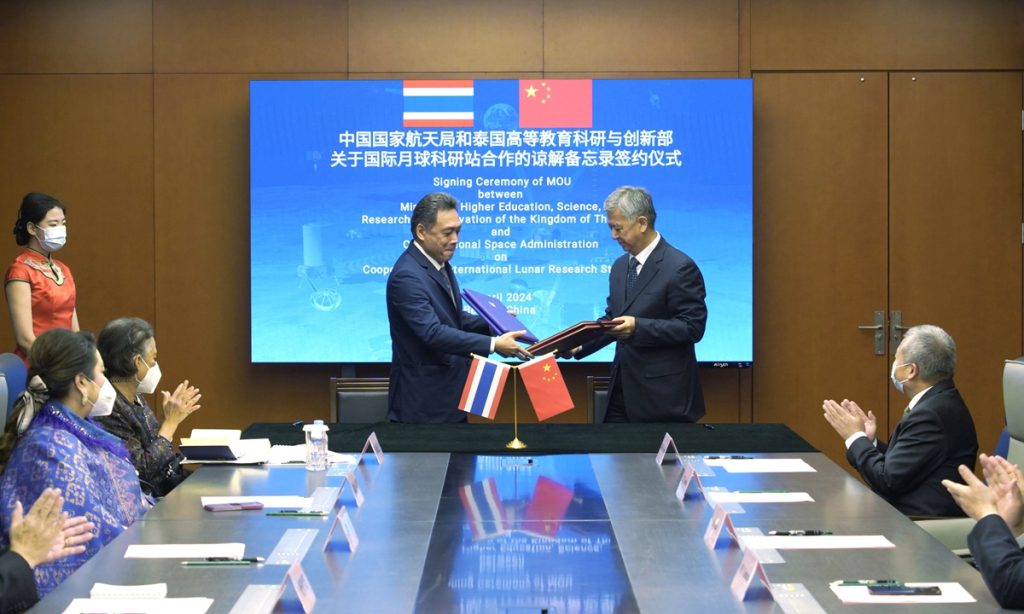
The China National Space Administration (CNSA) and Thai Ministry of Higher Education, Science, Research and Innovation on Friday jointly signed a memorandum of understanding (MoU) on cooperation in the exploration and peaceful use of outer space and an MoU on cooperation in the international lunar scientific research station.
Princess Maha Chakri Sirindhorn of the Kingdom of Thailand attended and witnessed the signing. Zhang Kejian, director of the China National Space Administration, delivered a welcome speech at the ceremony.
According to the MoU, China and Thailand will set up joint committees and working groups to strengthen cooperation in the fields of space exploration, space application and space capacity building by planning and implementing joint space projects, scientific exchange programs and personnel training programs, exchanging data and information, and jointly organizing symposiums and scientific workshops.
The two sides will focus on the demonstration, engineering implementation, operation and application of the international lunar scientific research station, organize expert teams to conduct research from the three aspects of science, engineering and international cooperation, and form a cooperation plan. At the same time, other countries, international organizations, research institutes, universities, industrial entities and scientists are welcome to join the international lunar scientific research station program, and to benefit from joint space exploration activities.
Previously, China and Thailand signed a MoU on space cooperation in 2018 to jointly build the Lancang-Mekong river spatial information exchange and cooperation center and the Lancang-Mekong river remote sensing data center. In 2023, a space weather monitor developed by Thailand has been selected to be a part of the Chang’e-7 spacecraft’s payload. China and Thailand will cooperate on lunar exploration missions in the future.
The Chang’e-7 is a planned robotic Chinese lunar exploration mission expected to be launched in 2026 to target the lunar south pole. Like its predecessors, the spacecraft is named after the Chinese moon goddess Chang'e. The mission will include an orbiter, a lander, a mini-hopping probe, and a rover.
As part of a recent nationwide anti-corruption campaign, the provincial discipline inspection commission and supervisory commission of Central China's Hunan Province invited the spouses of 140 senior officials from provincial government agencies, state-owned enterprises and universities to an anti-corruption themed event.
Attendees were introduced to corruption cases from recent years. Some of them engaged in "nepotism" and "family corruption," encouraging their sons to seek favors from other officials' children; some opened family businesses through corruption; some focused solely on money, helping their relatives to make money illegally; some were pushed into corruption by family ties, leading the whole family into an abyss. These examples of corrupt family traditions serve as a warning.
In March, the website of the Central Commission for Discipline Inspection and the National Supervisory Commission authorized the release of a report stating that 72 people were under investigation, and 28 people received disciplinary punishment. In March, a total of 6,715 cases of violations of the eight-point decision on improving Party and government conduct were investigated nationwide, with 9,065 individuals receiving criticism and education, including 6,591 individuals receiving disciplinary punishment.
"I wrote a letter to my child on his birthday, in which I said, the deepest pain for a mother is failing to uphold principles and lacking self-discipline." In the exhibition hall, a video showing Tang Jun, former secretary of the Party committee of Xintian county, tearfully confessing her mistakes served as a profound lesson.
"Some of the 'protagonists' in these cases are familiar to us, some were even former colleagues of our husbands. It is a lack of strict parenting and proper family traditions that led them astray into corruption," noted one attendee. Everyone at the event expressed that upright family tradition is the cornerstone of family happiness, and as family members, they must establish a strong ethical red line, constantly remind their spouses to respect, fear, and abide by the rules, and educate and manage their children and relatives well.
Anti-corruption experts say that including officials' family members in anti-corruption education can prevent corruption loopholes from being opened and also serve a supervisory role.
Many cases of corruption among officials were initially due to their family members being bribed, while the officials themselves may be unaware. Furthermore, if the spouses of officials can strengthen supervision and management of officials' abnormal behaviors in daily life, it can also enhance the warning effect for restraining officials' behavior, Zhuang Deshui, deputy director of the Research Center for Government Integrity-Building at Peking University, told the Global Times on Monday.
"Family tradition is like a 'firewall.' It is a line of defense for Party members, officials, and their families to resist temptation. If there is even a small hole in this wall, the 'small flames' that come through could potentially engulf the whole family," said Zhu Fan, a representative of family members, noting that this wall must be fortified, and a "clean and honest line of defense" must be upheld in order for a family to thrive.
"Family tradition is an important manifestation of the work style of leading officials, it is an important cornerstone for the prosperity of family inheritance, and it is a good remedy for the fight against corruption," Wang Shuangquan, a member of the Hunan provincial Party committee, secretary of the provincial discipline inspection commission, and director of the provincial supervision commission, vividly narrated the significance and profound connotation of establishing upright family traditions.
According to local officials, Hunan Province attaches great importance to the construction of family traditions for leading cadres, taking it as a fundamental project to deepen the comprehensive and strict governance of the Party, and as an important aspect included in the assessment of building a clean Hunan and constructing a clean culture.
In practice, Hunan regards the construction of family traditions for officials as a key focus in heart-to-heart talks, supervision and inspection, paying attention to digging deep into typical cases of poor family education and traditions.
The curtailing of corruption by discipline inspection and other procuratorial organs as well as the media is limited, as experts put it. Family members are directly related to integrity efforts. The key to integrity education is to enhance the officials' own integrity awareness, and to encourage family members to remind these officials at the appropriate time and reduce the occurrence of corruption problems, Zhuang said.
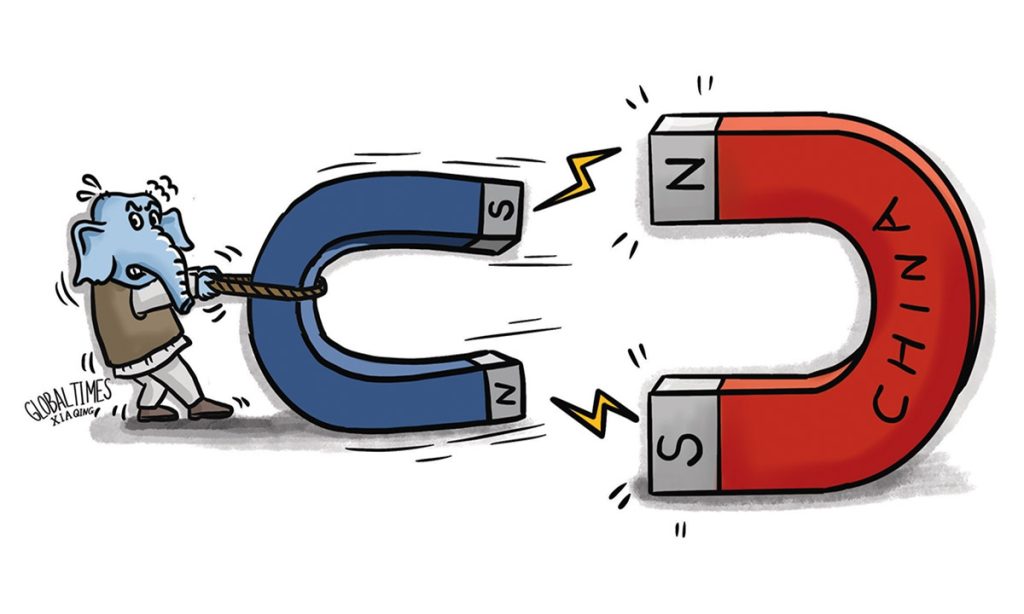
As China and India agreed to continue talks through diplomatic and military channels to resolve border issues at the latest border consultation in Beijing, India's External Affairs Minister S Jaishankar said he will "never compromise on securing borders," a move analysts viewed as a trick to pass the buck to China over the dispute and try to gain more leverage to bargain with Beijing.
According to a release from the Chinese Foreign Ministry on Thursday, China and India held the 29th meeting of the Working Mechanism for Consultation and Coordination on India-China Border Affairs (WMCC) on Wednesday in Beijing.
The two sides made positive comments on the progress made in bringing the border situation under control, had a "candid and in-depth" exchange of views on the next stage of work, agreeing to reach a mutually acceptable plan at an early date and push the border situation into a phase of regular control.
They agreed to continue to maintain communication through diplomatic and military channels, improve the negotiation and consultation mechanism, and agreed to strictly abide by the existing agreements and protocols, continue to consolidate the achievements of the previous efforts, and maintain peace and tranquility in the border areas.
Also on Wednesday, during his meeting with the Indian community in Malaysia, Jaishankar said, "My first duty to Indians is to secure the border. I can never compromise on that," according to India's NDTV.
Jaishankar claimed that "normalcy in bilateral ties with China will only be achieved based on the traditional deployment of troops and will be the prerequisite for the relationship with Beijing in the future."
Hu Zhiyong, a research fellow at the Institute of International Relations at the Shanghai Academy of Social Sciences, told the Global Times on Thursday that Jaishankar's "tough words" were made with an eye on the upcoming election.
More importantly, the words and acts from the Indian diplomat were also likely aimed at passing the buck to China over the border standoff and worsening bilateral ties, Hu said, noting that China needs to be wary of India's tricks to "internationalize the border disputes."
False remarks over the Chinese territory of Zangnan by Indian politicians, including Prime Minister Narendra Modi, were slammed by the Chinese Foreign Ministry as "absurd." Senior Colonel Wu Qian from China's Ministry of Defense on Thursday stressed that "It is an undeniable fact that Zangnan has been Chinese territory since ancient times, and there's no so-called Arunachal Pradesh."
Jaishankar expressed support for Manila over its South China Sea disputes with China during his recent meeting with his Philippine counterpart.
It's India that keeps provoking China and making trouble on the border issue in order to gain more leverage to bargain with China, Hu said.
"There is more about China-India bilateral relations than the border issue," Hu said, "But Indian politicians have tried to use the border issue to kidnap the bilateral relationship."
Earlier this month, data from the China General Administration of Customs showed that China's trade with India in the first two months of 2024 surged by 15.8 percent year-on-year, making it one of the fastest growth rates among China's trading partners.
Analysts believe that the current border situation is still generally under control, adding that China and India should further manage their differences in a practical manner and prevent a small case developing into a major one or even a military conflict.
"Both the Indian government and media should be careful in their words and actions, and respect basic historical facts on the territorial issue. Only in this way can China-India relations move forward in a healthy way and return to the normal track," Hu said.
China, which always seeks cooperation, does not want to make India an enemy, and India should not treat China as a "threat" and rival, said Hu.
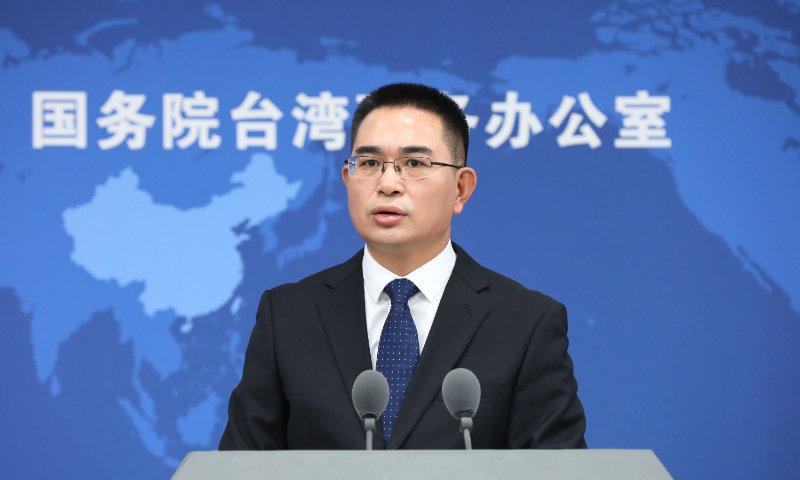
The Chinese mainland is closely monitoring movement of Taiwan island's military authority around Kinmen. If they provoke or cause trouble, daring to act rashly, they will surely face failure, Chen Binhua, a spokesperson for the State Council Taiwan Affairs Office, said on Wednesday in response to reports that Taiwan island will conduct live-fire drills in April in locations including Kinmen and Lieyu.
Democratic Progressive Party (DPP) authorities recently announced that live-fire drills will be conducted in April in locations including Kinmen and Lieyu, sparking concern across the local community. The island's military authority claimed that these actions are part of routine and regular training exercises, without any specific targets.
Whether it's "routine training" or "targeted provocation," DPP authorities know better than anyone. The people in Kinmen, having personally experienced the transitions between peace and war, value peace and oppose war even more, Chen said.
They have already made the right choice between "opening fire" and "building bridges." We are closely monitoring the movement of Taiwan island's military authority in Kinmen. Should they provoke or cause trouble, daring to act rashly, they will surely face failure, the spokesperson noted.
On February 14, a fishing boat from Fujian was violently chased by Taiwan authorities in waters near Kinmen, causing all four people on board to fall into the water. Two of them died. The DPP authorities on the island of Taiwan have been condemned for improperly handling the incident and for illegally harassing mainland fishermen.
The mainland coast guard has been boosting its law enforcement patrols in the waters near Kinmen after the fatal February 14 boat incident.
The State Council Taiwan Affairs Office also said earlier that the mainland firmly supports the law enforcement patrols implemented by the mainland coast guard authorities in waters near Kinmen, as they are legitimate actions to maintain order in the relevant maritime areas.
Also, on March 18, the Fujian coast guard reportedly found a distressed fishing boat in the waters of Weitou bay and rescued two people, both from Kinmen. One of two men surnamed Wu has been sent back to Kinmen on March 22.
The spokesperson said the relevant departments are further verifying the situation. Once the situation is verified, appropriate action will be taken regarding another individual.